
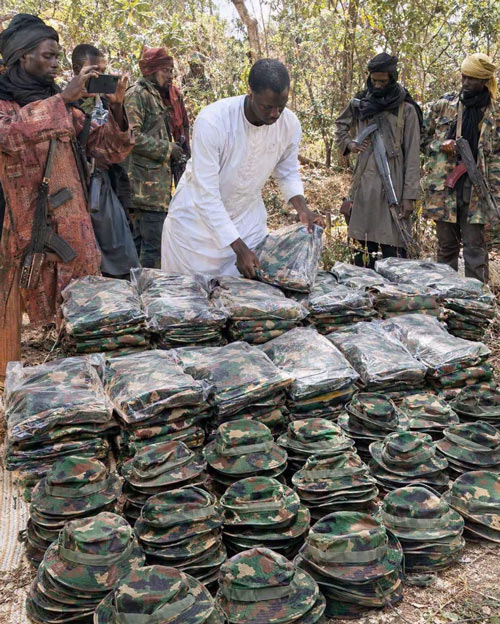
DHQ Denies Supplying Uniforms to Bandits in Nigeria
Summary
- The Defence Headquarters (DHQ) has denied that military camouflage uniforms found with suspected bandits originated from the Nigerian Armed Forces.
- This official denial followed the circulation of a viral video showing individuals in military-style attire.
- The DHQ explicitly dismissed suggestions that the uniforms were supplied by the military or obtained from intercepted military supply vehicles.
- The statement aims to clarify the source of such attire and uphold the integrity of the Armed Forces' supply chain.
- This official position is significant for national security and legal proceedings involving the unauthorized possession of military uniforms.
Official Denial Regarding Bandit Attire
The official denial by the Defence Headquarters provides a clear stance that may prove crucial in investigations or prosecutions related to unauthorized military attire.
The Defence Headquarters (DHQ) has issued a definitive statement refuting claims that military camouflage uniforms, reportedly discovered in the possession of individuals identified as suspected bandits, originated from the Nigerian Armed Forces. This official declaration by the DHQ denies supplying uniforms bandits Nigeria, directly addressing public concerns that arose following the widespread circulation of a video online. The footage depicted the alleged criminals wearing attire closely resembling standard military issue, prompting questions about the source of such equipment.
The DHQ's prompt response aims to clarify the situation and prevent misinformation from undermining public trust in the nation's security apparatus. The presence of military-style clothing among non-state actors is a serious national security concern, and the Defence Headquarters camouflage denial seeks to distance the legitimate armed forces from any implication of complicity or negligence in the equipping of criminal elements. This firm stance underscores the military's commitment to maintaining its integrity and operational distinction from illegal groups.
Refuting Supply Chain Allegations
In its comprehensive denial, the Defence Headquarters explicitly dismissed several specific suggestions regarding the origin of the uniforms. The DHQ firmly stated that the clothing was neither supplied directly by the military nor acquired through the interception of military supply vehicles. These assertions directly counter speculative narratives that had begun to circulate, which posited a direct or indirect link between the Nigerian military and the attire worn by the suspected bandits.
The official statement serves to reinforce the strict protocols governing the distribution and accountability of military equipment within the Nigerian Armed Forces. By refuting the notion of military supply or diversion from the supply chain, the DHQ aims to reassure the public about the robustness of its internal controls and the security of its assets. This clear rejection of such allegations is a critical component of the broader effort to address the issue of Nigerian military uniforms bandits.
Implications for Armed Forces Integrity
The significance of this Defence Headquarters camouflage denial extends beyond the immediate incident, touching upon the broader issue of Armed Forces supply chain integrity. The unauthorized use of military attire by criminal groups like bandits poses a substantial threat to national security, as it can create confusion, erode public confidence, and potentially facilitate illicit activities under the guise of official authority. Therefore, the DHQ's unequivocal denial is vital for upholding the reputation and operational effectiveness of the Nigerian military.
Ensuring that the source of bandits military attire is not linked to official channels is paramount for maintaining the distinction between state actors and criminal elements. This clarification helps to preserve the sanctity of the Nigeria national security uniform and prevents any perception of internal compromise within the armed forces. The military's proactive communication on this matter is a step towards safeguarding its image and reinforcing its commitment to combating insurgency and banditry without internal complicity.
Legal and Investigative Ramifications
The official denial by the Defence Headquarters provides a clear stance that may prove crucial in investigations or prosecutions related to unauthorized military attire. For legal professionals advising on national security, military law, or criminal defense, this clarification offers an authoritative position from the highest military command regarding the source of military camouflage found with suspected bandits. This official declaration could be a pivotal factor in legal arguments concerning the unauthorized possession of military attire or allegations of military complicity in criminal activities.
In any legal proceeding where the origin of such uniforms is contested, the DHQ's statement establishes a foundational point of reference, potentially influencing how evidence is interpreted and how culpability is assigned. This official position is particularly relevant for cases involving the misuse of military symbols and uniforms, ensuring that the legal framework aligns with the military's own assessment of its supply chain security. The denial underscores the importance of rigorous investigation into the true source of such attire, rather than assuming a military origin.
Practical Implications
Lawyers advising on national security, military law, or criminal defense should note the official denial by the Defence Headquarters regarding the source of military camouflage found with suspected bandits. This clarification may be crucial in investigations or prosecutions involving unauthorized possession of military attire or allegations of military complicity, providing an official stance to consider in legal arguments.
Source
How does this affect you?
Get an AI analysis of this article grounded in your jurisdictions, practice areas, and any policy documents you've uploaded to Wansom.
Finish Reading the Full Story and the Expert Analysis.
Get the latest legal & regulatory intelligence in Nigeria
Wansom is AI and can make mistakes.