
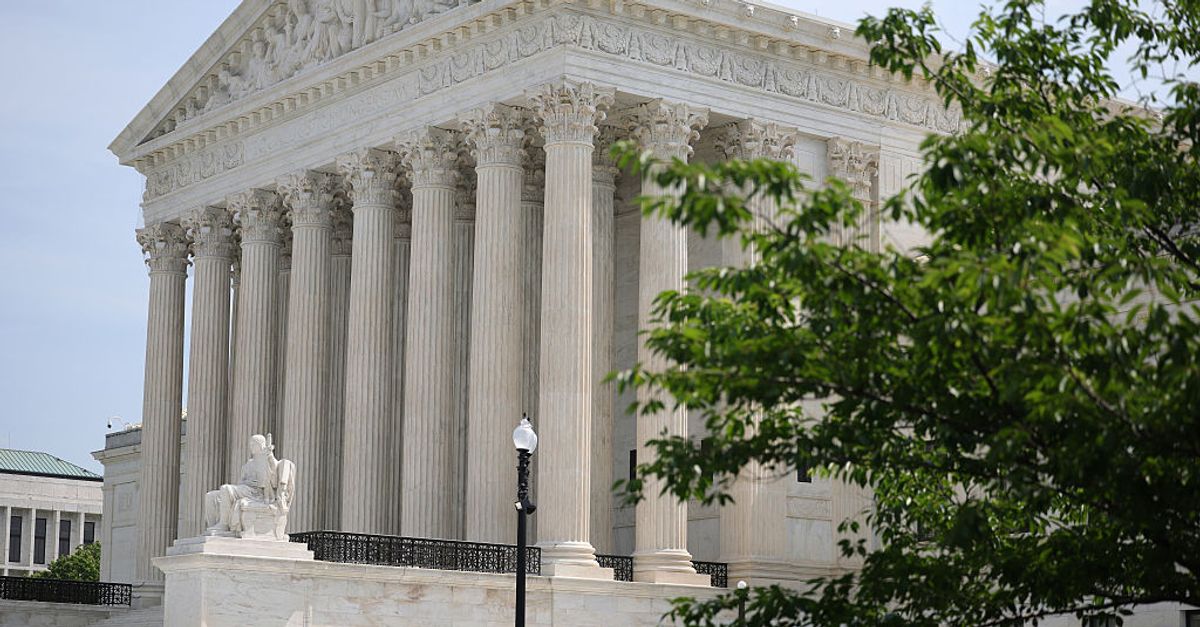
Department of the Air Force v. Prutehi Guåhan: SCOTUS on Agency Finality
Summary
- The Supreme Court heard arguments in `Department of the Air Force v. Prutehi Guåhan` concerning the Air Force's permit renewal to detonate hazardous munitions in Guam.
- The core legal question is whether the Air Force's permit renewal application constitutes a 'final agency action' that can be immediately challenged in court.
- The case involves the Resource Conservation and Recovery Act (RCRA) and the National Environmental Policy Act (NEPA), which govern hazardous waste and environmental impact assessments, respectively.
- For over 40 years, the Air Force has disposed of munitions like ammunition and tear gas by detonation at Tarague Beach, near Andersen Air Force Base in northern Guam.
- The ruling will set a significant precedent for the 'final agency action' doctrine, impacting when federal agency decisions, particularly environmental permits, can be judicially reviewed.
Supreme Court Considers Guam Munition Dispute
The Supreme Court's decision in `Department of the Air Force v. Prutehi Guåhan` will establish important precedent regarding the 'final agency action' doctrine.
The Supreme Court recently heard oral arguments in the case of `Department of the Air Force v. Prutehi Guåhan`, a significant dispute involving the U.S. Air Force and an organization dedicated to safeguarding Guam's environment and cultural heritage. During approximately 75 minutes of deliberation, the justices focused on a pivotal procedural question: whether the Air Force's application to renew a permit for detonating hazardous munitions on a Guam beach constitutes a 'final action' that is immediately subject to judicial review.
This central issue revolves around the timing and viability of legal challenges against federal agencies. While questioning the immediate challengeability of the permit renewal application, the high court also conveyed some apprehension regarding the potential broader implications of its eventual ruling on the scope of judicial oversight for agency decisions. The outcome will significantly shape the landscape for future `environmental permit renewal challenge` cases.
Key Environmental Statutes at Play
Two foundational environmental statutes underpin the legal arguments in this case. The first is the Resource Conservation and Recovery Act of 1976 (RCRA), which grants the federal Environmental Protection Agency (EPA) comprehensive authority to regulate hazardous waste. RCRA also includes provisions allowing the EPA to delegate the administration of hazardous-waste programs to individual states and U.S. territories, such as Guam.
The second critical piece of legislation is the National Environmental Policy Act of 1969 (NEPA). This act mandates a structured process for evaluating the environmental impact of actions undertaken by federal agencies. Specifically, NEPA requires the preparation of an Environmental Impact Statement (EIS) before any 'major Federal actions significantly affecting the quality of the human environment' are carried out, ensuring environmental considerations are integrated into federal decision-making.
Long-Standing Air Force Operations in Guam
The controversy stems from the `US Air Force hazardous waste Guam` operations, which date back over four decades. More than 40 years ago, the Air Force established a designated range for the disposal of hazardous munitions. This process specifically involves the detonation of materials such as ammunition, tear gas, and propellants.
These detonation activities are conducted at Tarague Beach, an area situated directly adjacent to Andersen Air Force Base in northern Guam. The ongoing nature of these operations and the Air Force's 2021 application to renew its permit for these activities are what triggered the current `SCOTUS Guam munition detonation` challenge.
Implications for Final Agency Action Doctrine
The Supreme Court's decision in `Department of the Air Force v. Prutehi Guåhan` will establish important precedent regarding the 'final agency action' doctrine. This doctrine is crucial for determining when federal agency decisions, particularly those related to `RCRA NEPA final agency action` and environmental permit renewals, can be judicially challenged. The justices' deliberations highlight the delicate balance between allowing agencies to perform their functions efficiently and ensuring that their actions are subject to appropriate legal oversight.
Legal practitioners advising on environmental compliance or considering litigation against federal agencies must closely monitor this ruling. Its outcome will have profound implications for the timing and viability of such challenges, potentially altering the landscape for environmental advocacy groups and regulated entities alike by clarifying when an agency's step in a multi-stage process becomes ripe for judicial review.
Practical Implications
This Supreme Court case will establish important precedent regarding the 'final agency action' doctrine, determining when federal agency decisions, particularly permit renewals under RCRA and NEPA, can be judicially challenged. Lawyers advising on environmental compliance or contemplating litigation against federal agencies must monitor this ruling for its implications on the timing and viability of such challenges.
Source
How does this affect you?
Get an AI analysis of this article grounded in your jurisdictions, practice areas, and any policy documents you've uploaded to Wansom.
Finish Reading the Full Story and the Expert Analysis.
Get the latest legal & regulatory intelligence in United States
Wansom is AI and can make mistakes.