
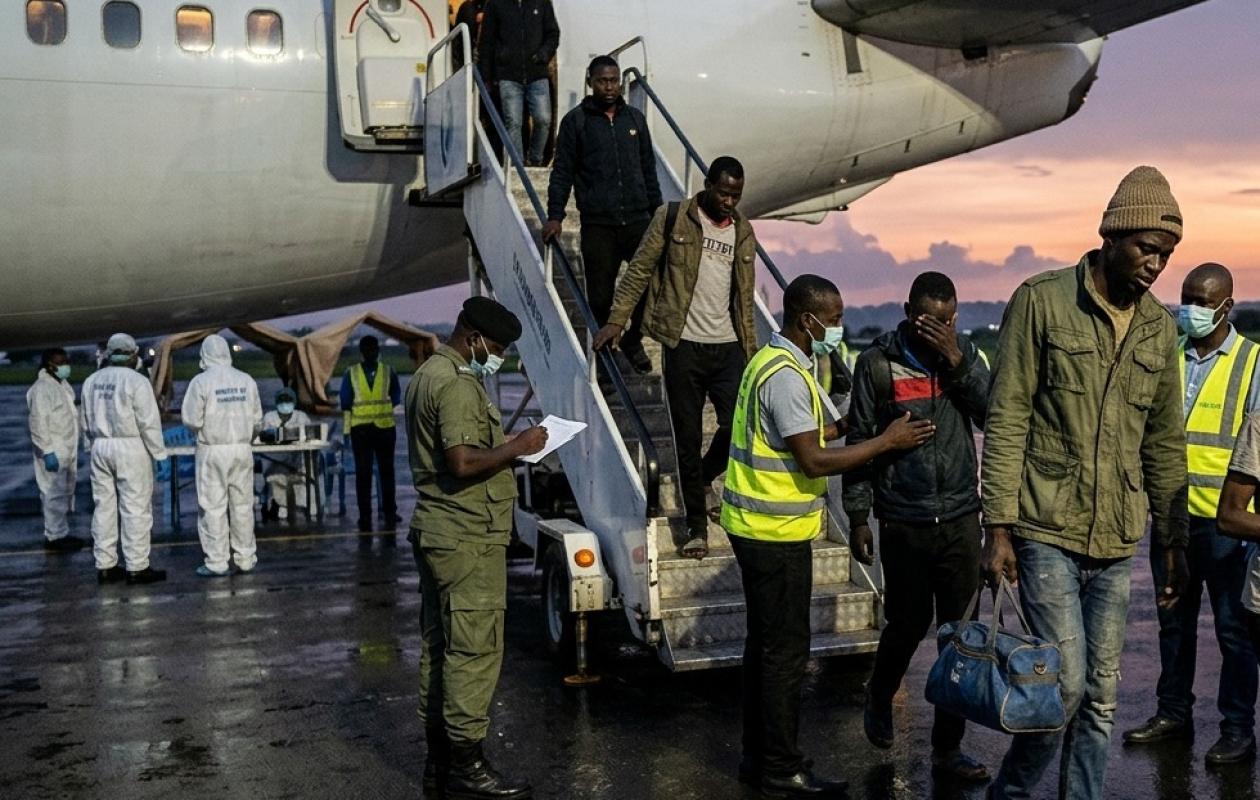
Demba Camara: 303 Senegalese Detainees in US Facilities
Summary
- As of October 24, 2026, 303 Senegalese nationals are detained in the United States, excluding those already deported.
- Demba Camara, Consul General of Senegal in New York, stated that ongoing arrests place "enormous pressure" on the consulate.
- The consulate collaborates with ICE, the Senegalese community, and NGOs to track and manage these detention cases.
- The Senegalese Embassy in Washington maintains direct contact with U.S. federal authorities regarding these issues.
- Senegalese citizens also face significant challenges with U.S. visa processes, including a permanent bond system with deposits of $10,000, $15,000, or $20,000.
Senegalese Detentions in the U.S. Reach Significant Numbers
Demba Camara, the Consul General of Senegal in New York, has revealed that 303 Senegalese nationals are currently held in detention facilities across the United States.
Demba Camara, the Consul General of Senegal in New York, has revealed that 303 Senegalese nationals are currently held in detention facilities across the United States. This figure, accurate as of October 24, 2026, specifically excludes individuals who have already been deported from the country. The Consul General also noted that arrests of Senegalese migrants in the United States are ongoing, indicating a dynamic and evolving situation.
This substantial number of Senegalese detainees places an "enormous pressure" on the consulate's resources and personnel. The continuous flow of new cases requires constant attention and management from the diplomatic mission, which is tasked with supporting its citizens abroad.
Consular Efforts and Inter-Agency Collaboration
In response to the growing number of Senegalese arrested in the United States, the consulate is actively collaborating with various entities to manage the situation. Consul General Demba Camara's office works directly with U.S. Immigration and Customs Enforcement (ICE) to ensure the accuracy of detention figures and to track individual cases. This collaboration with ICE has been independently reported by both Media Senegal and Seneweb, highlighting its significance.
Beyond official government channels, the consulate also engages with the broader Senegalese community in the United States, as well as with non-governmental organizations (NGOs) and other associations. These partnerships are crucial for monitoring individual cases and providing support to the detained Senegalese migrants. Furthermore, the Senegalese Embassy in Washington maintains direct communication with federal authorities to address these complex issues at a higher level, while other individuals also contribute their assistance to this extensive management effort.
Broader Challenges for Senegalese Nationals in the U.S.
The challenges faced by Senegalese nationals in the United States extend beyond the immediate issue of detentions. Many prospective visitors, particularly Senegalese supporters hoping to attend the 2026 World Cup, are encountering significant hurdles in securing entry to the country. The financial burden of travel, match tickets, and accommodation is compounded by a visa application process that is already notably cumbersome for citizens of several African nations that have qualified for the tournament.
Adding to these difficulties, the U.S. visa bond system, initially introduced as a pilot program in August 2025, was made permanent on August 3, 2026. This policy, applicable to nationals from countries identified on a specific list by the U.S. administration, now mandates security deposits of $10,000, $15,000, or $20,000, further complicating travel for Senegalese migrants and visitors.
Practical Implications
Lawyers specializing in immigration or criminal defense with Senegalese clients in the US should be aware of the significant number of detentions and the active consular involvement, which could impact case management, client communication, and potential avenues for assistance or advocacy. This also highlights potential complexities in US visa processes for African nationals.
Source
How does this affect you?
Get an AI analysis of this article grounded in your jurisdictions, practice areas, and any policy documents you've uploaded to Wansom.
Finish Reading the Full Story and the Expert Analysis.
Wansom is AI and can make mistakes.