
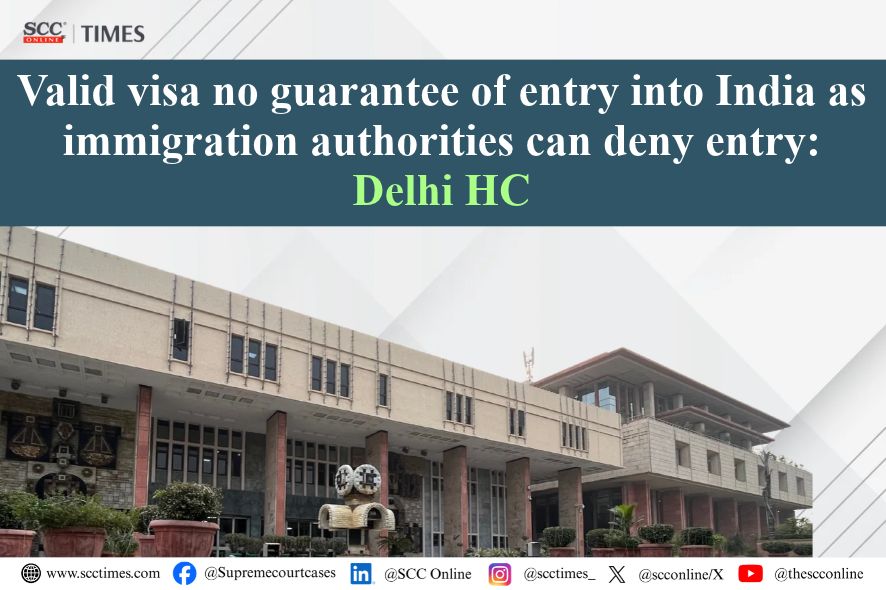
Delhi HC Immigration Entry Denial: Court Affirms Power Despite Valid Visa
Summary
- The Delhi High Court has affirmed that a valid visa does not guarantee entry into India.
- Indian immigration authorities possess the power to deny entry even to valid visa holders.
- This authority is granted by the Immigration and Foreigners Act, 2025.
- Denials can be based on concerns related to national security or public order.
- The ruling emphasizes the discretionary power of border control officials.
What Happened
Lawyers advising clients on travel to India must now explicitly inform them that a valid visa does not guarantee entry, as immigration authorities retain discretionary power to deny entry based on national security or public order concerns.
The Delhi High Court recently issued a significant ruling clarifying the scope of authority held by Indian immigration officials regarding entry into the country. This decision underscores that the possession of a valid visa does not automatically guarantee an individual's admission to India. The court explicitly affirmed that immigration authorities retain the power to refuse entry, even when a traveler holds all necessary documentation. This particular Delhi HC immigration entry denial clarification highlights the discretionary nature of border control.
The court's pronouncement specifically referenced the Immigration and Foreigners Act, 2025, as the legislative foundation for these powers. Under this Act, officials are authorized to prevent entry into India on specific grounds. These grounds primarily revolve around concerns related to national security and the preservation of public order. This judicial interpretation solidifies the understanding that a valid visa no guarantee entry India, as the ultimate decision rests with the immigration department's assessment of potential risks.
Legal Framework
The legal foundation for the discretionary powers exercised by immigration authorities is firmly established in the Immigration and Foreigners Act, 2025. This comprehensive legislation grants officials broad latitude to assess and determine who may enter Indian territory. Specifically, the Act empowers these authorities to deny admission to individuals if their presence is deemed to pose a threat to the nation's security or could potentially disrupt public order. This statutory backing means that decisions to deny entry are not merely administrative but are rooted in explicit legislative provisions.
The Delhi High Court's recent pronouncement serves to reinforce the interpretation of this Act, confirming that the issuance of a visa is a preliminary step, not a final assurance of entry. The court's emphasis on national security and public order immigration India as legitimate reasons for denial highlights the government's sovereign right to control its borders. This means that even with a duly issued visa, an individual may face an India visa denial national security if immigration officials, acting under the provisions of the 2025 Act, determine such a risk exists.
Implications for Travelers and Advisors
This Delhi High Court immigration ruling carries substantial implications for international travelers planning to visit India, as well as for legal professionals advising them. The judgment makes it unequivocally clear that a valid visa, while essential for travel, does not confer an absolute right of entry. Instead, it serves as a prerequisite, with the final determination remaining at the discretion of immigration officials at the port of entry. This necessitates a more cautious approach to pre-travel advice, as the possibility of an India visa denial national security or public order grounds remains a live concern.
Lawyers advising clients on travel to India must now explicitly inform them that a valid visa does not guarantee entry, as immigration authorities retain discretionary power to deny entry based on national security or public order concerns. This ruling necessitates a more cautious approach to pre-travel advice and potential challenges to entry denials. Understanding the robust legal framework provided by the Immigration and Foreigners Act, 2025, which underpins these powers, is crucial. Travelers must be aware that even minor perceived issues related to public order immigration India could lead to an unexpected denial, making thorough preparation and awareness of potential risks paramount.
Practical Implications
Lawyers advising clients on travel to India must inform them that a valid visa does not guarantee entry, as immigration authorities retain discretionary power to deny entry based on national security or public order concerns. This ruling necessitates a more cautious approach to pre-travel advice and potential challenges to entry denials.
Source
How does this affect you?
Get an AI analysis of this article grounded in your jurisdictions, practice areas, and any policy documents you've uploaded to Wansom.
Wansom is AI and can make mistakes.