
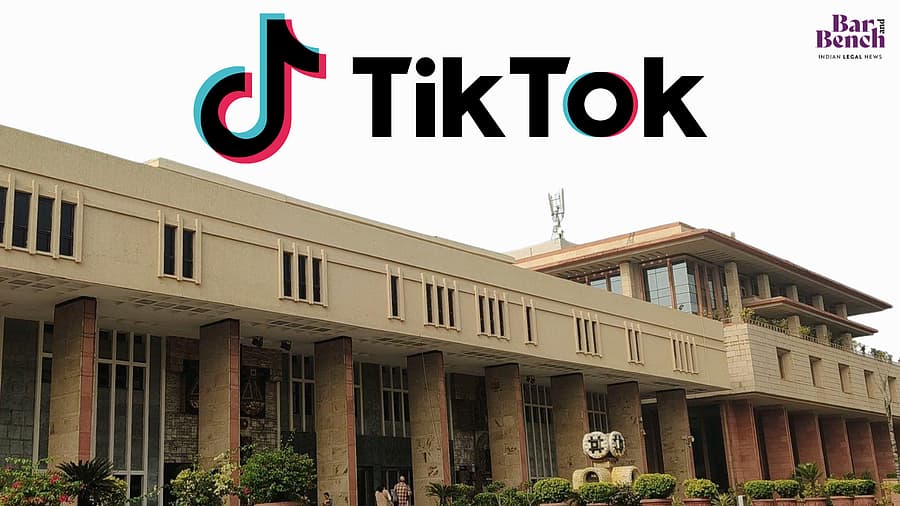
Delhi High Court: Reprimands TikTok for Ban Concealment, Denies Injunction
Summary
- The Delhi High Court criticized TikTok for concealing its app's ban in India since June 2020 while seeking copyright relief.
- TikTok filed its copyright suit in 2024, four years after the Central government's blocking orders.
- The court also chastised TikTok for misleading claims about continuous trademark use and suppressing an October 2023 trademark refusal.
- The trademarks registry had refused 'well-known' status to TikTok primarily due to the app's ban in India.
- The court denied TikTok an interim injunction, concluding the company did not approach with 'clean hands' in its suit against a businessman using 'TIKTOK' on sewing machine labels.
Judicial Rebuke for Concealment
The court's refusal to grant the interim injunction against the Ludhiana-based businessman, who was using the word 'TIKTOK' on sewing machine labels, underscores the severe consequences of failing to uphold the duty of full and candid disclosure.
The Delhi High Court recently issued a strong reprimand to TikTok, the Chinese social media platform, for deliberately withholding crucial information from the court. The company failed to disclose that its application had been subject to a ban in India since June 2020, a fact central to its legal standing. This omission came to light during proceedings in the case of TikTok Ltd v Sandeep Singh & Ors, where the platform was seeking relief for alleged copyright infringement.
Justice Purushaindra Kumar Kaurav, in an order dated November 26, highlighted that TikTok initiated its copyright infringement lawsuit in 2024. This filing occurred more than four years after the Central government had issued directives blocking the app. The court found it particularly egregious that TikTok chose not to reveal these significant blocking orders, which fundamentally impacted its operational presence and legal claims within the country. This lack of transparency ultimately led to the denial of an interim injunction sought by TikTok against a businessman in Ludhiana.
Undisclosed History and Trademark Issues
Beyond the app's outright ban, the Delhi High Court also criticized TikTok for presenting misleading assertions regarding the continuous use of its trademarks within India since 2017. The court noted that TikTok had suppressed an October 2023 order from the trademarks registry. This particular order had refused to grant TikTok the status of a 'well-known trademark,' primarily citing the app's blocked status in India as the reason for denial.
These combined acts of non-disclosure and misrepresentation led the court to conclude that TikTok had not approached the judicial system with 'clean hands.' The court emphasized that any party invoking its jurisdiction concerning a mark, especially when seeking an injunction, is obligated to disclose all pertinent facts from the outset. Instead, TikTok's petition painted a picture of uninterrupted and current use of its brand in India, which was contrary to the established facts of its ban and trademark refusal.
The Doctrine of 'Clean Hands' and Its Ramifications
The Delhi High Court's decision serves as a critical affirmation of the 'clean hands' doctrine, a fundamental principle in equity jurisprudence. This doctrine mandates that a party seeking equitable relief, such as an interim injunction, must not have engaged in any misconduct or concealment related to the subject matter of the dispute. TikTok's failure to disclose its ban, which was imposed in June 2020 on national security grounds following border skirmishes between Indian and Chinese troops, was deemed a significant breach of this principle.
The court's refusal to grant the interim injunction against the Ludhiana-based businessman, who was using the word 'TIKTOK' on sewing machine labels, underscores the severe consequences of failing to uphold the duty of full and candid disclosure. The ruling sends a clear message that parties must present all material facts to the court, even those that may be adverse to their case, when seeking judicial intervention. This case highlights the judiciary's intolerance for any attempt to obscure the truth or mislead the court, reinforcing the importance of integrity in legal proceedings.
Practical Implications
This ruling serves as a critical reminder for lawyers to advise clients on the paramount importance of full and candid disclosure of all material facts when seeking judicial relief, particularly interim injunctions. Failure to approach the court with 'clean hands' by concealing relevant information, such as a prior ban or trademark refusal, can lead to severe adverse consequences, including the denial of relief, as demonstrated by the Delhi High Court's decision against TikTok.
Source
How does this affect you?
Get an AI analysis of this article grounded in your jurisdictions, practice areas, and any policy documents you've uploaded to Wansom.
Finish Reading the Full Story and the Expert Analysis.
Get the latest legal & regulatory intelligence in India
Wansom is AI and can make mistakes.