
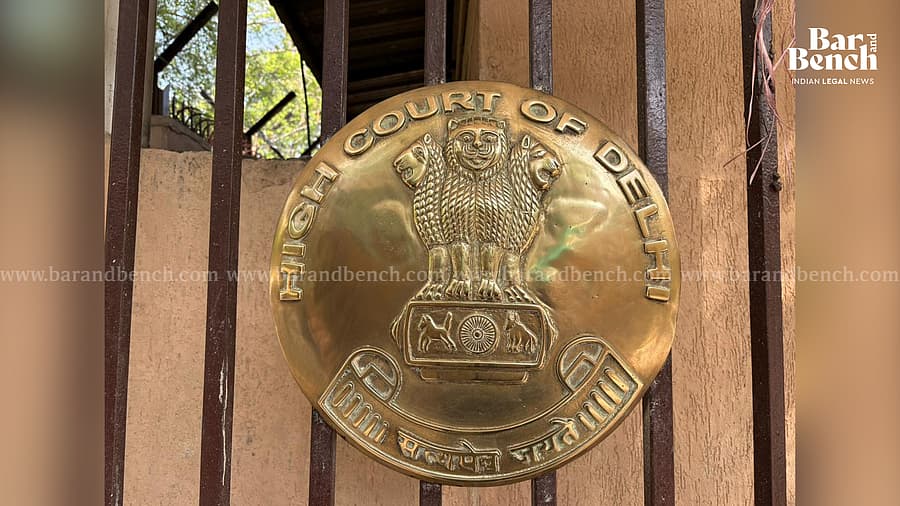
Delhi High Court: Declines Kartarpur Corridor Reopening Directive
Summary
- The Delhi High Court refused to order the reopening of the Kartarpur corridor for Sikh pilgrims.
- The court cited the government's policy decision, made in the interest of citizens following the Pahalgam terror attack, as the reason for closure.
- The PIL seeking the corridor's reopening was filed by the Paardarshita Public Welfare Foundation.
- The Kartarpur corridor connects Gurdwara Dera Baba Nanak in India to Gurdwara Darbar Sahib in Pakistan, a site where Guru Nanak Dev spent his last 18 years.
- India and Pakistan signed an agreement on October 24, 2019, to facilitate visa-free access for Indian pilgrims.
Court Upholds Government Stance on Kartarpur Corridor
This judgment by the Delhi High Court reinforces a critical aspect of India's legal framework: the limited scope of judicial review concerning government policy, especially when national security or public interest is invoked.
The Delhi High Court recently declined to issue directives for the reopening of the Kartarpur corridor, a crucial passage connecting Gurdwara Dera Baba Nanak in Punjab's Gurdaspur district with Gurdwara Darbar Sahib in Kartarpur, Pakistan. This decision came in response to a Public Interest Litigation (PIL) that sought to facilitate renewed access for Sikh pilgrims. A Division Bench, comprising Acting Chief Justice Nitin Wasudeo Sambre and Justice Sanjay Sharma, presided over the matter, ultimately siding with the government's existing policy.
The PIL was initiated by the Paardarshita Public Welfare Foundation, a non-governmental organisation, which had petitioned the court to intervene in the corridor's closure. Despite the plea, the High Court determined that the executive's decision to keep the corridor closed was a matter of policy, undertaken in the broader interest of the nation's citizens. This ruling underscores the judiciary's cautious approach when reviewing governmental actions that fall within the realm of policy-making.
Judicial Restraint in Policy Matters
The High Court's refusal to compel the reopening of the Kartarpur corridor was firmly rooted in the principle of judicial non-interference with government policy decisions. The bench specifically noted that the initial closure of the corridor followed the Pahalgam terror attack, indicating a link to national security considerations. The court emphasized that the government's action was a policy decision made "in the interest of the citizens" of the country, thus warranting judicial deference.
Citing Article 226 of the Constitution, which grants High Courts powers to issue writs, the judges found no compelling reason to overturn the government's determination. However, the court did acknowledge that the Paardarshita Public Welfare Foundation had submitted a formal representation to the government regarding the issue. Consequently, the High Court directed that the relevant authorities should duly consider this representation, ensuring that the petitioner's concerns are officially reviewed, even if the court itself would not mandate the corridor's immediate reopening.
The Kartarpur Corridor's Spiritual and Diplomatic Context
The Kartarpur Corridor holds profound religious significance, particularly for the Sikh community worldwide. It provides a direct link to Gurdwara Darbar Sahib in Kartarpur, Pakistan, a site revered as the place where Guru Nanak Dev, the founder of Sikhism, spent the final eighteen years of his life. This spiritual connection makes access to the shrine a deeply cherished aspiration for many.
The establishment of the corridor was a result of a bilateral agreement between India and Pakistan, signed on October 24, 2019. This landmark accord was designed to grant Indian pilgrims visa-free access to Gurdwara Darbar Sahib, facilitating their journey to the holy site. The corridor was subsequently inaugurated, marking a significant moment in cross-border religious diplomacy, before its closure due to the aforementioned security concerns.
Why the Ruling Matters
This judgment by the Delhi High Court reinforces a critical aspect of India's legal framework: the limited scope of judicial review concerning government policy, especially when national security or public interest is invoked. By refusing to direct the reopening of the Kartarpur corridor, the court reiterated that policy decisions, particularly those made in the aftermath of security incidents like the Pahalgam terror attack, are primarily within the executive's purview.
The court's stance under Article 226 government policy highlights the judiciary's reluctance to substitute its own judgment for that of the executive in complex matters of state. While acknowledging the importance of Gurdwara Darbar Sahib access for Sikh pilgrims, the ruling prioritizes the government's assessment of national interest and security. This precedent is significant for future challenges to executive actions, indicating that a high bar exists for judicial intervention unless a clear legal violation can be demonstrated.
Practical Implications
This ruling reinforces the principle that courts, particularly under Article 226, are reluctant to interfere with government policy decisions, especially those involving national security or public interest, unless there is a clear violation of law. Lawyers advising clients on challenging executive actions should note this precedent regarding the limited scope of judicial review in such matters.
Source
How does this affect you?
Get an AI analysis of this article grounded in your jurisdictions, practice areas, and any policy documents you've uploaded to Wansom.
Finish Reading the Full Story and the Expert Analysis.
Get the latest legal & regulatory intelligence in India
Wansom is AI and can make mistakes.