
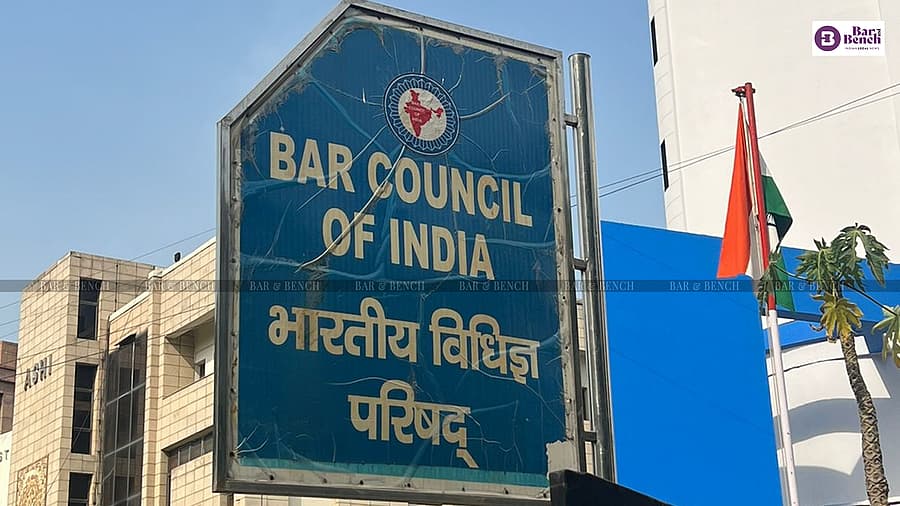
Delhi High Court: Initiates Challenge to BCI Internship Circular
Summary
- The Delhi High Court is reviewing a challenge to a 2014 Bar Council of India circular.
- The circular mandates that law students can only undertake internships during college vacation periods.
- Petitioner Aryan Pathak was denied an internship at Saikrishna & Associates because it fell during his academic semester.
- Pathak argues the BCI circular is invalid as it introduces new educational standards without required consultation under the Advocates’ Act.
- The student seeks a declaration allowing universities to permit internships of up to four continuous weeks during academic sessions.
The Challenge Unfolds
He asserts that the BCI circular should be invalidated because it effectively establishes a new standard for legal education without engaging in the statutory consultation process required with universities under the Advocates’ Act.
The Delhi High Court has initiated proceedings in a significant legal challenge brought by a law student against a Bar Council of India (BCI) directive concerning student internships. Justice Jasmeet Singh, on November 25, issued notices to the Bar Council of India, Guru Gobind Singh Indraprastha University, and Maharaja Surajmal Institute, requesting their responses to the petition. The case, formally titled Aryan Pathak Vs Bar Council of India & Ors, centers on a 2014 BCI circular that restricts law students from undertaking internships to periods coinciding with college vacations.
The petitioner, Aryan Pathak, a student enrolled at Maharaja Surajmal Institute, brought the matter before the court after his institution denied him permission to pursue an internship opportunity. Pathak had secured a position at the law firm Saikrishna & Associates for the month of February. However, his college, citing the contentious 2014 BCI circular, informed him that he could not proceed with the internship as February falls within the academic semester, not a vacation period. This specific denial prompted Pathak to seek judicial intervention, arguing that the existing regulation unduly constrains law students' ability to gain practical experience.
Regulatory Framework Under Scrutiny
At the heart of the Delhi High Court BCI internship circular challenge is the Bar Council of India's 2014 directive, which explicitly states that students pursuing an LL.B degree are permitted to undertake internships exclusively during their designated college vacation periods. Aryan Pathak's petition directly contests the legality and practicality of this rule, particularly in light of his own experience attempting to intern during an active academic session. He contends that this BCI circular 2014 law student internship rule fundamentally alters the landscape of legal education without proper procedural adherence.
Pathak's legal arguments are multi-faceted. He asserts that the BCI circular should be invalidated because it effectively establishes a new standard for legal education without engaging in the statutory consultation process required with universities under the Advocates’ Act. This lack of consultation, he argues, renders the circular procedurally flawed and beyond the BCI's authority in this specific manner. Furthermore, the petitioner has requested that the court direct the BCI to formulate new guidelines for internship timings, emphasizing the necessity of involving both universities and State Bar Councils in this consultative process to ensure a more balanced and practical approach to law student internship rules India.
Seeking Greater Flexibility
Beyond challenging the existing BCI circular, Aryan Pathak's plea before the Delhi High Court also seeks specific declarations that would grant greater autonomy and flexibility to educational institutions and students. He has requested a judicial declaration affirming that a university possesses the authority to permit its students to engage in an internship for a continuous duration of up to four weeks even during an ongoing academic session. This proposed allowance directly addresses the predicament faced by students like Pathak, who secure valuable opportunities that do not align with traditional vacation schedules.
The outcome of this Delhi High Court BCI internship circular challenge could significantly reshape the framework governing law student internships across India. A ruling in favor of Pathak could lead to a more adaptable system for practical legal training, potentially impacting how institutions like Guru Gobind Singh Indraprastha University internship programs are structured and how students manage their academic and professional development. The case highlights a tension between regulatory uniformity and the practical needs of students seeking to gain essential experience in the legal field, underscoring the importance of a consultative approach in policy-making that affects both academic calendars and career preparation.
Practical Implications
Law firms and legal educators should monitor the Delhi High Court's decision on the BCI's 2014 internship circular, as a ruling against the BCI could lead to greater flexibility in when law students can undertake internships, potentially impacting recruitment strategies and academic calendars.
Source
How does this affect you?
Get an AI analysis of this article grounded in your jurisdictions, practice areas, and any policy documents you've uploaded to Wansom.
Finish Reading the Full Story and the Expert Analysis.
Get the latest legal & regulatory intelligence in India
Wansom is AI and can make mistakes.