
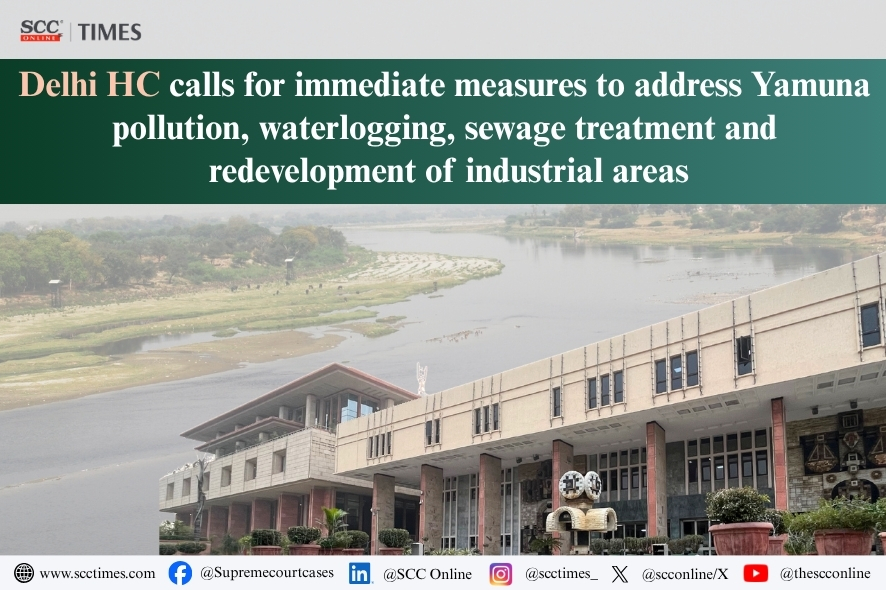
Delhi HC: Industrial Redevelopment Key to Curb Yamuna Pollution
Summary
- The Delhi High Court emphasized the essentiality of redeveloping non-conforming industrial areas.
- This redevelopment is crucial for providing proper infrastructure.
- It is also necessary for eliminating waterlogging.
- A key goal is preventing untreated sewage from entering the Yamuna river.
Judicial Mandate for Urban Renewal
The High Court explicitly stated that these initiatives are essential not merely for establishing adequate infrastructure, but also for addressing severe environmental issues.
The Delhi High Court has recently underscored the critical necessity of redeveloping specific industrial zones within the capital. This judicial emphasis highlights a pressing need to transform non-conforming industrial areas, signaling a significant push towards urban environmental improvement and infrastructure upgrades. The court's pronouncement reflects a growing concern over the environmental impact of unregulated industrial activity and the broader challenges of urban development in Delhi.
Central to the court's declaration is the multi-faceted benefit anticipated from such redevelopment efforts. The High Court explicitly stated that these initiatives are essential not merely for establishing adequate infrastructure, but also for addressing severe environmental issues. Specifically, the court pointed to the elimination of persistent waterlogging and, critically, the prevention of untreated sewage discharge into the Yamuna river as key objectives. This comprehensive approach indicates a judicial recognition that infrastructure, environmental protection, and public health are intrinsically linked in the context of Delhi's industrial landscape.
Confronting Delhi's Environmental Challenges
The court's focus on Delhi industrial area redevelopment is set against a backdrop of long-standing environmental concerns, particularly regarding the Yamuna river. The persistent issue of Yamuna pollution has been a subject of public and judicial scrutiny for decades, with industrial effluents and municipal waste often cited as major contributors. The Delhi High Court's recent statement reinforces the urgency of tackling these sources of pollution directly, particularly from areas that have historically operated without adequate environmental controls.
The concept of non-conforming industrial areas Delhi refers to zones where industrial activities may not align with current zoning regulations or where infrastructure has failed to keep pace with industrial growth. These areas often lack proper waste treatment facilities, leading to direct discharge of pollutants. The court's emphasis on their redevelopment is a clear signal that such environmental non-compliance will no longer be tolerated, pushing for a systemic overhaul that includes robust Yamuna river sewage treatment solutions and improved environmental compliance India standards.
Broad Implications for Industry and Governance
The Delhi High Court Yamuna pollution emphasis carries substantial implications for industrial operators and urban planners alike. For businesses situated in these non-conforming zones, the ruling foreshadows increased regulatory scrutiny and potential mandates for operational changes. The court's clear articulation of the need for proper infrastructure and sewage treatment suggests that industries will be expected to upgrade their facilities and ensure their waste streams are managed responsibly, aligning with stricter environmental norms.
This judicial intervention underscores a heightened enforcement environment, where the judiciary is actively pushing for concrete actions to mitigate environmental damage. The redevelopment initiative, driven by the court's insistence, aims to integrate these industrial areas into a more sustainable urban framework. This will likely involve significant investment in infrastructure, including advanced sewage treatment plants and improved drainage systems, ultimately impacting the operational costs and compliance requirements for industries within these redeveloped zones.
Practical Implications
Lawyers advising industrial clients in Delhi's non-conforming areas should prepare for increased regulatory scrutiny and potential compliance mandates related to environmental standards, sewage treatment, and infrastructure redevelopment. This ruling signals a heightened enforcement environment and the need for proactive measures to avoid penalties.
Source
How does this affect you?
Get an AI analysis of this article grounded in your jurisdictions, practice areas, and any policy documents you've uploaded to Wansom.
Finish this article free. Just your email for instant unlock.
Wansom is AI and can make mistakes.