
Delhi HC: Orders Savda Ghevra Slum Relocation for 717 Families
Summary
- The Delhi High Court has ordered 717 slum families near the Prime Minister's residence to relocate to Savda Ghevra within six weeks.
- The court upheld the eviction process, ruling that the Central Government has power to remove jhuggis under the DUSIB Act, and relocation beyond 5km is permissible in exceptional circumstances with DUSIB approval.
- A monitoring committee has been established to ensure the rehabilitation is conducted with dignity, with the government committing to cover all costs and provide extensive facilities.
- The ruling emphasizes the constitutional right to dignified rehabilitation, citing precedents like Sudama Singh and Sukanya Shantha.
- The court warned that any non-compliance with the promised facilities and dignified relocation would be viewed seriously.
Delhi High Court Upholds Eviction, Mandates Relocation
when a family living in a Jhuggi is forcibly evicted, each member loses a 'bundle' of rights - the right to livelihood, to shelter, to health, to education, to access to civic amenities and public transport and above all, the right to live with dignity.
The Delhi High Court has directed approximately 717 families residing in three slum clusters situated near the Prime Minister's residence and Delhi Race Course to vacate their homes within six weeks. This significant ruling mandates their relocation to flats in Savda Ghevra, a decision that comes after the court dismissed challenges to the eviction and rehabilitation process initiated by the Central Government. The affected settlements, known as Bhai Ram Camp, Masjid Camp, and DID Colony, are located on land managed by the Land and Development Office (L&DO) under the Ministry of Housing and Urban Affairs, adjacent to areas occupied by the Army and Air Force.
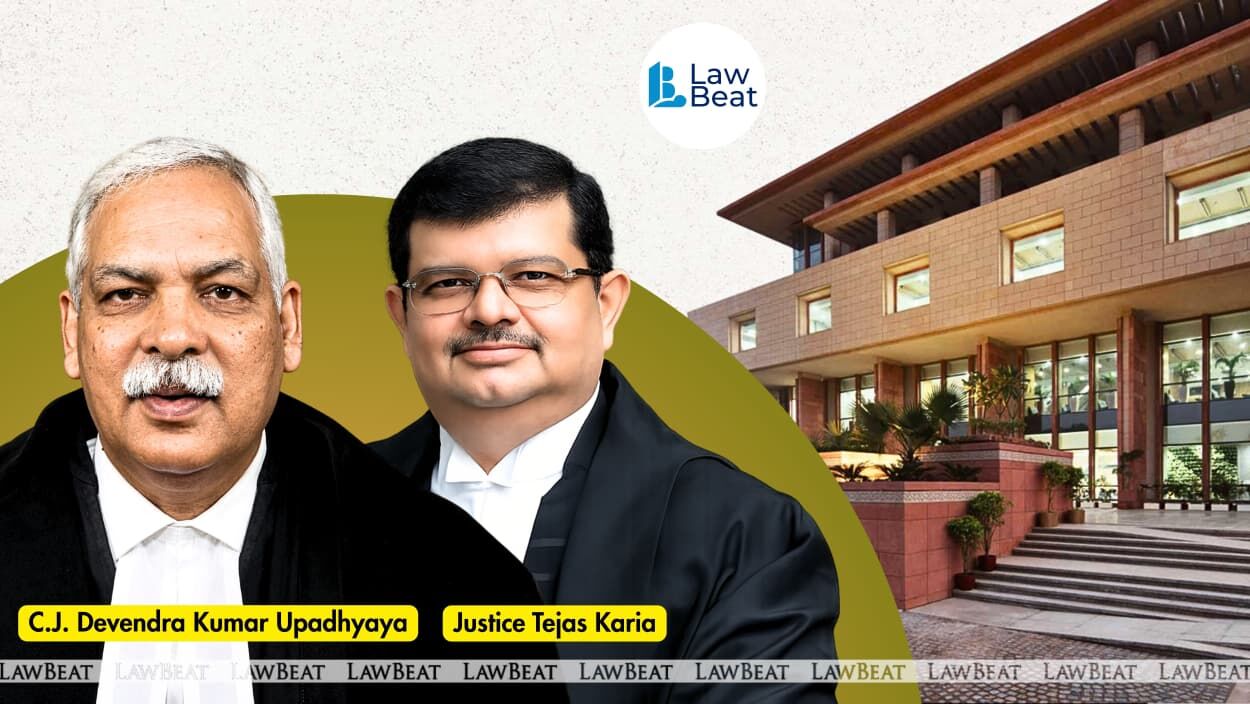
A Division Bench, comprising Chief Justice Devendra Kumar Upadhyaya and Justice Tejas Karia, heard intra-court appeals brought by the residents. These appeals contested an earlier judgment from a Single Judge, which had upheld the eviction notices but stipulated that authorities must ensure civic amenities and honor a waiver of beneficiary contributions before the residents were displaced. The current ruling affirms the legality of the eviction while placing a strong emphasis on the manner of rehabilitation.
To oversee the relocation, the court has established a monitoring committee. This committee's primary role is to ensure that the process is conducted with due regard for the dignity of the residents, reflecting the court's commitment to humane displacement. The directive for the Delhi HC Savda Ghevra slum relocation marks a critical juncture for urban development and slum rehabilitation efforts in the capital.
Legal Basis for Eviction and Relocation
Residents, represented by Senior Advocate N. Hariharan and his team, had argued that the entire eviction process was unlawful. Their primary contention was that the Delhi Urban Shelter Improvement Board (DUSIB), not the Land and Development Office, should have been the nodal agency under the Delhi Slum & JJ Rehabilitation and Relocation Policy, 2015. They also challenged the proposed relocation to Savda Ghevra, situated 40-45 kilometers away, asserting that it violated the policy's norm of in-situ rehabilitation within a five-kilometer radius.
The High Court, however, rejected these arguments. It clarified that the 2015 Rehabilitation Policy explicitly permits relocation beyond the five-kilometer limit in "exceptional circumstances," provided DUSIB grants prior approval. The court noted that DUSIB had formally approved the Savda Ghevra site on April 9, 2026. Furthermore, the bench ruled that Section 10(1) of the DUSIB Act does not diminish the Central Government's authority to remove jhuggis when necessary, affirming the L&DO's role as the land-owning agency acting on behalf of the Government of India. This interpretation is crucial for understanding the scope of the Central Government's power in Delhi High Court jhuggi eviction cases.
Upholding the Right to Dignified Rehabilitation
Despite dismissing the appeals on the question of legality, the court dedicated a substantial portion of its judgment to the constitutional right to dignified rehabilitation India. It drew upon established legal precedents, including the landmark cases of Sudama Singh v. Government of Delhi and Ajay Maken v. Union of India, to underscore the profound impact of forced displacement. The bench quoted from Sudama Singh, highlighting that "when a family living in a Jhuggi is forcibly evicted, each member loses a 'bundle' of rights - the right to livelihood, to shelter, to health, to education, to access to civic amenities and public transport and above all, the right to live with dignity."
The court further reinforced this principle by citing the Supreme Court's ruling in Sukanya Shantha v. Union of India, which posits that "dignity forms a part of the basic structure of the Constitution." To ensure a dignified transition, Additional Solicitor General Chetan Sharma, representing the Union, along with DUSIB's counsel Anuj Chaturvedi, informed the court of significant government commitments. These include waiving the beneficiary contribution and bearing the full cost of rehabilitating all 717 units, regardless of their eligibility status under the policy.
Authorities also provided undertakings regarding facilities at Savda Ghevra. These include free Delhi Metro travel for one family member for a year, guaranteed admission for children in nearby government and MCD schools, provision of ceiling fans and induction cookware for each household, and the establishment of a round-the-clock camp office to address any complaints. The court issued a stern warning, stating that "Any defiance or non-compliance thereof shall be viewed seriously by the Court," thereby emphasizing the critical importance of these commitments for the Bhai Ram Camp Masjid Camp relocation.
Broader Implications for Urban Development
This ruling carries significant implications for urban development and slum rehabilitation policies across Delhi. It clarifies the Central Government's authority in initiating jhuggi evictions under the DUSIB Act, particularly through its interpretation of Section 10(1) of the DUSIB Act. The judgment also provides a precedent for allowing relocation beyond the standard five-kilometer radius in "exceptional circumstances," as long as it aligns with the Delhi Slum & JJ Rehabilitation Policy 2015 and receives DUSIB's prior approval.
The court's robust emphasis on the right to dignified rehabilitation, coupled with its establishment of a monitoring committee and explicit warning against non-compliance, sets a high bar for future relocation projects. It underscores that while evictions may be deemed legal, the state's responsibility to ensure humane and dignified resettlement remains paramount. This decision will likely influence how future challenges to eviction and relocation processes are handled, demanding meticulous planning and transparent execution from authorities.
Practical Implications
Lawyers advising on urban development, land disputes, or human rights in Delhi should note this ruling clarifies the Central Government's power in slum evictions under the DUSIB Act and the 2015 Rehabilitation Policy, even allowing relocation beyond 5km in exceptional circumstances. It reinforces the critical importance of dignified rehabilitation and court-monitored implementation, setting a precedent for future challenges to eviction and relocation processes.
Source
How does this affect you?
Get an AI analysis of this article grounded in your jurisdictions, practice areas, and any policy documents you've uploaded to Wansom.
Wansom is AI and can make mistakes.