
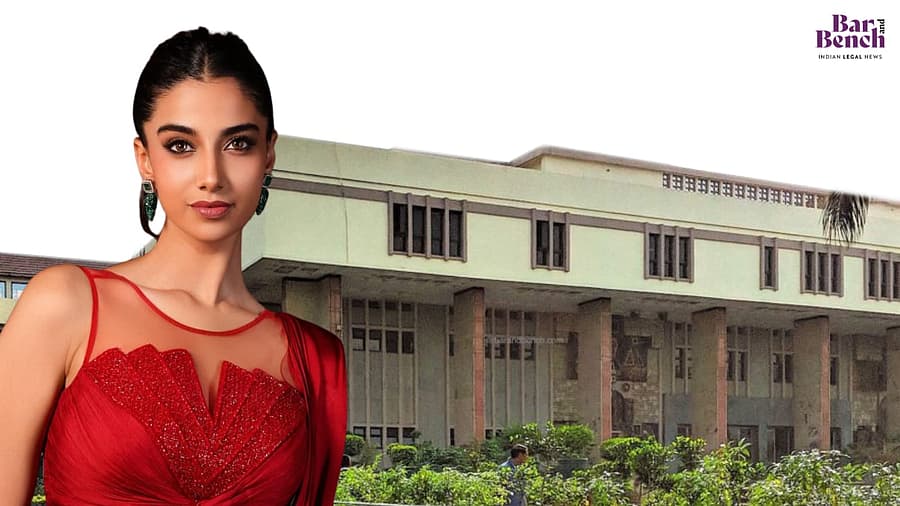
Delhi High Court: Meenakshi Chaudhary Personality Rights Injunction Scope Limited
Summary
- The Delhi High Court has indicated a clear disinclination to issue sweeping interim injunctions in cases concerning personality rights.
- Justice Anup Jairam Bhambhani presided over a suit filed by actor Meenakshi Chaudhary seeking protection for her personality rights.
- The court demanded specific demonstration of exploitation, questioning the extent of *ex parte* injunctions for public personalities.
- Counsel for the actor presented evidence of unauthorized obscene content and websites monetizing her images.
- This ruling suggests a shift towards requiring concrete proof of harm rather than broad assertions in personality rights litigation in India.
Court Rejects Blanket Injunctions in Personality Rights Cases
The Delhi High Court has indicated a clear disinclination to issue sweeping interim injunctions in cases concerning personality rights.
The Delhi High Court recently signaled a significant shift in its approach to personality rights litigation, indicating a strong reluctance to grant broad, interim injunctions. This stance emerged during proceedings for a suit filed by actor Meenakshi Chaudhary, who sought protection for her personality rights against various online infringements. Justice Anup Jairam Bhambhani, presiding over the matter, explicitly stated his opposition to issuing sweeping injunctions in such cases, emphasizing the need for a more nuanced and evidence-based approach.
During the hearing, Justice Bhambhani acknowledged that courts could order the removal of obscene content from the internet. However, he raised critical questions regarding the appropriate scope and extent of *ex parte* injunctions, particularly when dealing with public figures. The court challenged the actor's counsel to clearly demonstrate how her personality rights were being exploited, rather than merely asserting ownership or general infringement. This directive underscores a judicial demand for specific proof of harm and exploitation.
Judicial Scrutiny on Exploitation Claims
Justice Anup Jairam Bhambhani articulated a clear distinction between possessing a photograph and holding copyright over it, stating that simply claiming a photograph belongs to someone is insufficient to establish copyright. He directly questioned the counsel, asking, "Just saying it is not enough. Just because it was your photograph does not mean you own copyright on it." This line of questioning highlights the court's intent to scrutinize the legal basis for claims, moving beyond mere assertion of identity in an image.
The court further probed the practical implications of granting overly broad injunctions, hypothetically asking if the actor desired an order for all her photos to be removed, effectively making her "disappear from the internet." This pointed inquiry from Justice Bhambhani underscored the complexities of balancing individual rights with the public nature of celebrity, and the challenges in drawing a definitive line for what constitutes permissible use versus exploitation for public personalities. The court's position suggests a cautious approach to injunctive relief, particularly when it could have far-reaching or impractical consequences.
Specific Allegations and Future Implications
In response to the court's demand for specific evidence, counsel representing Meenakshi Chaudhary presented a compilation of infringing weblinks. These links were categorized into two primary groups: the first involved unauthorized obscene or sexually explicit content featuring the actor, while the second comprised websites that were actively monetizing her photographs and videos without authorization. This detailed submission aimed to provide the concrete examples of exploitation the court had requested.
This ruling from the Delhi High Court, particularly the stance taken by Justice Anup Jairam Bhambhani, carries significant implications for India's celebrity personality rights law. It signals that public figures seeking injunctive relief against the exploitation of their image or likeness will likely need to present specific, demonstrable instances of infringement and exploitation, rather than relying on broad claims of personality rights. The court's reluctance to grant a Delhi High Court blanket injunction emphasizes a judicial preference for targeted remedies that address proven harm, thereby shaping the future landscape of personality rights enforcement in the country.
Practical Implications
Lawyers advising public figures on personality rights in India must note the Delhi High Court's reluctance to grant blanket injunctions. This ruling emphasizes the need to specifically demonstrate actual exploitation of personality rights, rather than merely asserting ownership, when seeking injunctive relief.
Source
Source: Original reporting via Live Law
How does this affect you?
Get an AI analysis of this article grounded in your jurisdictions, practice areas, and any policy documents you've uploaded to Wansom.
Finish Reading the Full Story and the Expert Analysis.
Get the latest legal & regulatory intelligence in India
Wansom is AI and can make mistakes.