
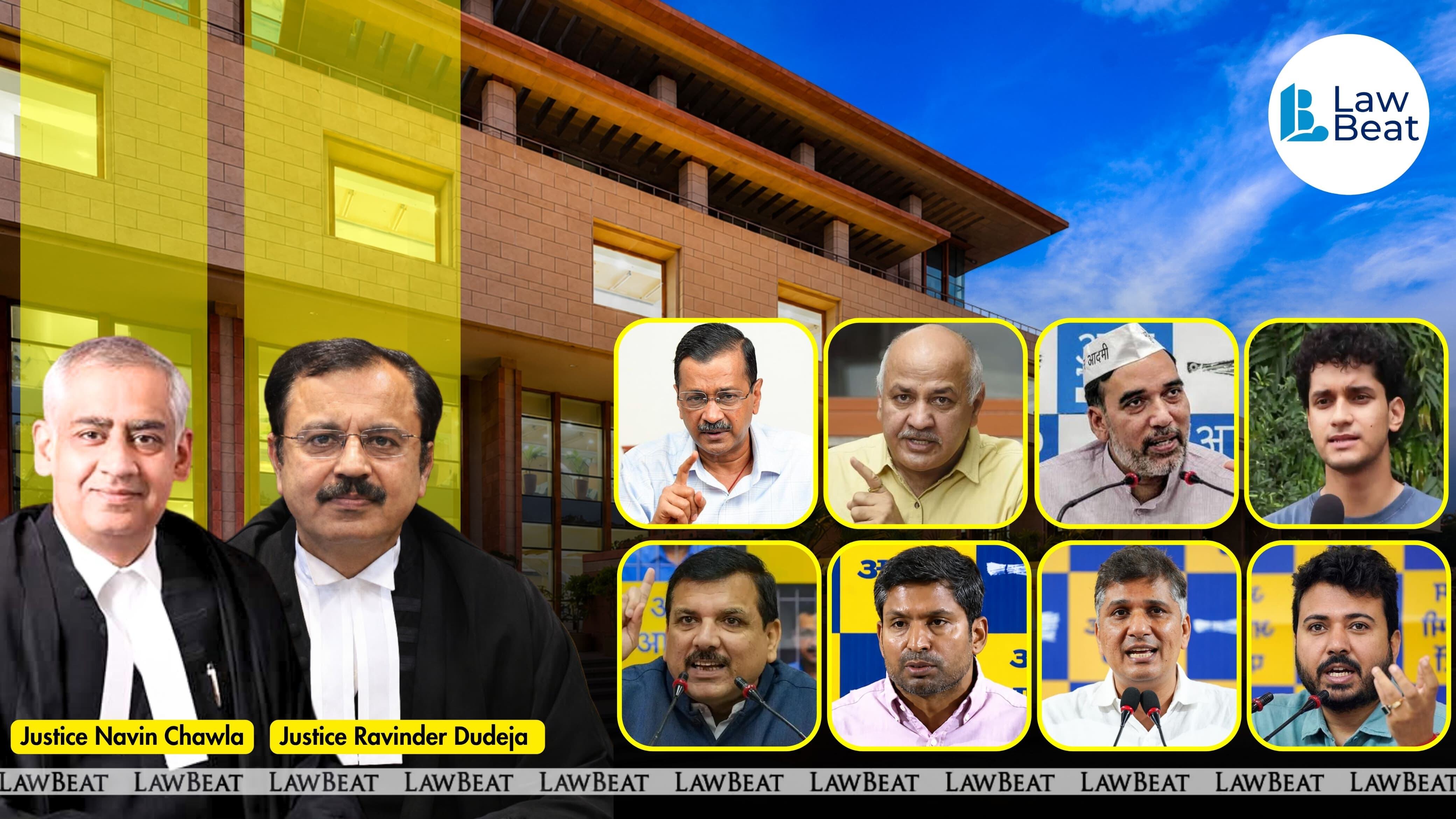
Delhi HC Grants Kejriwal, Other AAP Leaders & Saurav Das 4 Weeks To Reply In Justice Swarana Kanta Sharma Contempt Case
Summary
- The Delhi High Court granted Arvind Kejriwal and other respondents four weeks to file replies in a *suo motu* criminal contempt case.
- The contempt proceedings stem from an alleged social media campaign targeting Justice Swarana Kanta Sharma.
- Justice Sharma initiated the contempt action after rejecting a recusal application from Kejriwal, Sisodia, and Durgesh Pathak in the excise policy case.
- The court ordered fresh notice for one unserved respondent and had listed the matter for further hearing on August 4, and the case remains ongoing.
- Senior Advocate Rajdipa Behura was appointed Amicus Curiae in May to assist the court in the contempt petition.
Court Mandates Replies in Contempt Case
The court's firm rejection of the recusal application, coupled with its subsequent actions, sends a clear message that attempts to influence or discredit judges through public campaigns will be met with serious legal consequences, reinforcing the principle that the judiciary must operate free from external pressure and unwarranted attacks.
The Delhi High Court has granted a four-week period for Arvind Kejriwal and several other respondents to submit their replies in a *suo motu* criminal contempt case. This proceeding targets an alleged social media campaign directed at Justice Swarana Kanta Sharma. The Division Bench, comprising Justices Navin Chawla and Ravinder Dudeja, convened on Tuesday, commencing by confirming the representation of the various parties involved in the high-profile matter.
Among those granted time to respond are prominent Aam Aadmi Party (AAP) figures, including former Delhi Chief Minister Arvind Kejriwal, represented by Senior Advocate Vikram Chaudhari, and former Deputy Chief Minister Manish Sisodia, whose counsel is Advocate Vivek Jain. Other respondents include AAP leaders Sanjay Singh, Durgesh Pathak, Vinay Mishra, Saurabh Bhardwaj, and Gopal Rai, alongside journalist Saurav Das, represented by Advocate Jai Anant Dehadrai, and Saurabh Bhardwaj, represented by Advocate Lokesh Bhardwaj. The court has stipulated that all replies must be filed within four weeks, with an advance copy provided to the appointed Amicus Curiae.
During the proceedings, the bench identified that Respondent No. 5 had not yet received formal notice. Consequently, the court issued a directive for fresh notices to be served upon this individual by the concerned Station House Officer (SHO). Should Respondent No. 5 not be available at their last known address, the SHO is tasked with inquiring into and ascertaining their current whereabouts to ensure proper service. The Delhi High Court had scheduled the next hearing for this contempt matter on August 4, and the case remains ongoing.
Genesis of the Contempt Proceedings
The origins of these *suo motu* criminal contempt proceedings trace back to an alleged social media campaign that surfaced following a significant judicial decision. The controversy centers on alleged "defamatory and vilifying" remarks made against Justice Swarana Kanta Sharma, who was presiding over the Central Bureau of Investigation's (CBI) challenge to the discharge of Arvind Kejriwal and other accused individuals in the excise policy case. The contempt action was initiated after Justice Sharma took note of these allegations, which she perceived as an attempt to undermine judicial authority.
Prior to the initiation of contempt, Kejriwal, Sisodia, and Durgesh Pathak had sought Justice Sharma’s recusal from the excise policy case. This application was rejected by the judge on April 20, who firmly stated that a litigant could not be permitted to erode judicial authority or "sow seeds of mistrust" against the institution. It was in the aftermath of this rejection that the social media posts targeting Justice Sharma reportedly emerged, prompting her to take *suo motu* cognizance of the matter.
Beyond the social media campaign, Justice Sharma also noted other actions by the respondents, including letters penned by Kejriwal, Sisodia, and Pathak that indicated a boycott of court proceedings. Furthermore, a video released by Arvind Kejriwal, explaining the rationale behind the boycott, was also brought to the judge's attention. These collective actions formed the basis for the initiation of the contempt proceedings, leading to the current directives from the Delhi High Court.
Upholding Judicial Integrity
This procedural update in a high-profile contempt case underscores the Delhi High Court's proactive stance against alleged attempts to undermine judicial authority through social media campaigns. The *suo motu* nature of these criminal contempt proceedings highlights the judiciary's inherent power to protect its integrity and ensure the fair administration of justice, particularly when public commentary is perceived as crossing the line into vilification or defamation against a sitting judge.
The court's appointment of Senior Advocate Rajdipa Behura as Amicus Curiae in May to assist in the contempt petition further emphasizes the gravity with which the judiciary views such matters. The Amicus Curiae's role is crucial in providing impartial legal assistance to the court, ensuring a thorough and fair examination of the allegations. Notably, in May, the High Court had also issued notice to AAP leader Gopal Rai and journalist Saurav Das in connection with the contempt petition, indicating the broad scope of the court's inquiry.
Justice Swarana Kanta Sharma's decision to transfer the excise policy case to another Bench, given that Kejriwal and Sisodia are accused in the matter, further illustrates the judiciary's commitment to avoiding any perception of bias and maintaining the impartiality of proceedings. The court's firm rejection of the recusal application, coupled with its subsequent actions, sends a clear message that attempts to influence or discredit judges through public campaigns will be met with serious legal consequences, reinforcing the principle that the judiciary must operate free from external pressure and unwarranted attacks.
Practical Implications
This procedural update in a high-profile contempt case underscores the Delhi High Court's proactive stance against alleged attempts to undermine judicial authority through social media campaigns. Lawyers advising public figures or clients engaged in litigation must be acutely aware of the serious implications of actions perceived as contemptuous, particularly regarding public commentary on judges or ongoing cases, and should counsel careful communication strategies to avoid such exposures.
Source
Source: Original reporting via Live Law
How does this affect your business?
Get an AI analysis of this article grounded in your jurisdictions, practice areas, and any policy documents you've uploaded to Wansom.
Wansom is AI and can make mistakes.