
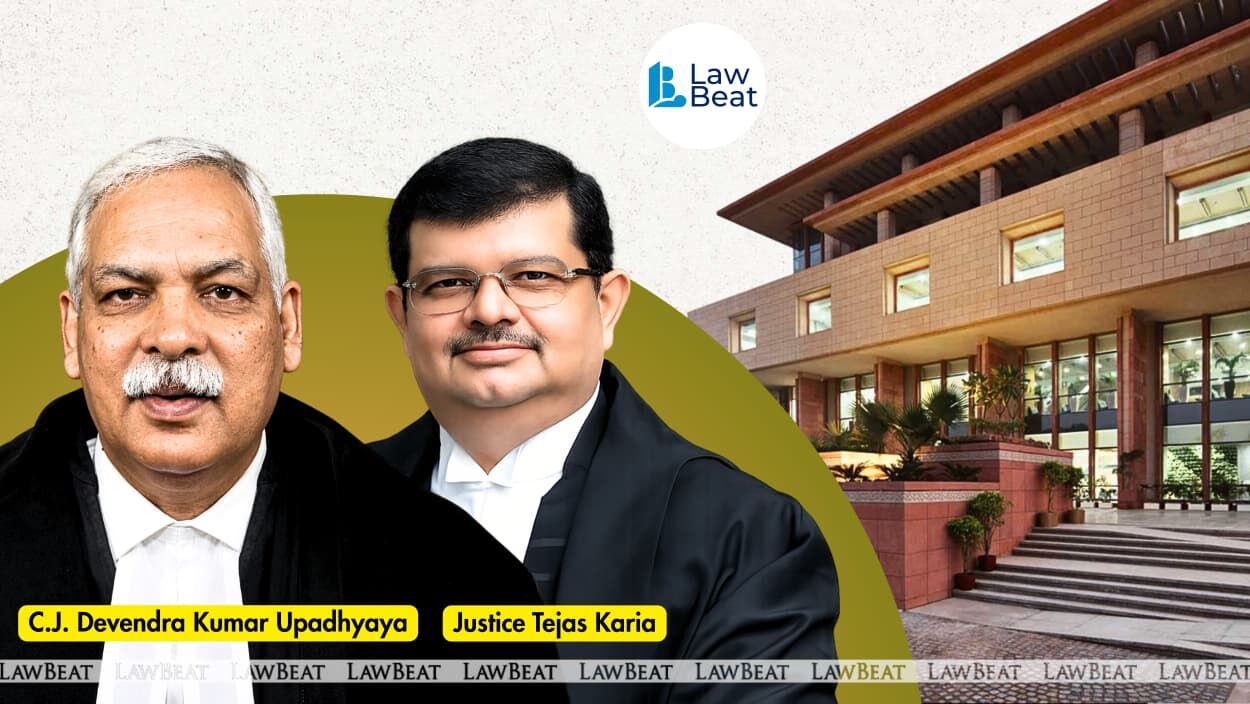
Delhi HC: Courts Cannot Create New Offenses After Parliament Omitted Section 377
Home / News updates Delhi HC: Courts Can't "Create" A New Offence To Replace Section 377 After Parliament Omitted It From BNS X Section 377's Removal from BNS Not Court's To Fix, Says Delhi HC Delhi HC says it cannot judicially create a new offence to replace the dropped Section 377, telling PIL petitioners that filling the BNS gender-neutrality gap left by IPC's exit is Parliament's job, not the court's. The Delhi High Court on Wednesday made it clear that courts cannot step in and "create" a fresh criminal offence to fill the gap left behind by the removal of Section 377 of the Indian Penal Code from the Bharatiya Nyaya Sanhita. A Division Bench of Chief Justice Devendra Kumar Upadhyaya and Justice Tejas Karia said defining a new offence was purely a matter for Parliament, and not something the judiciary could step into, while hearing a public interest litigation seeking a gender-neutral reading of sexual offence provisions under the new criminal code. "We understand your anxiety, but these are legislative policy matters. The offence has to be described. Which is the authority that can do it? It's the legislature. What can we do about it? Can we provide something which is not provided for by the legislature? Can we by judicial fiat create an offence?" the Bench asked the petitioners. Section 377 of the IPC had criminalised non-consensual intercourse "against the order of nature" involving a man, woman or animal, carrying a punishment of up to ten years. For decades, it was the only provision that covered non-consensual sexual acts where the victim was a man, a transgender person, or was subjected to bestiality. After the Supreme Court's 2018 verdict in Navtej Singh Johar decriminalised consensual same-sex relations between adults, Section 377 continued to apply to non-consensual acts, offences involving minors, and bestiality, effectively surviving in a narrower form even after the larger decriminalisation. That residual protection disappeared entirely when the provision was dropped altogether from the BNS, which took over from the IPC on July 1, 2024, without any replacement clause being introduced in its place. The petition before the Delhi High Court challenges the gender-specific language used in several BNS provisions dealing with rape, sexual assault, stalking and voyeurism. The petitioners argue that these provisions apply only where the accused is a man and the victim a woman, leaving men, transgender persons and third-gender individuals without equivalent legal protection, and also failing to cover cases where the accused is a woman or a transgender person. Framed this way, they contend, the current law offers no route to justice for a large category of survivors who do not fit the narrow man-woman framework that the BNS retains. They have asked the court to either read these provisions as gender-neutral or direct the central government to amend the law accordingly. The Bench, however, was unconvinced that the offences meant for women could be stretched to absorb what was earlier covered by Section 377 . "The problem which you are facing is dropping of Section 377 from BNS. Now, to reach that, you are targeting the offences against women... You can't use Article 14 to reach the same destination by targeting offences against them because those offences were always there," the Bench observed. During Wednesday's hearing, counsel for the petitioners pressed the Bench on what recourse would exist today if a man or an animal were subjected to a similar act, suggesting that the police would be forced to fall back on weaker provisions meant only for simple hurt. The petitioners have described the resulting vacuum in the law as a "constitutional nightmare." The plea has been filed by advocates Shubhi Srivastava, Ajay Kumar Singh, Prince Kumar, N Zubemo Lotha and Garima Singh, along with former civil servant Ashok Kumar Singh. After a brief hearing, the Court tagged the petition together with other pending pleas raising simil
How does this affect you?
Get an AI analysis of this article grounded in your jurisdictions, practice areas, and any policy documents you've uploaded to Wansom.
Wansom is AI and can make mistakes.