
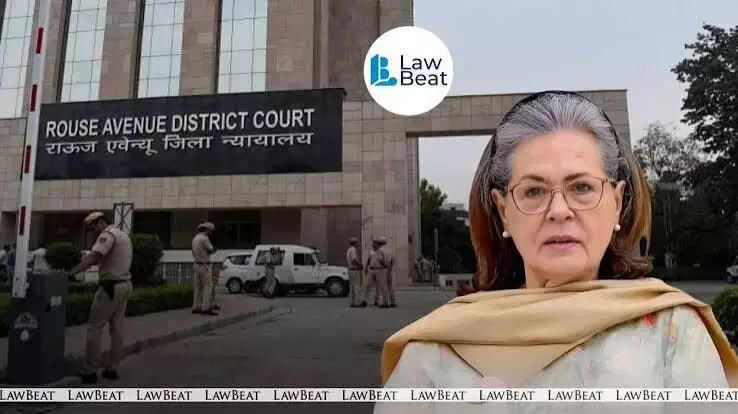
Delhi Court Directs Police on Sonia Gandhi 1980 Voter List FIR Plea
Summary
- A Delhi Court has requested an Action Taken Report from the police regarding a complaint seeking an FIR against Sonia Gandhi over her alleged 1980 voter list entry.
- The complaint by Vikas Tripathi claims Sonia Gandhi was on the New Delhi electoral roll in 1980 using forged documents, three years before she became an Indian citizen in 1983.
- The case was remanded by a Sessions Court after an earlier magisterial refusal to direct an FIR was deemed 'non-speaking' and lacking sufficient reasons.
- The current proceedings are guided by Section 175(3) of the Bharatiya Nagarik Suraksha Sanhita (BNSS), which requires a magistrate to conduct an inquiry and consider police submissions before ordering an investigation.
- The next hearing in the Rouse Avenue Courts for this matter is scheduled for November 28.
Court Orders Police Report in Voter List Dispute
This procedural shift, governed by Section 175(3) of the Bharatiya Nagarik Suraksha Sanhita, now mandates that magistrates conduct an inquiry and consider police submissions before directing an investigation, a significant departure from previous norms.
A Delhi Court has recently directed the Delhi Police to submit an Action Taken Report (ATR) concerning a complaint that seeks the registration of a First Information Report (FIR) against Congress leader Sonia Gandhi. The core of the complaint alleges that Ms. Gandhi's name was unlawfully entered into the electoral roll for the New Delhi constituency in 1980, utilizing forged documents. This occurred three years prior to her obtaining Indian citizenship in 1983, according to the complainant.
The complaint, filed by Vikas Tripathi, asserts that Ms. Gandhi's name appeared on the 1980 electoral roll despite her not being an Indian citizen at that time. While her name was reportedly removed from the roll in 1982, it was subsequently re-entered in 1983. Mr. Tripathi's counsel is pressing for a Sonia Gandhi 1980 voter list FIR, contending that the initial 1980 inclusion was facilitated through fraudulent means. Additional Chief Judicial Magistrate (ACJM) Vinod Joshi of the Rouse Avenue Courts issued this directive, with the next hearing scheduled for November 28.
Procedural History and Judicial Scrutiny
The current directive from ACJM Joshi follows a remand order from the Sessions Court. Initially, a magisterial court had declined to order the registration of an FIR in this Sonia Gandhi electoral roll case, reasoning that entertaining the plea would infringe upon the jurisdiction of the Election Commission of India. Furthermore, the court found the evidence presented to be insufficient, describing it as "mere bald assertions, unaccompanied by the essential particulars required to attract the statutory elements of cheating or forgery," and noted the complainant's reliance on a photocopy of an uncertified 1980 electoral roll extract.
Mr. Tripathi challenged this initial refusal before the Sessions Court. Special Judge Vishal Gogne subsequently set aside the magisterial order, characterizing it as a "complete non-speaking order, lacking appropriate reasons." However, the Sessions Court refrained from deciding the FIR plea itself, asserting that it could not assume the role of the ACJM to consider a request for an FIR under Section 175(3) of the Bharatiya Nagarik Suraksha Sanhita (BNSS). The matter was therefore remanded back to the ACJM, with instructions to issue a reasoned order after hearing all parties, conducting an inquiry, and considering input from the police officer concerned. It is also noted that in December 2025, a Sessions court had issued notice to Ms. Gandhi in a revision petition, and previously on September 11, 2025, a Delhi Court had dismissed a criminal complaint seeking an FIR against her over the same alleged 1980 electoral roll inclusion.
Evolving Standards for FIR Registration
This case highlights significant procedural changes introduced by Section 175(3) of the Bharatiya Nagarik Suraksha Sanhita (BNSS), which governs the registration of a Delhi Court police report. Unlike its predecessor, Section 156(3) of the Code of Criminal Procedure, the BNSS provision mandates a more rigorous process before an investigation can be ordered. This procedural shift, governed by Section 175(3) of the Bharatiya Nagarik Suraksha Sanhita, now mandates that magistrates conduct an inquiry and consider police submissions before directing an investigation, a significant departure from previous norms.
Under the new framework, an application seeking an investigation must be supported by an affidavit. The magistrate is empowered to conduct any necessary inquiry and must consider the submissions made by the police officer involved. This enhanced role for the magistrate means that initial applications for an FIR must be more robust and substantiated with stronger evidence. The current action by ACJM Vinod Joshi of the Rouse Avenue Courts, seeking an Action Taken Report from the Delhi Police, directly reflects the implementation of these new requirements under BNSS Section 175(3) FIR.
Practical Implications
This case highlights the procedural changes under Section 175(3) of the Bharatiya Nagarik Suraksha Sanhita (BNSS) regarding FIR registration. Lawyers must note the magistrate's enhanced role in conducting inquiries and considering police submissions before ordering an investigation, requiring more robust initial applications and evidence compared to the previous Section 156(3) CrPC.
Source
How does this affect you?
Get an AI analysis of this article grounded in your jurisdictions, practice areas, and any policy documents you've uploaded to Wansom.
Finish Reading the Full Story and the Expert Analysis.
Get the latest legal & regulatory intelligence in India
Wansom is AI and can make mistakes.