
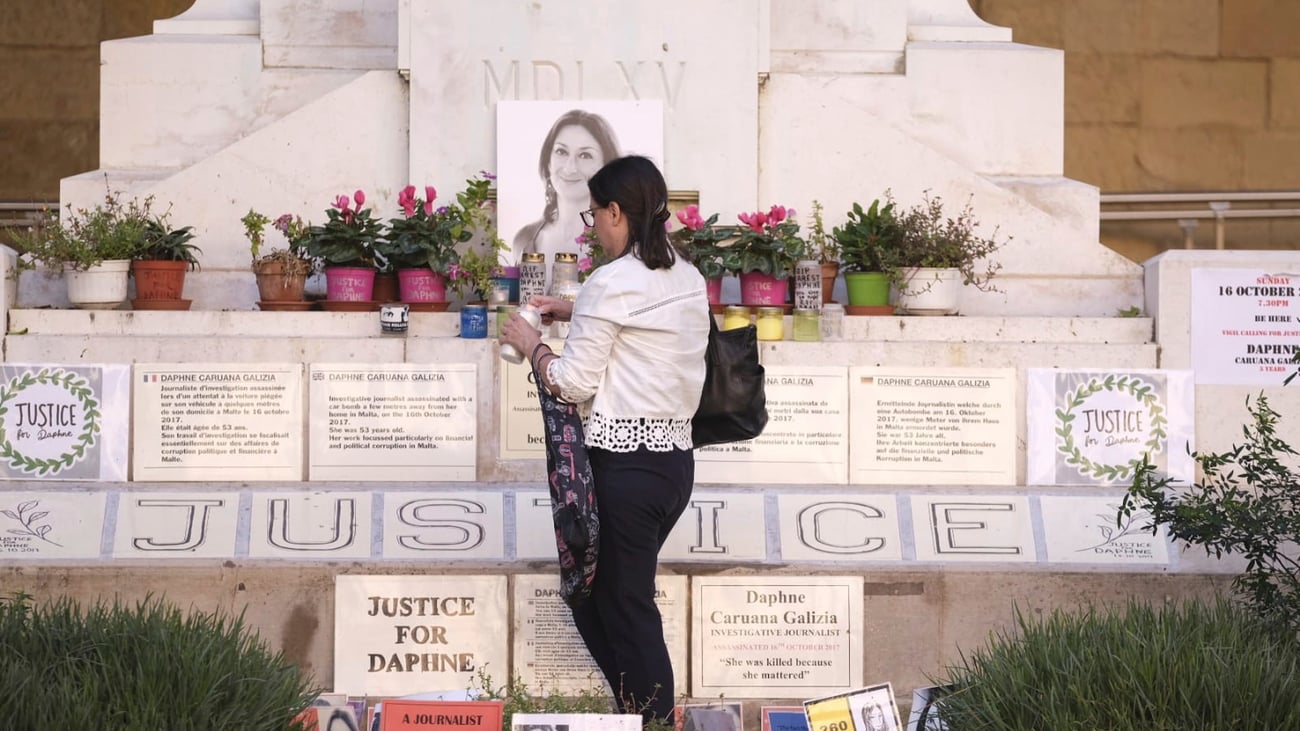
ECHR: Degiorgio Brothers ECHR Defense Rights Claims Dismissed
Summary
- The European Court of Human Rights rejected appeals from George and Alfred Degiorgio, upholding their 40-year sentences for the murder of Daphne Caruana Galizia.
- The brothers argued their fair trial rights were violated due to unchosen lawyers and insufficient time to prepare their defense.
- The ECHR found the appointment of legal aid justified and noted the brothers' prior knowledge of evidence and the involvement of two defense lawyers.
- The court concluded that the plea bargain was voluntary, citing judicial warnings and medical assessments.
- A legal expert questioned the ECHR's reasoning on defense preparation time, arguing that prior knowledge by the accused does not equate to new counsel's readiness.
ECHR Upholds Convictions in Caruana Galizia Murder
The ECHR rejected the Degiorgio brothers' arguments, finding that the appointment of legal aid lawyers was justified, particularly after other counsel had declined the case.
The European Court of Human Rights (ECHR) has dismissed claims by brothers George and Alfred Degiorgio, who were convicted of the 2017 murder of Maltese journalist Daphne Caruana Galizia. The ruling leaves the brothers to continue serving their 40-year prison sentences, which they received after admitting to the crime. Their applications to the Strasbourg court contended that Malta had violated their fair trial rights, specifically citing issues with their legal representation and the limited time provided for defense preparation.
The high-profile case revolves around the assassination of Caruana Galizia, a 53-year-old investigative journalist known for exposing corruption among Malta's political and business elite, including revelations from the Panama Papers. She was killed by a remotely detonated car bomb near her home on October 16, 2017. The Degiorgio brothers were among five individuals implicated in the plot, with Alfred planting the explosive device and George detonating it remotely. Their accomplice, Vincent Muscat, also faced conviction.
Defense Rights and Preparation Time Challenged
The core of the Degiorgio brothers' ECHR defense rights challenge centered on the circumstances surrounding their legal representation. Their original lawyer withdrew in August 2022, just weeks before their trial was set to begin. Court-appointed replacements were then tasked with reviewing an extensive body of evidence, comprising over 11,000 pages and four gigabytes of digital material. These new lawyers twice sought additional time for preparation, arguing that the volume of evidence, combined with their existing caseloads, made it impossible to adequately examine all materials.
Despite their pleas of not guilty on the morning of October 14, 2022, the brothers ultimately accepted a plea bargain later that same day, resulting in their 40-year sentences. Subsequent legal avenues, including a criminal appeal in 2023 and a constitutional challenge in April 2025, also proved unsuccessful. The brothers then brought their case to the European Court of Human Rights, arguing that the appointment of lawyers they had not chosen and the insufficient preparation period amounted to a denial of a fair trial under Maltese law.
The ECHR's Rationale for Dismissal
The ECHR rejected the Degiorgio brothers' arguments, finding that the appointment of legal aid lawyers was justified, particularly after other counsel had declined the case. The court determined that the brothers' personal preferences for legal representation did not override the necessity of maintaining the progression of the prosecution and safeguarding the interests of other affected parties. While acknowledging that a preparation period of just over 40 days might appear brief for such a complex case, the court highlighted that two lawyers, rather than one, had been assigned to assist the applicants, who faced identical charges and facts.
Crucially, the ECHR noted that the brothers were already familiar with the prosecution's evidence, having previously explored a plea bargain with their former lawyer. The court also considered that a trial, which was anticipated to span several days, would have afforded further opportunities for defense preparation. Regarding the voluntariness of their pleas, the ECHR concluded that the timetable did not coerce the brothers into involuntary admissions. This conclusion was supported by evidence of medical and psychiatric assessments, warnings issued by the trial judge, repeated confirmations of their pleas, and a subsequent review by the national courts. Although the brothers did not independently contest the voluntariness of their pleas in Strasbourg, the ECHR examined the issue and found no basis to question the official trial record, as no evidence was presented to substantiate claims of pressure or Alfred's alleged near-unconsciousness. Furthermore, the court observed that given their ages, 60 and 58, life imprisonment would likely not have resulted in a substantially longer period of incarceration than their agreed-upon 40-year sentences.
Legal Commentary on Fair Trial Standards
The European Court of Human Rights Degiorgio ruling has drawn commentary from legal experts regarding its implications for fair trial rights, particularly concerning legal aid and defense preparation. Sarah Ciliberti, a criminal law specialist based in Malta, acknowledged the defensibility of the outcome but raised questions about the ECHR's reasoning concerning preparation time. She emphasized that an accused person's prior exposure to evidence is not equivalent to newly appointed counsel having adequate time to master the material and construct an effective defense strategy.
Ciliberti also expressed concern over the court's approach of considering preparation during the trial as a substitute for being fully ready beforehand. She pointed to a potential circular argument, where the very pleas made by the brothers were used to counter their complaints about the conditions that allegedly prompted those pleas. Ciliberti cautioned against interpreting the decision as a general endorsement of a 40-day preparation period, stressing that the outcome was heavily dependent on the specific safeguards surrounding these particular plea agreements. She suggested that comparing sentence lengths might have understated the pressure faced by the defendants when confronting a trial with lawyers who had openly declared their unpreparedness.
Practical Implications
This ECHR ruling clarifies the court's interpretation of fair trial rights regarding legal aid appointment and defense preparation time, particularly where defendants have prior knowledge of evidence or engage in plea negotiations. Lawyers should note the ECHR's emphasis on specific case safeguards over a rigid minimum preparation period, impacting how claims of insufficient legal representation are assessed.
Source
How does this affect you?
Get an AI analysis of this article grounded in your jurisdictions, practice areas, and any policy documents you've uploaded to Wansom.
Finish Reading the Full Story and the Expert Analysis.
Get the latest legal & regulatory intelligence in United States
Wansom is AI and can make mistakes.