
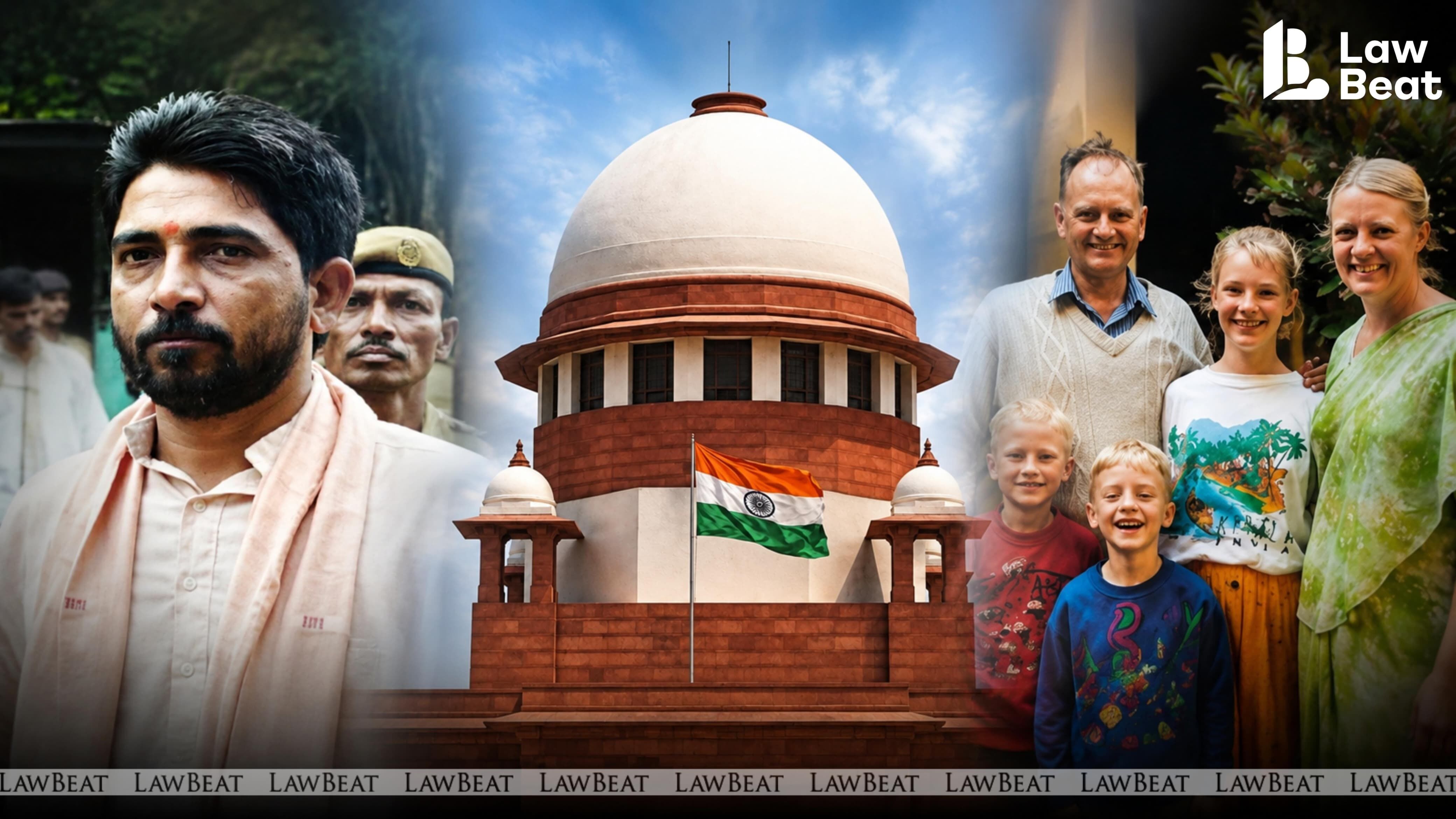
Supreme Court: Dara Singh Remission Plea Amendment Allowed After Odisha Rejection
Summary
- The Supreme Court permitted Ravindra Pal, also known as Dara Singh, to amend his remission plea after the Odisha government formally rejected his request on August 31, 2026.
- Dara Singh, a convict in the 1999 Graham Staines murder case, sought premature release under the Odisha Premature Release Policy, 2022, citing over 26 years served and good conduct.
- The Supreme Court had previously expressed strong dissatisfaction with the Odisha government's delays in deciding the remission plea, which had been pending for over two years.
- Singh's legal team has been granted two weeks to file the amendment application to challenge the rejection, with the matter scheduled for further hearing in three weeks.
- Five prior Sentence Review Committees had reportedly rejected Singh's applications for premature release before the latest formal rejection.
What Happened
The Supreme Court's willingness to allow an amendment to challenge the Odisha government remission rejection sends a clear signal regarding its expectations for timely and decisive action from state authorities on premature release applications.
The Supreme Court of India has granted permission to Ravindra Pal, also known as Dara Singh, a convict in the 1999 Graham Staines murder case, to amend his petition seeking remission. This development follows the Odisha government's formal rejection of his plea for premature release, communicated in an order dated August 31, 2026. A bench comprising Justices Manoj Misra and Vijay Bishnoi acknowledged the state's decision and directed that a copy of the rejection order be provided to Singh's legal counsel.
The Court's directive allows Singh's legal team two weeks to file an amendment application, enabling them to challenge the Odisha government's decision on appropriate legal grounds. The matter is now scheduled to be heard again after a period of three weeks, providing time for the necessary procedural steps. This ruling marks a significant procedural turn in the long-running legal battle over Dara Singh's remission plea Supreme Court amendment.
Court's Stance on Delays
The Supreme Court's recent decision comes after a period of evident frustration with the Odisha government's protracted handling of the remission request. During previous hearings, the bench had sharply questioned the state's repeated requests for adjournments, particularly after counsel for the state indicated that instructions were still awaited. Justice Misra had pointedly asked why the matter was being kept pending, emphasizing the need for a definitive decision from the authorities.
The Court had previously adjourned the case to August 19, 2026, specifically to allow the competent authorities to decide on the remission plea. Expressing concern over the plea's two-year pendency, Justice Misra remarked that the matter could not be allowed to "linger like this." The bench also sought clarification on the nature of "instructions" being awaited, stressing that the record should be placed before the court without unnecessary delays, highlighting its firm stance against state government inaction on such critical matters.
Grounds for Remission and State's Rejection
Ravindra Pal, the Graham Staines murder case convict, initiated his legal challenge in the Supreme Court in 2024, seeking premature release under the provisions of the Odisha Premature Release Policy, 2022. His petition asserted that he had already served over 26 years of imprisonment and maintained a record of good conduct during his incarceration, thereby fulfilling the eligibility criteria for remission. Singh's plea also invoked the principles of reformative justice and cited the Supreme Court's precedent-setting decision to grant remission to A.G. Perarivalan, a convict in the Rajiv Gandhi assassination case.
In his submissions, Singh expressed deep regret for the offenses committed more than two decades prior, attributing his actions to "youthful rage" and claiming no personal animosity towards the victims. However, the Odisha government had consistently informed the Court that the matter remained under consideration by its competent committee. Notably, Singh's application for premature release had reportedly been reviewed and rejected by five different Sentence Review Committees in the past, underscoring the state's consistent position prior to the latest formal rejection.
Why It Matters
The Supreme Court's willingness to allow an amendment to challenge the Odisha government remission rejection sends a clear signal regarding its expectations for timely and decisive action from state authorities on premature release applications. This ruling reinforces the judiciary's role in overseeing the implementation of remission policies and ensuring that state governments do not unduly delay or arbitrarily reject such pleas. The Court's insistence on a prompt decision, even if it is a rejection, indicates a commitment to procedural fairness and the right of convicts to have their applications processed efficiently.
This development could serve as a significant precedent for other individuals seeking premature release under various state policies, including the Supreme Court premature release policy guidelines. Lawyers advising clients on remission or premature release cases in India should take note of the Supreme Court's firm stance against state government delays in deciding such pleas and its willingness to allow amendments to challenge rejections. The case provides guidance on the procedural aspects and the SC's expectation for timely and decisive action from state authorities, potentially setting a precedent for similar challenges.
Practical Implications
Lawyers advising clients on remission or premature release cases in India should note the Supreme Court's firm stance against state government delays in deciding such pleas and its willingness to allow amendments to challenge rejections. This case provides guidance on the procedural aspects and the SC's expectation for timely and decisive action from state authorities, potentially setting a precedent for similar challenges.
Source
How does this affect you?
Get an AI analysis of this article grounded in your jurisdictions, practice areas, and any policy documents you've uploaded to Wansom.
Finish Reading the Full Story and the Expert Analysis.
Get the latest legal & regulatory intelligence in India
Wansom is AI and can make mistakes.