
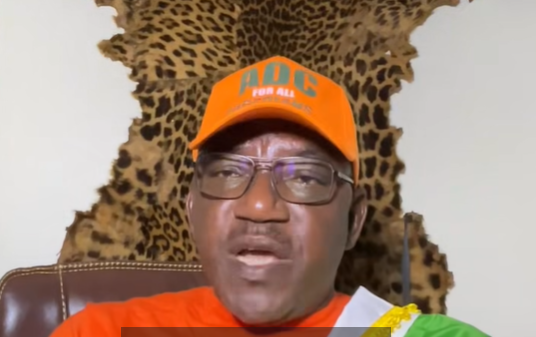
Solomon Dalung: ADC Caretaker Committee Supreme Court Case at Risk
Summary
- Solomon Dalung, an ADC chieftain, accused National Secretary Rauf Aregbesola, whose position was recently nullified by a Federal High Court judgment but is currently under appeal, of unilaterally appointing state caretaker committees.
- Dalung warned these appointments could undermine the ADC's pending Supreme Court case.
- The chieftain also stated that the actions risk jeopardizing the party's participation in the 2027 elections.
- The allegations highlight an internal dispute within the African Democratic Congress regarding governance procedures.
The Allegation Unveiled
Lawyers advising political parties or candidates should closely monitor internal party governance disputes, especially those concerning caretaker committee appointments, as such actions can lead to challenges to election eligibility and impact ongoing litigation, such as the mentioned ADC caretaker committee Supreme Court case.
Solomon Dalung, a prominent figure within the African Democratic Congress (ADC), has publicly voiced serious concerns regarding the conduct of the party's National Secretary, Rauf Aregbesola, whose position was recently nullified by a Federal High Court judgment but is currently under appeal. Dalung's allegations center on Aregbesola's purported unilateral actions in establishing caretaker committees across various states. This internal dispute within the African Democratic Congress highlights significant tensions at the leadership level.
The chieftain specifically accused Aregbesola of acting without due process or consultation in making these crucial appointments. Such actions, according to Dalung, represent a significant deviation from established party protocols and could have far-reaching consequences for the ADC's operational integrity and future political endeavors. These Solomon Dalung ADC allegations bring to light a critical challenge to the party's internal governance structure.
Legal and Electoral Ramifications
The implications of these Rauf Aregbesola caretaker committee appointments extend beyond mere internal disagreements, potentially impacting the African Democratic Congress's legal standing and electoral future. Dalung explicitly warned that the National Secretary's actions could severely compromise a critical pending case involving the party before the Supreme Court. The integrity of the party's legal arguments in this ADC caretaker committee Supreme Court case could be undermined by the manner in which these committees were formed.
Furthermore, Dalung cautioned that these unilateral appointments risk jeopardizing the party's ability to participate in the upcoming 2027 elections in Nigeria. The potential for disqualification or legal challenges to the party's candidates due to internal procedural irregularities is a significant concern. This warning underscores the vital link between internal party governance and external electoral eligibility, particularly concerning Nigeria 2027 election participation.
Internal Party Governance Under Scrutiny
The core of the African Democratic Congress internal dispute revolves around the authority and process for establishing interim leadership structures. Dalung's claims suggest a breakdown in collective decision-making, with the National Secretary allegedly bypassing established channels to install caretaker committees. This raises fundamental questions about adherence to the party's constitution and internal democratic principles.
The unilateral nature of the Rauf Aregbesola caretaker committee appointments implies a lack of consensus and potentially a disregard for the party's foundational documents. Such actions can lead to factionalism and weaken the party's overall cohesion, making it vulnerable to external challenges and internal dissent. Ensuring proper governance is paramount for any political organization aiming for stability and electoral success.
Broader Significance for Nigerian Politics
The Solomon Dalung ADC allegations serve as a stark reminder of the critical importance of strict adherence to party constitutions and electoral laws for all political parties in Nigeria. The potential for the African Democratic Congress to face exclusion from the 2027 elections due to an internal dispute over caretaker committee appointments illustrates the high stakes involved in party administration. This situation highlights how internal governance issues can directly impact a party's ability to contest elections.
Lawyers advising political parties or candidates should closely monitor internal party governance disputes, especially those concerning caretaker committee appointments, as such actions can lead to challenges to election eligibility and impact ongoing litigation, such as the mentioned ADC caretaker committee Supreme Court case. This underscores the critical need for strict adherence to party constitutions and electoral laws to prevent disqualification and ensure legitimate Nigeria 2027 election participation.
Practical Implications
Lawyers advising political parties or candidates should closely monitor internal party governance disputes, especially those concerning caretaker committee appointments, as such actions can lead to challenges to election eligibility and impact ongoing litigation, such as the mentioned Supreme Court case. This underscores the critical need for strict adherence to party constitutions and electoral laws to prevent disqualification.
Source
How does this affect you?
Get an AI analysis of this article grounded in your jurisdictions, practice areas, and any policy documents you've uploaded to Wansom.
Finish Reading the Full Story and the Expert Analysis.
Get the latest legal & regulatory intelligence in Nigeria
Wansom is AI and can make mistakes.