
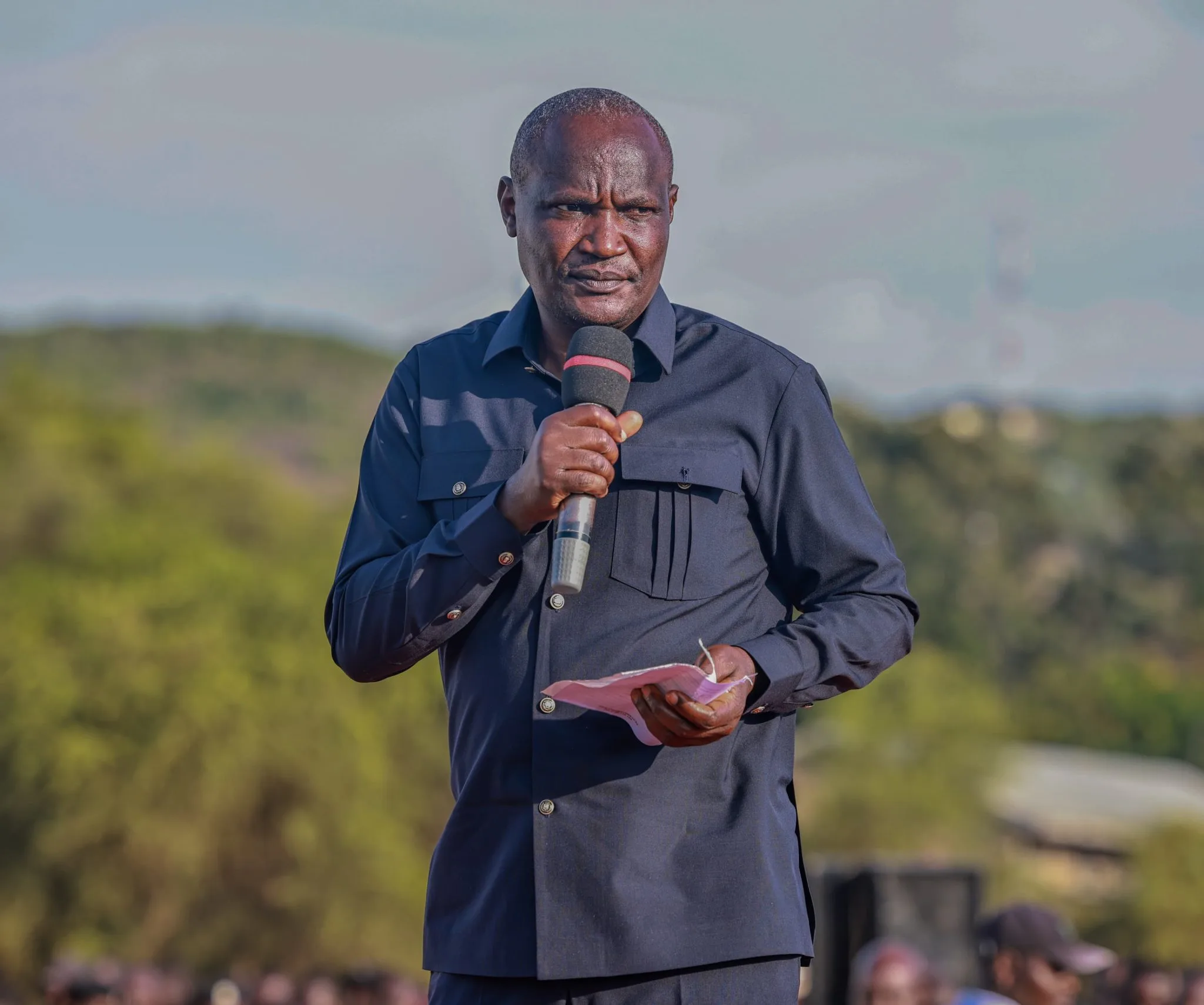
Treasury CS Mbadi: Defends Dangote Lamu Land Compensation Amid Disputes
Summary
- Treasury CS John Mbadi defended the proposed Dangote Lamu oil refinery, dismissing land compensation protests as 'primitive politics'.
- Mbadi accused land brokers and 'cartels' of making fraudulent claims, citing demands of Ksh. 30 million for plots valued at Ksh. 60,000.
- He asserted that public participation exercises were conducted by government agencies and rejected claims of President William Ruto's financial interest in the project.
- The refinery, associated with Aliko Dangote, is presented as a major investment for jobs and petroleum processing in Kenya and East Africa.
- The government plans to proceed with the project, addressing legitimate concerns through legal and administrative channels.
Government Defends Major Infrastructure Project Amid Land Dispute
The government plans to proceed with the project, addressing legitimate concerns through legal and administrative channels.
Kenya's Treasury Cabinet Secretary, John Mbadi, has publicly defended the proposed Dangote Lamu oil refinery, asserting its significant benefits for the nation despite ongoing protests from local residents. The planned East Africa Oil Refinery in Lamu County has faced considerable opposition concerning land compensation and the adequacy of public participation processes. Mbadi characterized these objections, along with broader political criticism, as "primitive politics," emphasizing the importance of safeguarding such a substantial investment from undue interference.
Residents of Lamu have voiced strong concerns regarding what they perceive as insufficient compensation for land designated for the refinery and a lack of meaningful engagement in the decision-making process prior to the project's anticipated groundbreaking. However, Mbadi maintained that relevant government agencies had conducted public participation exercises, involving local communities before the project received its official approval. This stance underscores the government's firm position on the legitimacy of its preparatory actions for the Kenya infrastructure project compensation.
The dispute over land acquisition has emerged as a central challenge for the refinery, with some residents insisting on their legitimate claims to the affected parcels. Mbadi's remarks highlight a growing tension between the government's push for large-scale development and community demands for fair treatment and transparency in land matters, particularly concerning the Mbadi Dangote Lamu land compensation issues.
Accusations of Fraudulent Claims and Political Interference
In his defense of the Aliko Dangote Kenya investment, Treasury CS John Mbadi accused certain individuals of attempting to exploit the government through fraudulent land claims related to the Lamu land acquisition public participation process. He specifically pointed to land brokers and what he termed "cartels" who, he alleged, were trying to interfere with the acquisition process by presenting vastly inflated compensation demands. Mbadi cited an example where demands for Ksh. 30 million were made for plots valued at only Ksh. 60,000, signaling the government's refusal to entertain what it considers unjustified financial demands.
Mbadi also addressed and rejected allegations that President William Ruto holds a financial interest in the proposed refinery. He unequivocally stated that President Ruto possesses no shares in the project and challenged those making such claims to verify the ownership structure of the Dangote Group. Furthermore, Mbadi indicated that 30% of the refinery's shareholding would be made available to investors across the East Africa region, suggesting an opportunity for broader regional participation in this significant Kenya East Africa Oil Refinery dispute. These allegations against the President were initially raised by Ndindi Nyoro, leader of the People's Party of Kenya (PPK), who suggested powerful government-linked individuals were seeking personal benefit from the project.
Economic Promise and Path Forward
The proposed East Africa Oil Refinery, spearheaded by Nigerian businessman Aliko Dangote, is poised to be a transformative investment for Kenya's petroleum and industrial sectors. The government has consistently promoted the refinery as a vital source of employment opportunities, a catalyst for further investment, and a means to enhance petroleum processing capacity not only for Kenya but for the wider East African region. Despite the scrutiny over land acquisition, compensation, and public participation, preparations for the groundbreaking of this substantial project are actively moving forward.
Treasury CS John Mbadi reiterated the government's unwavering commitment to advancing the project. He affirmed that while the government would proceed with the refinery's development, it would also ensure that any legitimate concerns raised by affected parties are addressed through the appropriate legal and administrative channels. This approach aims to balance the imperative of national development with the need to resolve community grievances, setting a precedent for future large-scale infrastructure projects in the region.
Practical Implications
Lawyers advising on large-scale infrastructure or energy projects in Kenya should note the government's firm stance on land compensation and public participation, signaling potential for ongoing disputes and the need for robust due diligence on land tenure and community engagement strategies. Compliance officers should monitor how 'legitimate concerns' are addressed through legal channels, as this could set precedents for future project approvals and community relations.
Source
How does this affect you?
Get an AI analysis of this article grounded in your jurisdictions, practice areas, and any policy documents you've uploaded to Wansom.
Finish Reading the Full Story and the Expert Analysis.
Get the latest legal & regulatory intelligence in Kenya
Wansom is AI and can make mistakes.