
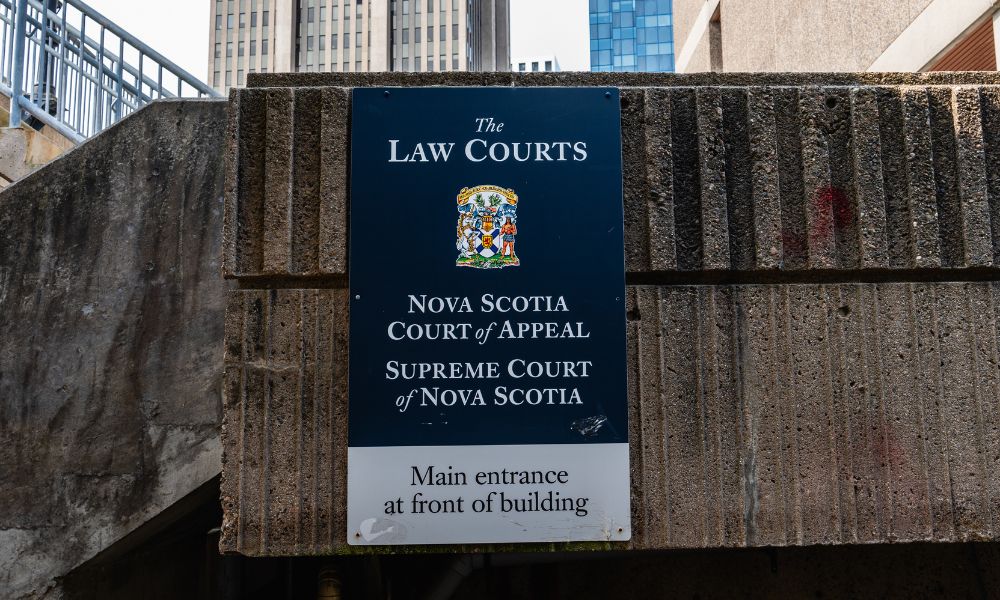
Crosby V. Westhaver Double Dipping: Nova Scotia Court Imputes Income
Summary
- A Nova Scotia ex-husband's appeal to reduce spousal support after job loss was dismissed by the Nova Scotia Court of Appeal.
- The lower court had found a material change due to job loss but imputed income to the ex-husband, reducing support from $8,237.50 to $7,500 monthly.
- The appeal court upheld the imputation of income, finding the ex-husband voluntarily underemployed, citing Richards v. Richards.
- The court rejected the ex-husband's "double dipping" claim, stating the case fell within an exception to Boston v. Boston principles.
- The ex-husband was ordered to pay $5,000 in costs to his ex-wife following the dismissed appeal.
Background to the Dispute
This ruling in Crosby v. Westhaver provides important clarification regarding Nova Scotia spousal support imputed income and the concept of voluntary underemployment spousal support.
A Nova Scotia couple, married for 24 years, separated in October 2018 and finalized their divorce in January 2020. Following their divorce, a corollary relief order mandated the ex-husband to pay monthly spousal support, initially set at $8,000, commencing February 1, 2020. This amount was subject to an annual two percent increase, leading to payments of $8,237.50 per month since February 1, 2022.
The ex-husband's employment in the software sector was terminated due to a workforce reduction, effective October 1, 2023. Citing this job loss and his subsequent unemployment, he applied for a reduction in his spousal support obligation, retroactive to April 1, 2023, and also claimed an overpayment of support. While acknowledging his ongoing responsibility for spousal support, he contended that his income had significantly decreased. The ex-wife, however, opposed any reduction, arguing that her former husband's job loss was temporary and could be easily resolved by securing new employment, thus not constituting a material change in circumstances. She further requested that, should a material change be recognized, the court impute income to her ex-husband due to his intentional unemployment and address any potential underpayment of support.
Lower Court's Determination
On November 25, 2025, Justice Aleta Cromwell of the Supreme Court of Nova Scotia, Family Division, presiding over Crosby v. Crosby (Westhaver), 2025 NSSC 372, addressed the application. The court acknowledged an unforeseen material change in circumstances had occurred due to the ex-husband's job loss. Consequently, the monthly spousal support obligation was reduced to $7,500, effective from October 1, 2023.
Despite the reduction, the court found it appropriate to impute income to the ex-husband, referencing the principles established in Richards v. Richards, 2012 NSCA 7. This decision indicated the court's view that the ex-husband's earning capacity remained higher than his current declared income. Given the mixed success of both parties on the various issues presented, the court directed each party to bear their own legal costs.
Appeal Court Upholds Decision
The ex-husband subsequently appealed this decision to the Nova Scotia Court of Appeal, arguing that the lower court judge had erred by imputing income to him. He also contended that the imputation violated the "double dipping" prohibition outlined in Boston v. Boston, 2001 SCC 43. However, in Crosby v. Westhaver, 2026 NSCA 81, issued on November 10, the Nova Scotia Court of Appeal dismissed the ex-husband's appeal.
The appellate court found no error in the lower court judge's reasoning or conclusions, determining there was no basis to intervene. It specifically noted that the judge's factual findings, which led to the determination of the ex-husband's voluntary underemployment, were supported by evidence. The appeal court also rejected the ex-husband's "double dipping" argument, observing that the lower court had explicitly considered this issue and concluded that the specific circumstances of the parties fell within a recognized exception to the application of Boston principles. As a result of the dismissed appeal, the ex-husband was ordered to pay his ex-wife $5,000 in costs, including disbursements.
Significance for Spousal Support in Nova Scotia
This ruling in Crosby v. Westhaver provides important clarification regarding Nova Scotia spousal support imputed income and the concept of voluntary underemployment spousal support. It reinforces the judiciary's authority to impute income even when a payor experiences job loss, particularly if the court perceives a lack of diligent effort to secure new employment commensurate with their skills and experience. The decision underscores that a job loss, while a material change circumstances spousal support NS, does not automatically lead to a proportionate reduction in support if the payor is deemed voluntarily underemployed.
Furthermore, the Nova Scotia Court of Appeal's explicit rejection of the "double dipping" claim, by affirming that the circumstances fell within an exception to Boston v. Boston principles, offers valuable guidance. This aspect of the judgment clarifies that the prohibition against "double dipping" is not absolute and courts retain discretion to apply exceptions based on the specific facts of a case. For legal practitioners, this case highlights the critical importance of demonstrating genuine and proactive efforts to mitigate income loss when seeking a reduction in spousal support, especially in situations involving temporary unemployment.
Practical Implications
Lawyers advising clients on spousal support modifications in Nova Scotia should note this ruling reinforces the court's power to impute income for voluntary underemployment, even following job loss, and clarifies the application of 'double dipping' principles. This case provides precedent for arguing against reductions based on temporary or voluntary unemployment, highlighting the importance of demonstrating genuine efforts to secure new employment.
Source
How does this affect you?
Get an AI analysis of this article grounded in your jurisdictions, practice areas, and any policy documents you've uploaded to Wansom.
Finish Reading the Full Story and the Expert Analysis.
Get the latest legal & regulatory intelligence in Canada
Wansom is AI and can make mistakes.