
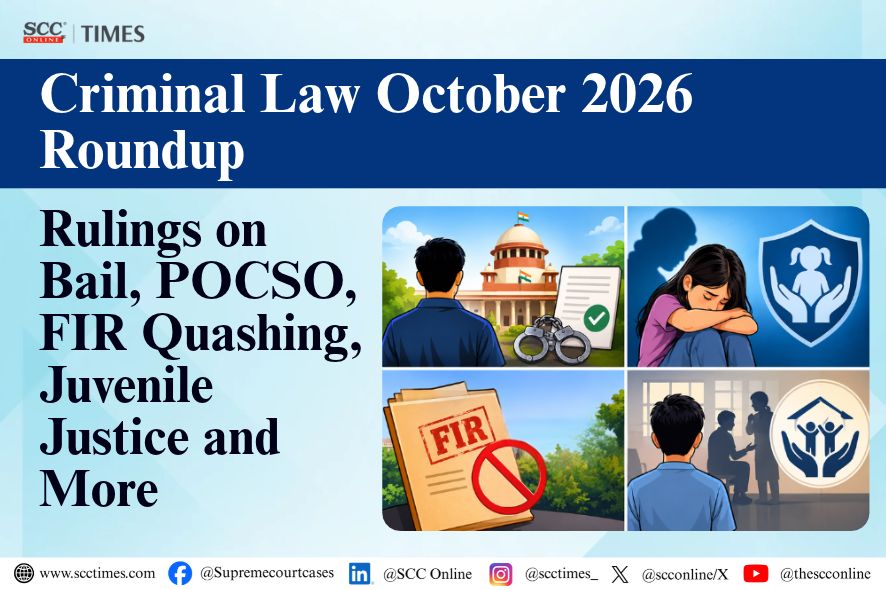
India High Courts: Criminal Law Roundup October 2026 Unveils Key Judgments
Summary
- October 2026 saw significant judicial developments in Indian criminal law by various High Courts.
- Rulings addressed critical areas including bail, POCSO offenses, and the quashing of criminal proceedings.
- Important questions concerning individual liberty, criminal liability, and procedural safeguards were examined.
- The judgments also covered issues related to juvenile offenders and contempt of court.
- These judicial updates are crucial for legal professionals to understand the evolving landscape of criminal jurisprudence in India.
October's Criminal Law Landscape
The comprehensive nature of these interventions underscores the judiciary's active role in refining the application of justice.
The month of October 2026 marked a period of considerable judicial engagement within India's criminal justice system. Across various High Courts, a series of significant developments unfolded, addressing a diverse array of critical legal questions. These rulings collectively contribute to the ongoing evolution of criminal law in India, offering fresh perspectives and clarifications on established principles. The comprehensive nature of these interventions underscores the judiciary's active role in refining the application of justice.
These judicial pronouncements from October 2026 encompassed a wide spectrum of issues, ranging from the fundamental rights of individuals to the intricacies of procedural compliance. The High Courts, through their judgments, tackled complex scenarios that demanded careful interpretation of existing statutes and precedents. This period of intense judicial activity provides valuable insights into the current trends and priorities within the Indian criminal legal framework, making it a crucial focus for any criminal law roundup October 2026 India.
Diverse Areas of Judicial Focus
Among the specific domains that received judicial attention, several stand out for their direct impact on both accused individuals and the broader public. High Courts delivered important rulings concerning bail, a critical aspect of individual liberty that determines pre-trial detention. These bail rulings India October 2026 likely explored the delicate balance between the rights of the accused and the interests of justice, potentially setting new benchmarks for granting or denying temporary release.
Furthermore, the judiciary actively engaged with cases related to the Protection of Children from Sexual Offences (POCSO) Act. These POCSO judgments India 2026 are particularly significant, as they often involve sensitive matters requiring a nuanced understanding of child protection while ensuring due process. Another key area involved the quashing of criminal proceedings, with various FIR quashing High Courts 2026 decisions providing clarity on the circumstances under which initial police reports can be set aside, thereby preventing unnecessary prosecution. Beyond these, important questions were also addressed regarding criminal liability, procedural safeguards, the treatment of juvenile offenders, and even matters of contempt of court, reflecting a holistic review of the criminal justice apparatus.
Upholding Fundamental Legal Principles
The judicial developments observed in October 2026 consistently underscored the judiciary's commitment to upholding fundamental principles of justice. Central to many of these rulings was the concept of individual liberty, with High Courts meticulously examining the extent to which state action impacts personal freedom. This focus ensures that constitutional guarantees are not merely theoretical but are actively applied in the context of criminal investigations and trials.
Concurrently, significant emphasis was placed on procedural safeguards, ensuring that due process is rigorously followed at every stage of criminal proceedings. These safeguards are vital for maintaining fairness and preventing arbitrary actions, thereby reinforcing public trust in the justice system. The rulings also delved into various facets of criminal liability, clarifying the elements required for specific offenses and the standards of proof necessary for conviction, which are essential for consistent application of the law.
Why It Matters for Legal Professionals
For legal practitioners and compliance officers, these India criminal law judgments 2026 represent essential updates that demand close attention. The clarifications and interpretations provided by the High Courts can directly influence legal strategies, client advice, and the conduct of ongoing cases. Staying abreast of these SCC Online criminal law updates is not merely academic; it is a practical necessity for effective legal representation and risk management.
The cumulative effect of these judicial pronouncements is a dynamic and evolving legal landscape. Each ruling, whether concerning bail, POCSO, or the quashing of FIRs, contributes to a more refined understanding of criminal jurisprudence. This continuous judicial review ensures that the law remains responsive to societal needs while steadfastly protecting individual rights and maintaining the integrity of the justice system.
Practical Implications
Lawyers and compliance officers should review this roundup to stay abreast of the latest judicial developments in Indian criminal law, particularly concerning individual liberty, procedural safeguards, and specific offenses like POCSO, as these rulings may establish new precedents or alter existing interpretations relevant to ongoing cases or client advice.
Source
Source: Original reporting via SCC Times
How does this affect you?
Get an AI analysis of this article grounded in your jurisdictions, practice areas, and any policy documents you've uploaded to Wansom.
Wansom is AI and can make mistakes.