
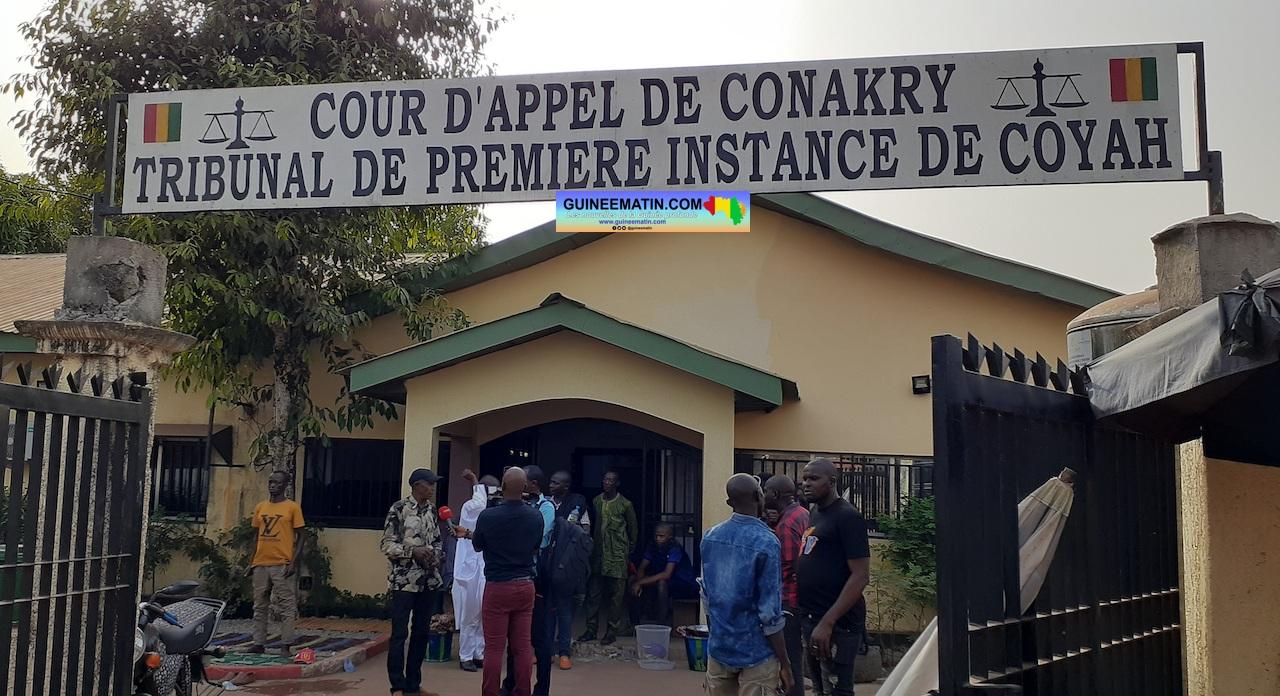
Coyah District Court: Guilty Verdicts in Landmark Human Trafficking Case
Summary
- Two individuals were found guilty of human trafficking charges in Coyah district court on August 11, 2026.
- The case drew attention due to the poignant testimony of victim Nana Fofana.
- Guinea's anti-trafficking laws, strengthened by a new comprehensive law enacted in 2024, provide for severe penalties for those found guilty, but critics argue that burden of proof remains a challenge.
- The verdict raises questions about potential liability for businesses and individuals involved in international travel.
Cayah Human Trafficking Case Verdict
The case drew attention due to the poignant testimony of victim Nana Fofana.
A landmark verdict was delivered in the Coyah district court on August 11, 2026, marking a significant milestone in Guinea's fight against human trafficking. Two individuals were found guilty of human trafficking charges after admitting to the allegations brought against them. The case drew attention due to the poignant testimony of one of the victims, Nana Fofana, who shared her harrowing experience with the court.
The trial was a crucial test for Guinea's anti-trafficking laws and regulations, which have been strengthened by a new comprehensive law enacted in 2024. The verdict serves as a reminder that human trafficking remains a significant concern in the country, despite efforts to combat it.
Relevant Legal/Regulatory Context
Guinea's anti-trafficking laws were significantly strengthened by a new law on Trafficking in Persons enacted on April 26, 2024, which consolidates existing provisions from the Children's Code and the Penal Code. This legislation aims to prevent and punish human trafficking and provides for severe penalties, including imprisonment and fines, for those found guilty of human trafficking. However, critics argue that the burden of proof remains a significant challenge in successfully prosecuting traffickers. In this case, the defendants' admission to the charges may have contributed to their conviction, highlighting the need for more robust evidence-gathering mechanisms.
The verdict also raises questions about potential liability for businesses and individuals involved in international travel. As Guinea continues to develop its tourism industry, it is essential that stakeholders are aware of their responsibilities in preventing human trafficking. Lawyers and compliance officers should take note of this case as a precedent for future anti-trafficking efforts.
Why It Matters
The Coyah human trafficking case verdict has significant implications for anti-trafficking efforts in Guinea. The conviction of the two defendants sends a strong message that human trafficking will not be tolerated, but it also highlights the need for more effective legislation and enforcement mechanisms. As Guinea continues to grapple with this complex issue, it is essential that all stakeholders work together to prevent human trafficking and protect its citizens.
The case also underscores the importance of robust evidence-gathering and burden of proof in successfully prosecuting traffickers. Lawyers and compliance officers should take note of these lessons as they navigate future anti-trafficking cases.
Practical Implications
Lawyers and compliance officers should watch for the implications of this verdict on anti-trafficking efforts in Guinea, particularly with regards to the burden of proof and potential liability for businesses and individuals involved in international travel.
Source
How does this affect you?
Get an AI analysis of this article grounded in your jurisdictions, practice areas, and any policy documents you've uploaded to Wansom.
Wansom is AI and can make mistakes.