
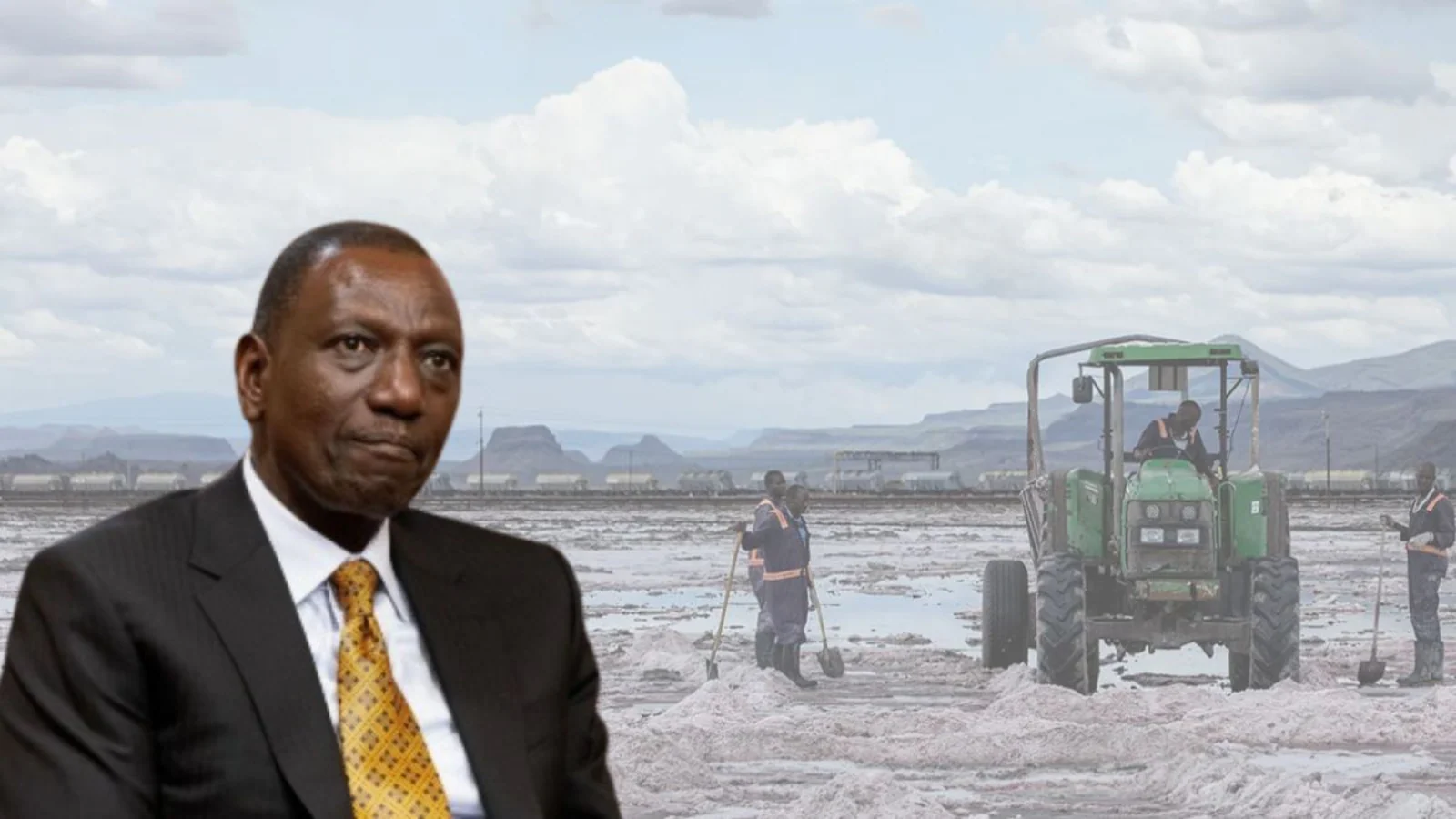
Court Steps Aside in Tata’s Magadi Fight: The Jurisdiction Ruling That Leaves Kenya’s Mining Dispute Unresolved
A procedural ruling in a much larger dispute
On 23 October 2026, Justice William Musyoka ruled that the High Court lacked jurisdiction to determine Tata Chemicals Magadi Limited’s challenge to the government’s suspension of its mining operations.
The dispute followed an order issued by Mining Cabinet Secretary Hassan Joho on 28 July, directing the company to suspend operations at its Lake Magadi soda ash facility. The government cited outstanding concerns involving royalties, licensing, export reporting, local employment, community development and other regulatory obligations.
Tata challenged the suspension, arguing that the government had acted unlawfully and without giving the company a proper opportunity to respond. But the High Court did not proceed to determine those substantive arguments. Justice Musyoka held that the dispute concerned mining and minerals and therefore fell within the constitutional jurisdiction of the Environment and Land Court (ELC).
The distinction is fundamental. The Court did not determine that the suspension was lawful, that Tata had breached its obligations, or that the company had no valid defence. It concluded that the case before it could not be determined by that court.
The immediate consequence is that Tata’s challenge has encountered a jurisdictional barrier before the underlying legality of the suspension could be resolved in that proceeding. The company said it was examining the order and would consider the next legal steps.
Why jurisdiction became decisive
Kenya’s Constitution distributes judicial authority among courts with different mandates. Article 162(2)(b) provides for a court with the status of the High Court to hear disputes relating to the environment and the use, occupation of and title to land. The Environment and Land Court exercises jurisdiction under that constitutional and statutory framework.
Article 165(5), meanwhile, limits the High Court’s jurisdiction over matters reserved for courts established under Article 162(2).
Justice Musyoka relied on this division of authority, reasoning that a dispute concerning mining and minerals belonged before the specialised court rather than the High Court. As reported by The Standard, he concluded that he could not take further steps once he determined that jurisdiction was absent.
The legal significance goes beyond the identity of the court handling this particular dispute.
Jurisdiction determines whether a court has the authority to adjudicate a matter at all. A court may have the power to review administrative decisions generally, but that does not necessarily mean it can hear every dispute that involves government administration. The nature of the subject matter and the constitutional allocation of judicial authority remain decisive.
This is particularly important in disputes involving natural resources. A mining suspension can simultaneously raise questions about administrative fairness, statutory licensing, mineral rights, environmental governance and public authority. Those issues may overlap, but their overlap does not automatically give every court jurisdiction over the entire dispute.
The ruling therefore underscores a practical lesson for public-law litigation: identifying the correct legal forum is not a technical detail that can safely be left until later. It can determine whether a challenge proceeds to a substantive hearing at all.
The July suspension: What the government says, and what Tata disputes
The jurisdiction ruling cannot be understood without the underlying regulatory dispute.
The government’s position is that Tata Chemicals Magadi had unresolved compliance issues requiring intervention. Officials cited royalty reconciliation and payments, licensing, export reporting, mineral value addition, community development agreements, local employment and environmental requirements.
The government also maintained that it had engaged with the company over its obligations and that the suspension was a temporary compliance measure rather than cancellation of its mining rights.
Tata presented a different account. It argued that it had not been given a proper opportunity to respond to the allegations before the suspension was imposed. The company also disputed the government’s account of the compliance issues and challenged the basis on which the decision had been made.
In its court arguments, Tata questioned the alleged community complaints relied upon by the government, saying that it had not been provided with sufficient particulars to respond. It also disputed the claim that the suspension was justified by unresolved royalty obligations, maintaining that it had made payments and submitted relevant information. These are the parties’ respective positions, not findings established by the 23 October jurisdiction ruling.
The distinction matters because a regulator’s power to enforce compliance and the manner in which that power is exercised are separate legal questions.
Even where a government has authority to regulate mineral operations, the exercise of that authority must remain within the law. The applicable statute, the nature of the regulatory action, the notice given, the opportunity to respond and the reasons for the decision may all become relevant when a court examines legality.
Conversely, a company’s assertion that it has complied with regulatory requirements does not, by itself, establish that every obligation has been met. That question requires evidence and proper legal determination.
The October ruling did not resolve this contest between the government’s allegations and the company’s response. It determined where the dispute could be heard.
The earlier ruling did not settle the merits either
The October decision followed an earlier court ruling in August.
On 7 August, the High Court declined to lift the suspension, finding that the decision issued on 28 July had already taken effect before Tata filed its challenge on 30 July. The judge also considered the practical position of the parties and found that Tata had not sufficiently demonstrated the nature and extent of the losses it claimed would result from the continued suspension.
At that stage, the court was considering interim relief rather than finally determining the substantive legality of the suspension.
The two decisions should therefore not be conflated.
The August ruling concerned whether the court should issue an interim order lifting the suspension while the case proceeded. The October ruling concerned whether the High Court had jurisdiction to determine the dispute at all.
Neither should be presented as a final judicial finding that Tata had committed the alleged regulatory breaches. Equally, neither establishes that the government’s suspension was unlawful.
For a landmark-case analysis, this procedural distinction is central: a court can refuse interim relief or decline jurisdiction without deciding the underlying legal dispute on its merits.
Beyond the courtroom: Who benefits from Lake Magadi?
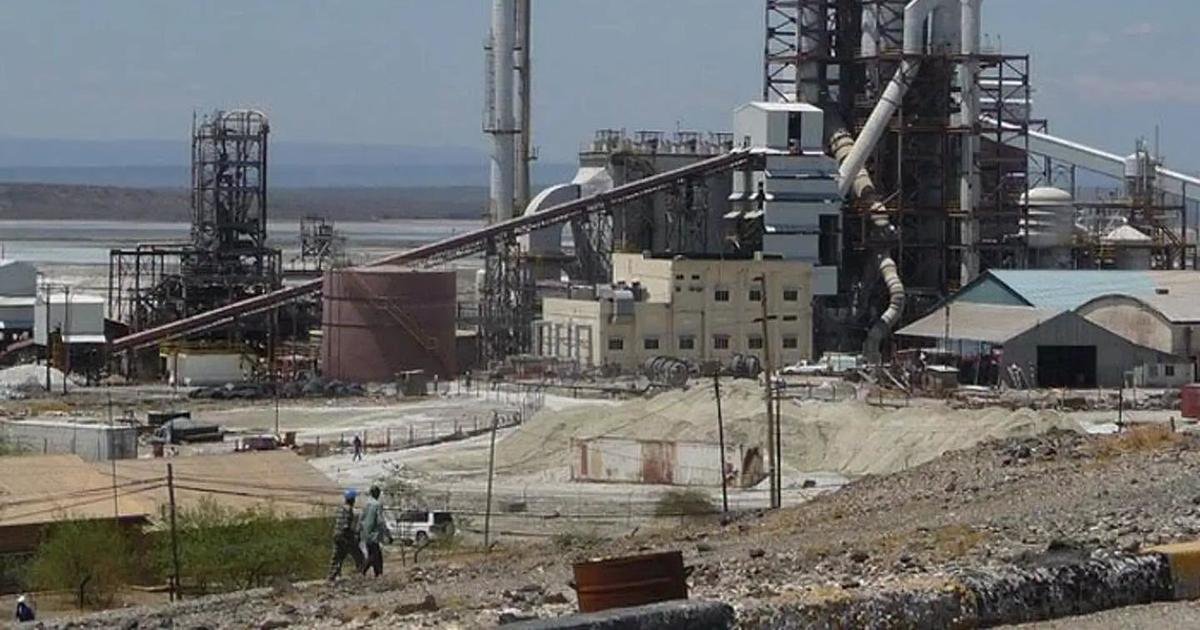
The legal proceedings are unfolding alongside a wider political and economic debate about Kenya’s natural resources.
Lake Magadi is home to a major soda ash operation with a history stretching back more than a century. Tata Chemicals acquired the business in 2005. The facility produces soda ash from trona, a naturally occurring mineral used in glassmaking, detergents, chemicals and other industrial applications.
The operation connects a mineral resource in Kajiado County to international supply chains, industrial customers, transporters, contractors and local economic activity. Its future therefore has consequences beyond the company itself.
The government’s criticism has extended beyond questions of compliance. President William Ruto has argued that Kenya should obtain greater local economic value from its resources, including through value addition and domestic manufacturing. He has also spoken publicly about bringing in new investors to develop industrial capacity in the region.
Tata, meanwhile, has emphasised its compliance position and the economic relationships sustained by the operation, including employment, suppliers and community support.
These positions raise a broader development question: what should a country expect from a long-established company extracting and processing a valuable natural resource?
There are several distinct dimensions to that question. The state is entitled to enforce applicable licensing, royalty and environmental rules. Communities have legitimate interests in how nearby resources generate jobs, services and local opportunities. Investors, in turn, need predictable laws, fair administrative procedures and clarity about the conditions under which they may operate.
None of these interests automatically cancels out the others. A company’s economic contribution does not exempt it from legal obligations, just as a government’s development ambitions do not remove the requirement to exercise regulatory power lawfully.
The dispute demonstrates how questions of mineral compliance can become intertwined with national industrial policy. But the legal questions must still be resolved through the applicable statutory framework and competent institutions, rather than through political statements alone.
The economic cost of unresolved regulatory uncertainty
For an industrial operation, a prolonged suspension can affect more than production volumes. It may disrupt export commitments, logistics, supplier relationships, employee income and the planning decisions of customers who depend on reliable supply.
The government also faces costs when a major resource project remains in regulatory limbo. Uncertainty can complicate the assessment of royalties, the design of local industrial policy and the planning of any future investment.
This does not mean that operations must resume whenever a company disputes a suspension. Regulatory enforcement may be necessary to protect public interests. The question is whether the process provides a clear, lawful and timely route for determining the dispute.
The October jurisdiction ruling adds a procedural complication to that task. Tata must consider its next legal steps, while the government’s regulatory position remains contested and a joint technical review is underway.
A predictable process would help establish which obligations remain disputed, what evidence supports the respective positions, what corrective action—if any—is required and which authority has the power to decide the matter.
For investors considering Kenya’s mining sector, the wider signal will not come from this ruling alone. It will emerge from how the dispute progresses, how consistently the regulatory framework is applied and whether the parties can reach a legally sustainable resolution.
The technical committee: A parallel route to resolution
The dispute is not proceeding solely through litigation.
Tata Chemicals has disclosed plans for a joint technical committee with the Kenyan government to review regulatory concerns involving Tata Chemicals Magadi. According to the company’s disclosure, the committee is to be jointly led by the Principal Secretary responsible for mining, representing the ministry, and the subsidiary’s chief executive officer.
The committee is expected to conduct a detailed technical review and submit its findings to the Cabinet Secretary for consideration and further direction. Its stated areas of focus include responsible mining, value addition, community development and mutually beneficial partnerships.
This process could offer a practical means of examining issues that may be difficult to resolve through public exchanges alone. Royalty calculations, licensing records, export reporting and compliance documentation can require detailed technical assessment. Community development and local value addition may require a broader discussion about measurable commitments and implementation.
But a committee is not a substitute for lawful decision-making. Its findings will need to be considered by the authorities empowered to act, and any agreement must operate within the relevant legal framework.
Nor does the existence of the committee establish that the suspension has been lifted or that the dispute has been resolved. The company’s latest reported position was that it was examining the court order and considering its next steps.
The committee’s value will therefore depend on whether it produces concrete findings, clarifies outstanding obligations and supports a resolution that can withstand legal scrutiny.
What the case means for public-law litigation
The Magadi dispute offers several lessons for businesses and government agencies dealing with regulatory action.
First, jurisdiction must be addressed at the outset. A challenge can raise important questions about fairness and legality yet still fail to reach a substantive determination if it is filed in the wrong forum.
Second, interim relief and final adjudication serve different purposes. A refusal to lift a suspension does not necessarily establish that the suspension was lawful, just as a jurisdictional ruling does not determine whether the regulator acted correctly.
Third, regulatory decisions involving significant economic consequences need a defensible legal basis and a clear evidentiary record. Where allegations concern royalties, licensing or community complaints, the particulars and supporting documentation may become important to the substantive dispute.
Finally, the resolution of a major industrial dispute requires more than a single procedural victory. The parties still need clarity about the legal obligations at issue, the authority responsible for enforcing them and the route by which the contested decision can be reviewed.
For companies operating in regulated industries, these are not abstract procedural matters. They affect how regulatory disputes are managed, how operations are planned and how legal risks are assessed.
The next chapter remains open
The High Court’s 23 October ruling marks an important development in the Tata Chemicals Magadi dispute, but it does not bring the underlying controversy to a close.
The immediate issue is the legal route available to challenge the suspension following the finding that the High Court lacked jurisdiction. Tata has said it is reviewing the order. The government’s allegations and the company’s response remain to be resolved through the appropriate legal and regulatory processes.
At the same time, the joint technical committee may offer a parallel opportunity to address the operational and policy questions surrounding royalties, licensing, local value addition and community development.
The outcome will matter not only to Tata Chemicals but also to Kenya’s broader approach to mineral governance. A credible framework must protect the public interest while ensuring that regulatory powers are exercised lawfully, disputes are handled by the proper institutions and investors can understand the rules governing their operations.
The Court has stepped aside, but the central dispute remains. The decisive question is no longer only whether Tata can challenge the suspension in the High Court. It is whether the next legal and regulatory steps will establish, with evidence and due process, what the company owes, what the government may lawfully require, and how Kenya can secure greater public value from its mineral resources.
Citations
- 1.The Standard — Court strikes out Tata Chemicals suspension case
- 2.Business Today — Tata Chemicals gets relief in Kenya dispute as High Court rules it lacks jurisdiction
- 3.Business Daily Africa — Judge declines to lift suspension of Tata Chemicals Magadi operations
- 4.Kenyan Wall Street — Tata Chemicals fights shutdown to save soda ash mining business
- 5.Pulse Kenya — Lake Magadi: Soda ash, Tata Chemicals and the fight over Kenya’s mineral wealth
Finish Reading the Full Story and Expert Analysis.
Get the latest legal & regulatory intelligence in Kenya
Wansom is AI and can make mistakes.