
Corruption Watch Ghana: Astroturf Procurement Exposé Uncovers GH₵1B Irregularities
Summary
- Corruption Watch's investigation, launched in February 2025, has uncovered widespread irregularities in Ghana's "One Constituency, One Astroturf" program, which began in 2017.
- The probe found ownership disputes, procurement irregularities, and conflicts of interest in 169 projects valued over GH₵1 billion.
- Former Energy Minister John Peter Amewu and former Ghana Gas Communications Director Ernest Owusu-Bempah are implicated in ownership disputes for facilities funded by over GH₵17 million.
- Specific projects in Hohoe and Agogo saw Wembley Sports Construction Company Limited awarded contracts through single-sourcing or after work had already commenced, circumventing Public Procurement Authority rules.
- The investigation highlights systemic circumvention of competitive bidding, use of procurement to legitimize predetermined decisions, and submission of inaccurate information to the PPA.
Unveiling Systemic Flaws in Public Projects
The observed practices, such as the direct award of contracts without competitive bidding and the retroactive seeking of approvals, directly undermine these principles.
Corruption Watch's extensive investigation, launched in February 2025, has brought to light significant irregularities within Ghana's "One Constituency, One Astroturf" program. This initiative, which commenced in 2017 under the administration of former President Nana Akufo-Addo, was initially lauded as a transformative investment aimed at fostering youth development and community sports nationwide. However, nearly a decade later, the probe has revealed a troubling pattern encompassing ownership disputes, widespread procurement irregularities, the privatization of public lands designated for stadiums, allegations of abuse of office, and conflicts of interest. The current phase of the exposé, published in September 2026, specifically scrutinizes these three critical anti-corruption issues.
The investigation spans 169 Astroturf and sports infrastructure projects across Ghana, representing a colossal public investment estimated to exceed GH₵1 billion. A central finding highlights the involvement of two prominent figures from the previous administration: former Minister of Energy, Mr. John Peter Amewu, and former Ghana Gas Communications Director, Ernest Owusu-Bempah. Both individuals are implicated in ownership disputes concerning sports facilities located in Hohoe and Agogo, respectively. These particular projects were largely financed with public funds totaling more than GH₵17 million, raising serious questions about accountability and the management of state resources.
Questionable Procurement Practices Exposed
Corruption Watch's detailed examination has uncovered severe procurement irregularities in the construction of both the Hohoe Sports Stadium in the Volta Region and the Agogo Sports and Cultural Complex in the Ashanti Region. These projects, initiated by the Hohoe Municipal Assembly and the Asante Akim North Assembly respectively, received funding from various state agencies through their Corporate Social Responsibility programs, including the Ghana National Petroleum Corporation (GNPC Foundation), Ghana National Gas Company Limited (Ghana Gas), Volta River Authority (VRA), GOEnergy Company Limited (GOE), and the Hohoe Municipal Assembly itself. The findings reveal a consistent pattern of bypassing competitive bidding requirements, utilizing procurement processes to rubber-stamp pre-determined decisions, and submitting inaccurate information to the Public Procurement Authority (PPA).
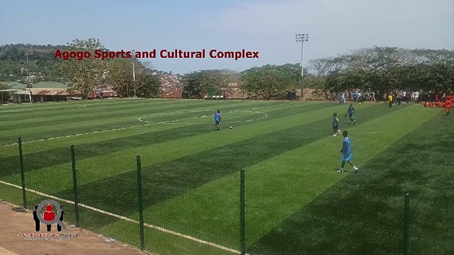
A stark example is the Agogo Sports and Cultural Complex, which was fully funded by Ghana Gas to the tune of GH₵ 3,444,524.85. The contract for this facility was directly awarded to Wembley Sports Construction Company Limited (Wembley) via a single-source contract, circumventing standard competitive procedures. Even more concerning is the situation surrounding the Hohoe Sports Stadium. Documentary evidence indicates that Wembley had already been selected, mobilized to the site, commenced construction, and received substantial public payments before the Hohoe Municipal Assembly even sought the necessary approval from the PPA to deviate from the default competitive procurement process, signaling a profound disregard for established regulations.
Legal and Regulatory Scrutiny
The findings from Corruption Watch underscore significant breaches of Ghana's public procurement framework. The Public Procurement Authority (PPA) regulations are designed to ensure transparency, fairness, and value for money in government contracts. The observed practices, such as the direct award of contracts without competitive bidding and the retroactive seeking of approvals, directly undermine these principles. Such actions not only raise red flags about potential corruption but also expose state agencies to risks of investigations, allegations of abuse of office, and conflicts of interest.
To provide an independent assessment of the procurement records, Corruption Watch consulted two experts: Kobina Ata-Bedu, a specialist in procurement and management consultant, and David Ofosu-Dorte, a Senior Partner at AB & David Africa. Their expertise was leveraged to evaluate the legality and appropriateness of the processes followed. The revelations highlight a critical need for stricter adherence to PPA guidelines and robust oversight mechanisms to prevent similar irregularities in future public infrastructure projects.
Broader Implications for Public Trust
The "One Constituency, One Astroturf" investigation by Corruption Watch signals a heightened scrutiny on public procurement processes across Ghana, particularly concerning large-scale infrastructure projects. The program, initially envisioned as a boon for community development, has instead become a symbol of potential mismanagement and corruption. The involvement of former high-ranking officials in ownership disputes and the systemic circumvention of procurement laws erode public trust in government institutions and the allocation of taxpayer money.
These revelations are crucial for understanding the challenges in ensuring accountability and transparency in Ghana's public sector. They emphasize the importance of independent oversight bodies like Corruption Watch in holding public officials and contractors to account. The exposé serves as a critical reminder that while public-private partnerships and infrastructure development are vital, they must be executed with unwavering integrity and strict adherence to legal and ethical standards to truly benefit the citizenry.
Practical Implications
This exposé signals heightened scrutiny on public procurement processes in Ghana, particularly for infrastructure projects. Lawyers should advise clients involved in government contracts or state agencies on strict adherence to Public Procurement Authority (PPA) regulations to mitigate risks of investigation, abuse of office, and conflict of interest allegations.
Source
How does this affect you?
Get an AI analysis of this article grounded in your jurisdictions, practice areas, and any policy documents you've uploaded to Wansom.
Finish Reading the Full Story and the Expert Analysis.
Get the latest legal & regulatory intelligence in Ghana
Wansom is AI and can make mistakes.