
Concor Business Rescue South Africa: Construction Firm Enters Proceedings
Summary
- Concor, fully owned by the GEPF and UIF, has initiated voluntary business rescue proceedings in South Africa due to severe financial distress.
- The company faces over R1.6 billion in contingent liabilities from projects and an additional R218 million from litigation, alongside R190 million in creditor debt.
- Despite a CEO statement of "0 employees," the business rescue is believed to jeopardize over 2,200 jobs, including 600 permanent staff.
- The Public Investment Corporation, managing GEPF and UIF assets, is engaging with business rescue practitioners to protect public funds and sustain operations.
- Concor is a joint venture partner on the critical Msikaba bridge project, part of the N2 Wild Coast Toll Road development.
Concor Enters Business Rescue
Lawyers representing creditors, joint venture partners, or parties with ongoing litigation against Concor (or its subsidiaries) must immediately engage with the appointed business rescue practitioners to protect their claims, contractual rights, and assess potential recovery given the reported R1.6 billion in contingent liabilities.
Concor, a construction firm entirely owned by the Government Employees Pension Fund (GEPF) and the Unemployment Insurance Fund (UIF), has formally initiated voluntary business rescue proceedings in South Africa. This action comes as the company grapples with significant financial distress, impacting its various entities, including Concor Holdings, Concor (Pty) Ltd, Concor Construction, and Concor Mining.
While Concor CEO Marius Koen asserted in a sworn affidavit supporting the business rescue application that the company currently has "0 employees," this claim is widely disputed. It is understood that the company's financial instability places the employment of more than 2,200 individuals at risk. This figure includes approximately 600 permanent head office staff and an additional 1,500 fixed-term contractors. The full extent of Concor's financial position, including its final asset and liability status, is yet to be definitively established, pending the verification of outstanding financial information. The company's immediate liquidity is notably low, with cash and cash equivalents totaling only R4,000 and trade and other receivables amounting to R11,000. However, it holds R811 million in investments in subsidiaries and inter-company receivables, with R25 million due from subsidiaries.
Mounting Liabilities and Legal Challenges
The company faces a substantial burden of contingent liabilities, with current projects alone accounting for over R1.6 billion. Additionally, Concor has estimated creditors totaling R190 million, primarily comprising loan funding provided by its shareholders, for which default notices have already been issued. Inter-company payables, as per Concor's draft annual financial statements for the 2026 fiscal year, stand at R34 million.
Further complicating its financial outlook are contingent liabilities stemming from ongoing litigation, estimated at R218 million. This figure includes specific liabilities related to OptiPower and Murray & Roberts (M&R). These particular liabilities follow an unsuccessful high court application by Concor in May 2025, where it sought to prevent demands on its guarantees for the Wolf Wind Farm project in the Eastern Cape. Concor had been developing this project as part of a joint venture with M&R’s OptiPower division. M&R’s own business rescue plan, published in March 2025, disclosed a R469.8 million disputed claim by Concor against OptiPower, related to damages and various costs associated with the Wolf Wind Farm project, though the current status of this claim remains unclear.
Public Funds and Critical Infrastructure at Stake
Concor's ownership structure, with the GEPF holding 81.25% and the UIF 18.75%, means that public funds managed by the Public Investment Corporation (PIC) are directly exposed to the outcome of this Concor business rescue in South Africa. The PIC, which oversees the assets of both the GEPF and UIF, was informed by Concor's board on October 6, 2026, about the decision to file for business rescue. Since then, the PIC has engaged with the appointed joint business rescue practitioners (BRPs), aiming to safeguard the value of client investments and explore strategies to sustain Concor’s operations and protect jobs.
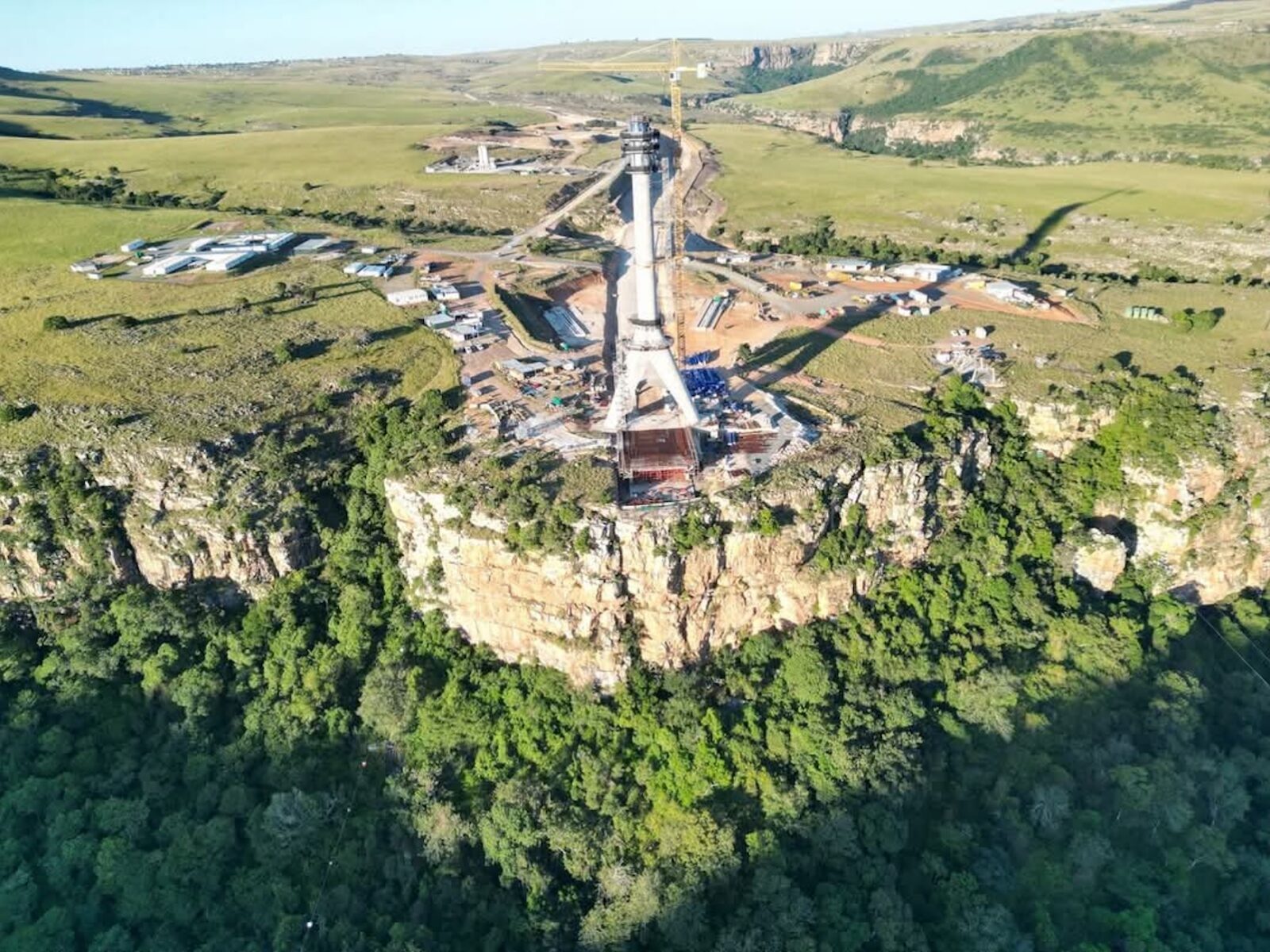
The PIC has a history of supporting Concor, having implemented various restructuring initiatives and recapitalizations over several years to stabilize the company and promote its long-term viability. Notably, Concor defaulted on its loan obligations to the GEPF, the PIC’s largest client, in 2022. This situation echoes a previous instance where the Southern Palace Group, a former majority shareholder within Concor's original structure, also entered business rescue. Concor's involvement as a joint venture partner in the construction of the iconic Msikaba bridge in the Eastern Cape, a crucial component of Sanral's multi-billion-rand N2 Wild Coast Toll Road development, underscores the broader implications of its financial distress. Lawyers representing creditors, joint venture partners, or parties with ongoing litigation against Concor (or its subsidiaries) must immediately engage with the appointed business rescue practitioners to protect their claims, contractual rights, and assess potential recovery given the reported R1.6 billion in contingent liabilities. Compliance officers overseeing investments by the GEPF and UIF should closely monitor the BRPs' strategy to safeguard public funds.
Practical Implications
Lawyers representing creditors, joint venture partners, or parties with ongoing litigation against Concor (or its subsidiaries) must immediately engage with the appointed business rescue practitioners to protect their claims, contractual rights, and assess potential recovery given the reported R1.6 billion in contingent liabilities. Compliance officers overseeing investments by the GEPF and UIF should closely monitor the BRPs' strategy to safeguard public funds.
Source
Source: Original reporting via Moneyweb
How does this affect you?
Get an AI analysis of this article grounded in your jurisdictions, practice areas, and any policy documents you've uploaded to Wansom.
Finish Reading the Full Story and the Expert Analysis.
Get the latest legal & regulatory intelligence in South Africa
Wansom is AI and can make mistakes.