
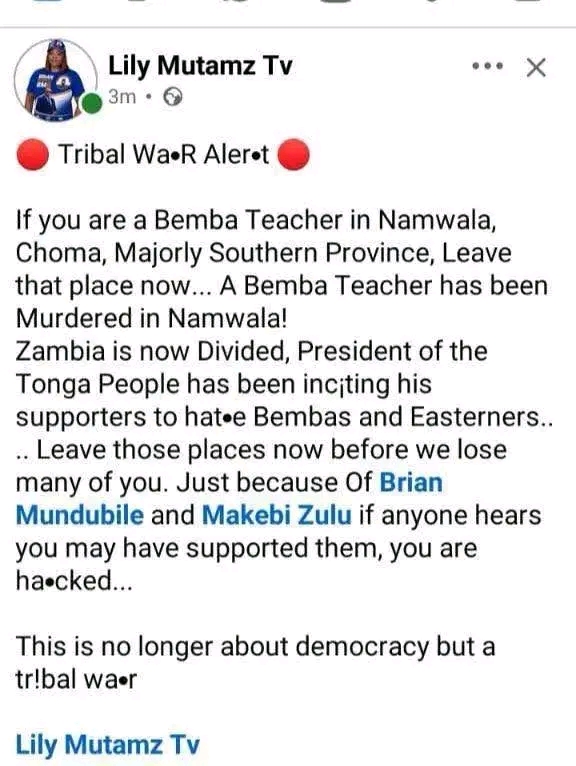
Commentary: Lillian Mutambo’s Tribal Statements Require Action
In Zambia, Lillian Mutambo's recent statements, described as "tr|bal incitement and the promotion of tribal hegemony," have prompted public calls for legal action, referencing the 1948 Genocide Convention. This situation highlights a serious concern regarding the boundaries of free speech and the potential for criminal or regulatory investigation into statements perceived as hate speech or incitement to tribal hatred within the Zambian context.
This matter holds profound legal significance, as it navigates the delicate balance between constitutionally guaranteed freedom of expression and the imperative to maintain public order, national unity, and prevent incitement to violence or discrimination. For legal practitioners, it raises complex questions about the precise definition of "hate speech" or "incitement" under Zambian law, the evidentiary thresholds required for prosecution, and the potential application of international legal instruments like the Genocide Convention within the domestic legal framework. It also underscores a heightened societal and political sensitivity to tribal rhetoric in Zambia, given its history and constitutional commitment to national unity.
The legal context for addressing such statements primarily involves Zambia's Constitution, which, while safeguarding freedom of expression, also permits limitations in the interest of public order, national security, and preventing incitement. Relevant domestic statutes would include provisions within the Penal Code concerning sedition, incitement to violence, or promoting tribal hatred. The reference to the 1948 Genocide Convention suggests a potential argument for the most severe interpretation of such statements, although any prosecution would typically proceed under Zambian criminal law. The primary bodies responsible for acting upon such statements would be the Zambia Police Service, potentially leading to a prosecution by the Director of Public Prosecutions.
Key parties involved are Lillian Mutambo, whose statements are under scrutiny, and Oster Chali Halutaka, the author calling for action. Implicitly, the Zambia Police Service and the Director of Public Prosecutions are key stakeholders who would determine whether to initiate an investigation or prosecution. The practitioner takeaway is that attorneys advising public figures, media organizations, or political entities must counsel extreme caution regarding public statements, particularly those touching on tribal, ethnic, or religious issues. A thorough understanding of the limitations on free speech under Zambian law and the potential criminal liabilities is crucial for mitigating legal risks. The outcome of any potential investigation or legal action in this matter is not yet reported.
How does this affect you?
Get an AI analysis of this article grounded in your jurisdictions, practice areas, and any policy documents you've uploaded to Wansom.
Finish Reading the Full Story and the Expert Analysis.
Wansom is AI and can make mistakes.