
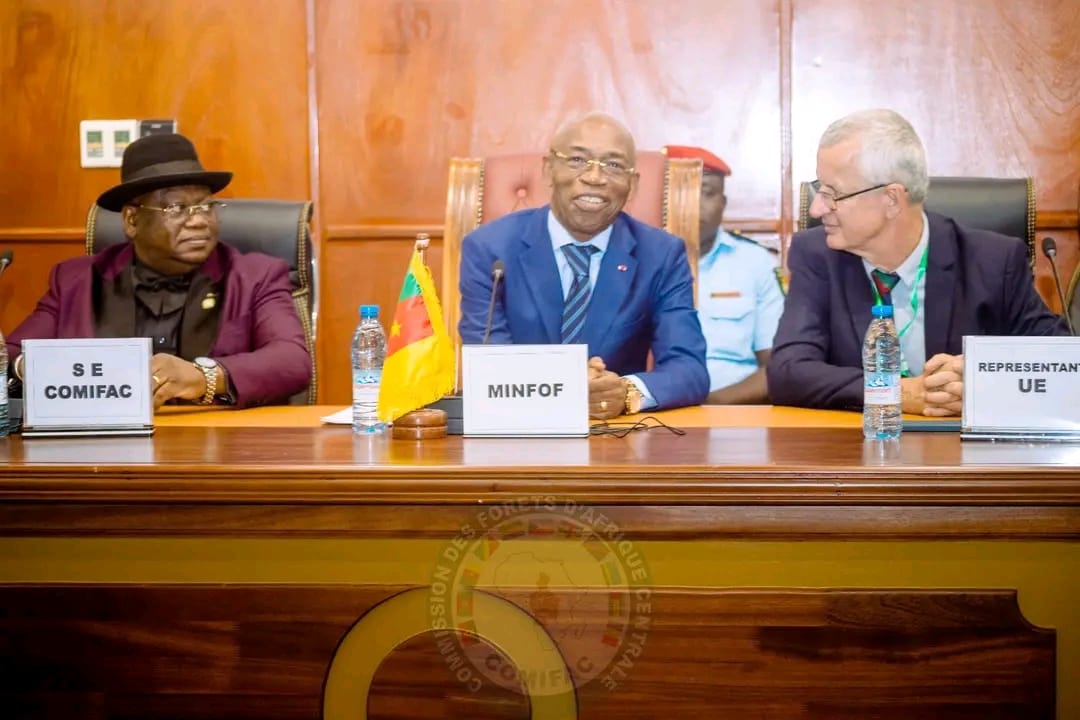
COMIFAC: Convergence Plan 2026-2035 Validation in Yaoundé
Summary
- The COMIFAC Convergence Plan 2026-2035 underwent validation at a sub-regional forum in Yaoundé on September 17 and 18, 2026.
- This ambitious plan, projected to cost $7 billion USD annually, targets forests, climate, and biodiversity in Central Africa.
- Key innovations include the "One Health" approach, emphasis on youth and women, AI for early warning, and strengthened environmental diplomacy.
- The Conseil International de Dialogue et de Partenariat (CIDP) participated, reaffirming its commitment to the plan's objectives and the preservation of Congo Basin forests.
- The plan's finalization signals new regulatory and compliance requirements for businesses in resource-intensive sectors across the COMIFAC region.
What Happened
The validation of the COMIFAC Convergence Plan 2026-2035 in Yaoundé signals the imminent finalization of a comprehensive environmental framework for Central Africa.
The Commission des Forêts d'Afrique Centrale (COMIFAC) recently hosted a crucial sub-regional forum in Yaoundé, Cameroon, marking a significant step towards the finalization of its ambitious environmental strategy. This gathering, held on September 17 and 18, 2026, at the COMIFAC headquarters, focused on the validation of the COMIFAC Convergence Plan 2026-2035. The event brought together key stakeholders to review and endorse this comprehensive framework designed to guide environmental action across Central Africa for the next decade.
Among the notable participants was the Conseil International de Dialogue et de Partenariat (CIDP), which actively contributed to the proceedings. Their involvement underscored the collaborative spirit driving this initiative, aimed at shaping a robust master plan for the region's ecological future. The validation forum represents a pivotal moment in the ongoing efforts to address critical environmental challenges within the Congo Basin and beyond, solidifying the COMIFAC Convergence Plan 2026-2035 validation Yaoundé as a key regional development.
The COMIFAC Convergence Plan 2026-2035
The COMIFAC Convergence Plan 2026-2035, also known as PC3, outlines an ambitious agenda for safeguarding Central Africa's natural heritage. This strategic document is projected to require an annual investment of $7 billion USD, reflecting the scale of its objectives across forests, climate, and biodiversity. The plan is a cornerstone of COMIFAC's refined vision extending to 2035, aiming to establish a resilient and sustainably managed environmental landscape through a comprehensive Central Africa forests climate biodiversity plan.
Several innovative approaches are central to the PC3. Notably, it integrates the "One Health" approach, recognizing the interconnectedness of human, animal, and environmental well-being. Furthermore, the plan places a strong emphasis on the active participation of youth, women, and local communities, acknowledging their vital roles in conservation efforts. Technological advancements are also leveraged, with provisions for the use of artificial intelligence and remote sensing to enhance early warning systems for environmental threats. The strategy also seeks to strengthen environmental diplomacy, fostering regional and international cooperation on critical ecological issues.
Strategic Vision and Stakeholder Engagement
The overarching goal of the COMIFAC Convergence Plan 2026-2035 is to solidify a comprehensive environmental framework for Central Africa, particularly focusing on the vital Congo Basin environmental strategy. This strategic blueprint reflects COMIFAC's commitment to a long-term vision for sustainable development and ecological preservation. The inclusion of the "One Health" approach COMIFAC within the plan signifies a holistic understanding of environmental challenges, moving beyond traditional conservation methods to address public health and ecosystem health in an integrated manner.
Organizations like the CIDP play a crucial role in the development and implementation of such large-scale initiatives. The CIDP's participation in the CIDP COMIFAC Yaoundé meeting was driven by its commitment to contribute to this master plan for the environment in Central Africa. Through its engagement, the CIDP reaffirmed its dedication to both the "One Health" paradigm and the advancement of environmental diplomacy Central Africa, recognizing these as essential tools for the effective preservation of the region's forests and biodiversity. This collaborative spirit is fundamental to achieving the ambitious targets set forth in the plan.
Legal and Regulatory Implications
The validation of the COMIFAC Convergence Plan 2026-2035 in Yaoundé signals the imminent finalization of a comprehensive environmental framework for Central Africa. This development carries significant implications for legal and compliance professionals operating within the COMIFAC region, particularly in countries like Cameroon. As the plan moves towards full implementation, businesses in resource-intensive sectors such as forestry, mining, and energy should anticipate new or updated regulatory landscapes.
Compliance officers and legal advisors will need to prepare for enhanced environmental due diligence requirements and potential new obligations related to biodiversity conservation, climate change mitigation, and the integrated "One Health" approach. The plan's emphasis on early warning systems, community engagement, and environmental diplomacy suggests a more stringent and interconnected regulatory environment. Proactive engagement with these evolving standards will be crucial for companies seeking to operate sustainably and avoid potential legal and reputational risks in the Central Africa forests climate biodiversity plan.
Practical Implications
This validation signals the imminent finalization of a comprehensive environmental framework for Central Africa. Lawyers and compliance officers advising clients in resource-intensive sectors (e.g., forestry, mining, energy) within the COMIFAC region should prepare for new or updated regulations, enhanced environmental due diligence requirements, and potential compliance obligations related to biodiversity conservation, climate change mitigation, and the 'One Health' approach, especially in Cameroon.
Source
How does this affect you?
Get an AI analysis of this article grounded in your jurisdictions, practice areas, and any policy documents you've uploaded to Wansom.
Finish Reading the Full Story and the Expert Analysis.
Get the latest legal & regulatory intelligence in Cameroon
Wansom is AI and can make mistakes.