
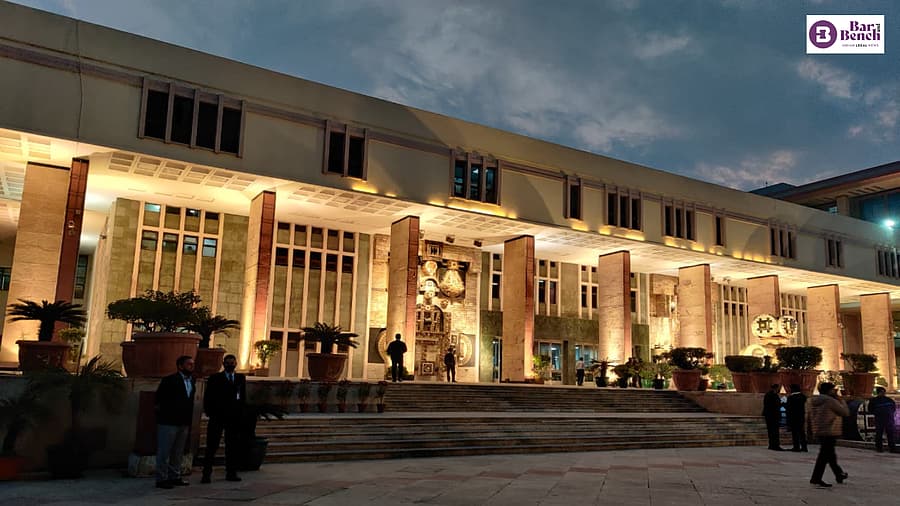
Supreme Court Collegium: Recommends 8 Delhi High Court Judges To Fill Vacancies
Summary
- The Supreme Court Collegium has recommended eight judicial officers for appointment as judges to the Delhi High Court.
- Among the recommended individuals, three are women, contributing to gender diversity on the bench.
- Arun Bhardwaj, the current Registrar General of the Delhi High Court, is one of the eight officers proposed for elevation.
- The Delhi High Court currently operates with 44 judges against a sanctioned strength of 60, leaving 16 vacancies.
- These recommendations aim to fill a significant portion of the existing judicial vacancies in the Delhi High Court.
Key Recommendations Announced
Lawyers practicing before the Delhi High Court should closely monitor these recommendations, as the eventual appointments will significantly impact the court's composition.
The Supreme Court Collegium has put forth a significant set of recommendations for the Delhi High Court, proposing the appointment of eight judicial officers to serve as judges. These recommendations, issued on Thursday, aim to bolster the court's strength and ensure a more robust judicial process in the capital.
Among the eight individuals recommended by the Collegium, three are women, signaling a move towards greater gender representation within the judiciary. The list of prospective judges includes Gurvinder Pal Singh, Nivedita Anil Sharma, Nisha Sahay Saxena, Sanjay Sharma-I, Shri Bharat Parashar, Dr. Aditi Choudhary, Dinesh Bhatt, and Arun Bhardwaj. These individuals bring diverse experience to the bench, reflecting the varied needs of the Delhi High Court.
Notably, one of the recommended candidates, Arun Bhardwaj, currently holds the position of Registrar General for the Delhi High Court. His potential elevation from an administrative leadership role to a judicial one highlights the Collegium's recognition of internal talent and experience within the court system. These Supreme Court Collegium recommendations are a crucial step in the ongoing process of judicial appointments.
Addressing Judicial Vacancies
The proposed appointments come at a critical juncture for the Delhi High Court, which has been operating with a substantial number of vacancies. The court's sanctioned strength is set at 60 judges, a figure designed to manage the extensive caseload typical of a major metropolitan jurisdiction. However, the court is presently functioning with only 44 judges, leaving a significant gap in its judicial capacity.
This shortfall translates to 16 existing vacancies that need to be addressed to ensure efficient and timely dispensation of justice. The Collegium's recommendation of eight judicial officers directly tackles this issue, aiming to reduce the current vacancy count by half. Such Delhi High Court judicial appointments are essential for maintaining the court's operational effectiveness and preventing backlogs.
The process of filling these positions through the Supreme Court Collegium recommendations is a vital mechanism for judicial administration in India. Each new judge, including those like Gurvinder Pal Singh and Nivedita Anil Sharma Delhi High Court, contributes to the overall capacity and specialized expertise of the bench, which is crucial for the New Delhi High Court judges to manage its diverse legal challenges.
Impact on the Judiciary
The eventual appointment of these eight judicial officers will have a tangible impact on the composition and functioning of the Delhi High Court. With an increase in the number of judges, the court will be better equipped to constitute more benches, hear a greater volume of cases, and potentially expedite the resolution of pending matters. This influx of new talent, including the three women recommended, will bring fresh perspectives and experience to the judicial proceedings.
Lawyers practicing before the Delhi High Court should closely monitor these recommendations, as the eventual appointments will significantly impact the court's composition. Changes in judicial personnel can influence bench assignments, the allocation of specific types of cases, and even the prevailing judicial approaches in ongoing or future litigation. The India High Court judge appointments are not merely administrative actions but carry profound implications for legal practice and the justice system.
These Supreme Court Collegium recommendations underscore the continuous effort to strengthen the Indian judiciary. By addressing vacancies and bringing in experienced judicial officers, the Collegium plays a pivotal role in ensuring that the Delhi High Court, a key institution in the nation's legal framework, remains robust and capable of fulfilling its constitutional mandate. The addition of new judges, such as those recommended, is fundamental to the court's ability to serve the public effectively.
Practical Implications
Lawyers practicing before the Delhi High Court should note these recommendations as the eventual appointments will impact the court's composition, potentially influencing bench assignments and judicial approaches in ongoing or future cases.
Source
How does this affect you?
Get an AI analysis of this article grounded in your jurisdictions, practice areas, and any policy documents you've uploaded to Wansom.
Finish Reading the Full Story and the Expert Analysis.
Get the latest legal & regulatory intelligence in India
Wansom is AI and can make mistakes.