
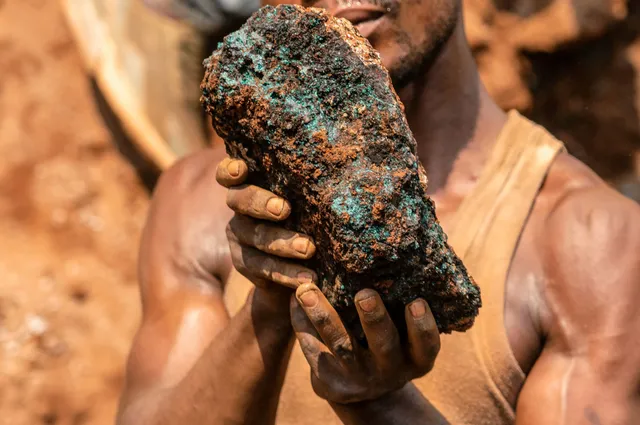
Cobalt's 30% Slide Puts D.R. Congo's Quota Gamble to the Test
Summary
The policy: an export ban from February to October 2025, then quotas capping exports at 96,600 tonnes a year for 2026 and 2027. Producers share 87,000 tonnes pro rata and ARECOMS holds a 9,600-tonne strategic quota, with power to adjust quarterly and buy back excess output.
The rally: cobalt hydroxide more than quadrupled by April 2026.
The slide: hydroxide fell 31% in the third quarter (Benchmark); cobalt traded at $39,140 per tonne on 29 September, down about 30% in a month; cobalt sulphate fell nearly 30%.
The causes: rising Congolese exports, weak downstream demand and discounted recycled material.
The state's own supply: EGC exported 3,531 tonnes of contained cobalt in the first half of 2026, becoming Congo's fifth-largest hydroxide exporter, and has filled its quota.
The decision: ARECOMS said on 11 August that a quota cut may be considered if the imbalance persists or worsens. Watch for a revision in October.
Trade law: export quotas sit uneasily with GATT Article XI, and price-driven quotas fared badly in the China raw materials and rare earths cases. Stability clauses and investment treaties add producer-side legal risk.
From Ban to Quotas: How Congo Took Control of Cobalt Supply
Why Congo can move the market?: The Democratic Republic of Congo supplies about 70% of the world's cobalt, mostly as cobalt hydroxide, an intermediate product shipped largely to China for refining into battery chemicals. Years of rising output, led by large copper-cobalt mines, created a global surplus and pushed prices sharply lower by early 2025.
The legal foundations. Under the framework of its 2018 Mining Code, Congo has designated cobalt a strategic substance, a category that allows tighter state control over production and trade. Export policy is administered by ARECOMS, the Authority for the Regulation and Control of Strategic Mineral Substances Markets, chaired by Patrick Mpoyi Luabeya.
The policy timeline:
Date | Measure |
|---|---|
February 2025 | Cobalt export ban takes effect, aimed at cutting a global glut |
21 September 2025 | ARECOMS announces the ban will end on 16 October 2025 and be replaced by quotas |
16 October 2025 | Quota regime begins: 18,125 tonnes allowed for the rest of 2025 |
2026 and 2027 | Annual cap of 96,600 tonnes of cobalt per year: 87,000 tonnes allocated to producers pro rata on historical exports, plus a 9,600-tonne strategic quota at ARECOMS's discretion |
April 2026 | Cobalt hydroxide prices have more than quadrupled from their lows |
Late June / 5 July 2026 | ARECOMS cancels unused second-quarter allocations not shipped by 5 July; market participants estimate 15,000–20,000 tonnes of annual allowance removed, after a customs-platform glitch blocked some exports |
11 August 2026 | ARECOMS chairman tells Fastmarkets that a quota cut may be considered if the supply-demand imbalance persists or worsens |
ARECOMS's powers. The quota framework lets ARECOMS:
adjust quota volumes quarterly;
allocate its strategic quota at its sole discretion;
buy back cobalt produced beyond an operator's export allowance, a potential state buffer stock; and
adjust allocations if prospects arise for local processing of hydroxide into higher-value products.
The result is a state-managed supply system for a critical mineral. In effect, ARECOMS is designed to act as a market balancer, absorbing surplus when prices are weak and releasing it when they are high.
The September Slide
The rally fades. On 4 September 2026, Bloomberg reported that cobalt's rally was reversing as Congolese exports picked up under the quota regime, testing Kinshasa's ability to control prices. By the end of the quarter the decline was steep.
Measure | Third-quarter 2026 move | Source |
|---|---|---|
Cobalt hydroxide (CIF Asia) | Down 31% across the quarter, to $17.25/lb (about $38,030/tonne) | Benchmark Mineral Intelligence |
Cobalt (as reported 29 September) | $39,140 per tonne, down about 30.5% in one month | Benchmark, as reported by Ecofin Agency |
Cobalt sulphate (EXW China) | Down nearly 30% to RMB 58,000/tonne | Benchmark |
Cobalt metal (Europe) | Down about 11% | Benchmark |
MHP cobalt payables (CIF Asia) | Fell from 91.5% to 65.8% by mid-September, as cheaper hydroxide offered an alternative | Benchmark |
What drove it. Three forces combined:
More Congolese exports. Shipments under the quota regime picked up through the summer, adding supply to a market that had been starved of hydroxide.
Weak downstream demand. Refiners and battery-chemical buyers held back. Benchmark reported no confirmed hydroxide trades for ten days in August, and a widening gap between buyers' bids and sellers' offers.
Recycled material. Recyclers discounted cobalt sulphate, pulling prices lower ahead of China's Golden Week holiday.
The state's own channel adds supply. Supply growth is coming partly from the state itself. Entreprise Générale du Cobalt (EGC), the Gécamines subsidiary with a state-granted monopoly on buying and exporting artisanal cobalt, told Fastmarkets its exports spiked in the first half of 2026 as the government formalised the artisanal sector:
EGC milestone | Detail |
|---|---|
November 2025 | First 1,000 tonnes of fully traceable artisanal cobalt |
First half 2026 | 3,531 tonnes of contained cobalt exported (in 9,948 tonnes of hydroxide), making EGC Congo's fifth-largest hydroxide exporter |
By late August 2026 | 3,995 tonnes of contained cobalt shipped, 100% of its allocated quota |
2026 quota | 5,640 tonnes under the base quota |
Logistics | Maiden shipment via the Lobito Corridor through Angola: 587 tonnes of cobalt and 500 tonnes of copper |
Artisanal miners account for about 15% to 25% of Congo's cobalt output. Bringing them into a formal, traceable channel advances responsible-sourcing goals, but it also turns previously informal supply into measured, exportable volume within the quota system.
The underlying balance. Not everyone reads the slide as a lasting turn. Analysts note that the market could still face a deficit in 2026 under the quota regime. Benchmark had earlier projected that quotas would reduce ex-Congo cobalt stocks to around one month of demand by the fourth quarter of 2026.
Kinshasa's Choice: Tighten or Hold
The signal. On 11 August 2026, ARECOMS chairman Patrick Mpoyi Luabeya told Fastmarkets that Congo may reduce its cobalt export quota if the supply-demand imbalance persists or worsens. He added that quotas for 2026 and 2027 had been set to preserve market balance. The quarterly adjustment power gives ARECOMS the legal tool to act. The price slide since then has made the question live.
The options:
Option | Mechanism | Likely effect | Risks |
|---|---|---|---|
Cut quotas | Reduce the 87,000-tonne base allocation, or hold back the 9,600-tonne strategic quota | Tighter hydroxide supply; support for prices | Producers lose volume and revenue; buyers accelerate diversification to Indonesian supply; stockpiles build inside Congo |
Tighten administration | Stricter enforcement of deadlines, as with the cancellation of unused Q2 allocations | De facto supply cut without a formal quota change | Legal and commercial disputes over lost allocations; reputational cost of administrative unpredictability |
Use the buy-back power | ARECOMS buys excess output, building a state stock | Removes surplus from the market | Fiscal cost; needs funding and storage; risk of an overhang later |
Hold | Keep current quotas | Lets the market find a floor | Prices may keep falling if exports stay strong and demand weak |
The constraints. A quota cut cannot ignore three realities:
Indonesia. Indonesian nickel-cobalt output, particularly mixed hydroxide precipitate (MHP), gives buyers an alternative. Sustained high prices for Congolese hydroxide accelerate that shift.
Fiscal revenue. Royalties and export revenues depend on both volume and price. Cutting volume to lift price only pays if the price response is strong enough.
Credibility. The regime's value depends on predictability. Frequent changes, administrative glitches and cancelled allocations raise the risk premium on Congolese supply.
What a revision would look like. Because ARECOMS can adjust quotas quarterly, an October decision would most likely take the form of a revised fourth-quarter or 2027 allocation, announced by ARECOMS communiqué. Producers, traders and buyers should watch for that announcement in October.
The Trade-Law Analysis

1. Export quotas and the WTO
Congo is a WTO member. GATT Article XI generally prohibits export quotas and bans, as distinct from export duties. The exceptions are narrow:
Exception | Requirement | Fit with Congo's quotas |
|---|---|---|
Article XI:2(a) | Temporary restrictions to prevent or relieve critical shortages of essential products in the exporting country | Poor fit: the aim is to cut a global surplus, not relieve a domestic shortage |
Article XX(g) | Measures relating to the conservation of exhaustible natural resources, made effective together with restrictions on domestic production or consumption | Arguable on conservation grounds, but WTO panels have rejected export quotas aimed at prices or industrial policy |
In China – Raw Materials and China – Rare Earths, WTO panels and the Appellate Body found China's export restrictions on minerals inconsistent with WTO rules, rejecting conservation defences where the measures were not even-handed with domestic restrictions. A quota system whose stated purpose is to reduce a glut and support prices would face similar difficulty if challenged. With the WTO's appeal system not functioning, however, a challenge would have limited practical force.
2. Investment protections and contractual stability
Large miners operate under mining titles and conventions that may include stability clauses, protecting them from adverse changes in the fiscal and customs regime for a period. Quotas that cut exports below what operators could otherwise ship raise questions under those clauses and under bilateral investment treaties. Several producers declared force majeure on contracts during the 2025 export ban. Administrative actions, such as cancelling unshipped quotas after a customs-platform failure, add another layer of potential dispute.
3. A state monopoly in the artisanal segment
EGC holds a state-granted monopoly on buying and exporting artisanal cobalt. Within the quota regime, that makes the state both regulator, through ARECOMS, and supplier, through EGC and its parent Gécamines. That dual role requires transparent and non-discriminatory allocation, a point EGC's chief executive addressed directly when he said no operator received preferential treatment under the quota system.
4. Responsible sourcing and due diligence
Buyers in Europe, the United States and Asia face growing supply-chain due-diligence expectations for cobalt, rooted in OECD guidance and, for the EU, battery regulation. Artisanal cobalt has long been avoided because of child-labour and traceability concerns. EGC's formal, traceable channel is designed to meet those expectations, and its push for direct deals with battery makers will test whether downstream buyers accept formalised artisanal supply.
5. Critical minerals geopolitics
Cobalt is classed as a critical mineral by the US, EU and others. Supply controls by the dominant producer intensify efforts to diversify, through Indonesian supply, recycling and new mine development, and give weight to logistics routes such as the Lobito Corridor, which carries Congolese copper and cobalt to the Atlantic through Angola.
What It Means for Each Stakeholder
Large cobalt producers in Congo
They benefit when quotas lift prices, but face volume limits, administrative risk and the possibility of further cuts. The June–July episode, when unused second-quarter quotas were cancelled after a customs-platform glitch, shows how quickly allowance can be lost. They should ship allocations early in each period, document any administrative obstacles, review stability clauses in their mining conventions, and prepare for an October revision.
Smaller and mid-tier producers
Pro-rata allocations based on historical exports can squeeze producers that are expanding or newly in production. Any cut falls proportionately on them too. They should engage ARECOMS on allocation methodology and the use of the strategic quota.
EGC and artisanal miners
EGC has filled its quota and is seeking direct deals with battery makers. For the estimated 1.5 to 2 million people in artisanal cobalt, formalisation promises safer conditions and traceable sales, but the quota cap limits how much formal artisanal cobalt can be exported. A quota cut could hit artisanal livelihoods as well as industrial output.
Traders (Trafigura, Mercuria, Traxys and others)
Price volatility, administrative deadlines and possible quota changes complicate offtake planning. Traders should build quota and regulatory risk into contracts, including price adjustment, delay and force majeure clauses.
Chinese refiners and battery-chemical producers
They process most Congolese hydroxide. Lower prices ease input costs for now, but a quota cut could tighten supply again. Diversification into Indonesian MHP and recycled feed reduces dependence on Congolese policy.
Battery makers and automakers
Cobalt price swings feed into battery costs, especially for nickel-manganese-cobalt chemistries. Supply controls reinforce the case for lower-cobalt chemistries and recycling, while EGC's traceable artisanal supply offers a new sourcing option if it meets due-diligence standards.
Western governments and investors
Congo's quotas show how a dominant producer can use export controls on a critical mineral. That strengthens the case for diversified supply, strategic stockpiles and partnerships with producer countries, and gives weight to infrastructure such as the Lobito Corridor.
The Congolese state
The trade-off is volume against price, revenue now against market share later, and control against credibility. Clear, predictable decisions by ARECOMS will matter as much as the quota level itself.
Lawyers and advisers
The work includes quota-allocation disputes, stability-clause and investment-treaty analysis, offtake contract drafting under regulatory risk, force majeure claims, and due-diligence frameworks for artisanal supply.
Key Dates
Date | Event |
|---|---|
11 August 2026 | ARECOMS chairman signals a possible quota cut if the imbalance persists or worsens |
4 September 2026 | Bloomberg reports the cobalt rally fading as Congolese exports pick up |
7 September 2026 | EGC reports its export surge in the first half of 2026 |
29–30 September 2026 | Quarter closes: cobalt hydroxide down 31% for the quarter (Benchmark) |
What to Watch
Milestone | Why it matters |
|---|---|
ARECOMS quota revision in October | Whether Kinshasa tightens supply to support prices |
Use of the 9,600-tonne strategic quota and buy-back power | A sign of whether ARECOMS will act as a buffer-stock manager |
Hydroxide trades after China's Golden Week | Whether buyers return and the bid-offer gap closes |
Customs and quota administration | Whether exports flow smoothly or administrative friction returns |
EGC direct deals with battery makers | A test of market acceptance for formalised artisanal cobalt |
Frequently Asked Questions
Why did cobalt prices fall in September 2026? Exports from Congo picked up under the quota regime while downstream demand stayed weak. Benchmark Mineral reports cobalt hydroxide fell 31% over the third quarter.
What are Congo's cobalt export quotas? An annual cap of 96,600 tonnes for 2026 and 2027: 87,000 tonnes allocated to producers based on historical exports and 9,600 tonnes held as a strategic quota by ARECOMS. Quotas replaced an export ban that ran from February to October 2025.
Can Congo cut the quotas? Yes. ARECOMS can adjust quota volumes quarterly, and its chairman said in August that a cut may be considered if the supply-demand imbalance persists or worsens.
What is EGC? Entreprise Générale du Cobalt, a Gécamines subsidiary with the state monopoly on buying and exporting artisanal cobalt. It exported 3,531 tonnes of contained cobalt in the first half of 2026.
Are Congo's export quotas consistent with WTO rules? Export quotas are generally prohibited by GATT Article XI, and exceptions are narrow. WTO rulings in the China raw materials and rare earths cases suggest price-driven quotas would be hard to defend, but enforcement is limited while the WTO appeal system is not functioning.
Citations
- 1.• Fading Cobalt Rally Is Testing Congo's Efforts to Control Prices, Bloomberg (4 September 2026)
- 2.• Hydroxide standoff and broad decline: Q3 2026 Cobalt Price Review, Benchmark Mineral Intelligence
- 3.• Cobalt Prices Drop 31% in Third Quarter Despite DR Congo Export Quotas, Ecofin Agency (1 October 2026)
- 4.• DRC may reduce cobalt quota if market needs rebalancing, ARECOMS says: exclusive, Fastmarkets (12 August 2026)
- 5.• DRC's artisanally mined cobalt supplier enters top 5 exporters in H1 2026, Fastmarkets
- 6.• Congo's EGC eyes battery-maker deals after filling cobalt quotas, Reuters via Kitco (28 August 2026)
- 7.• "No Operator Received Preferential Treatment Under the Cobalt Quota System," says EGC CEO Eric Kalala, Ecofin Agency (15 July 2026)
- 8.• DRC to lift cobalt export ban and impose quotas through 2027, Benchmark Mineral Intelligence
- 9.• Column: Can the Congo tame the wild cobalt market?, Reuters via Mining.com
- 10.• Congo's cobalt quota system just showed its single point of failure, Evidencity
Finish Reading the Full Story and Expert Analysis.
Get the latest legal & regulatory intelligence in DR Congo
Wansom is AI and can make mistakes.