
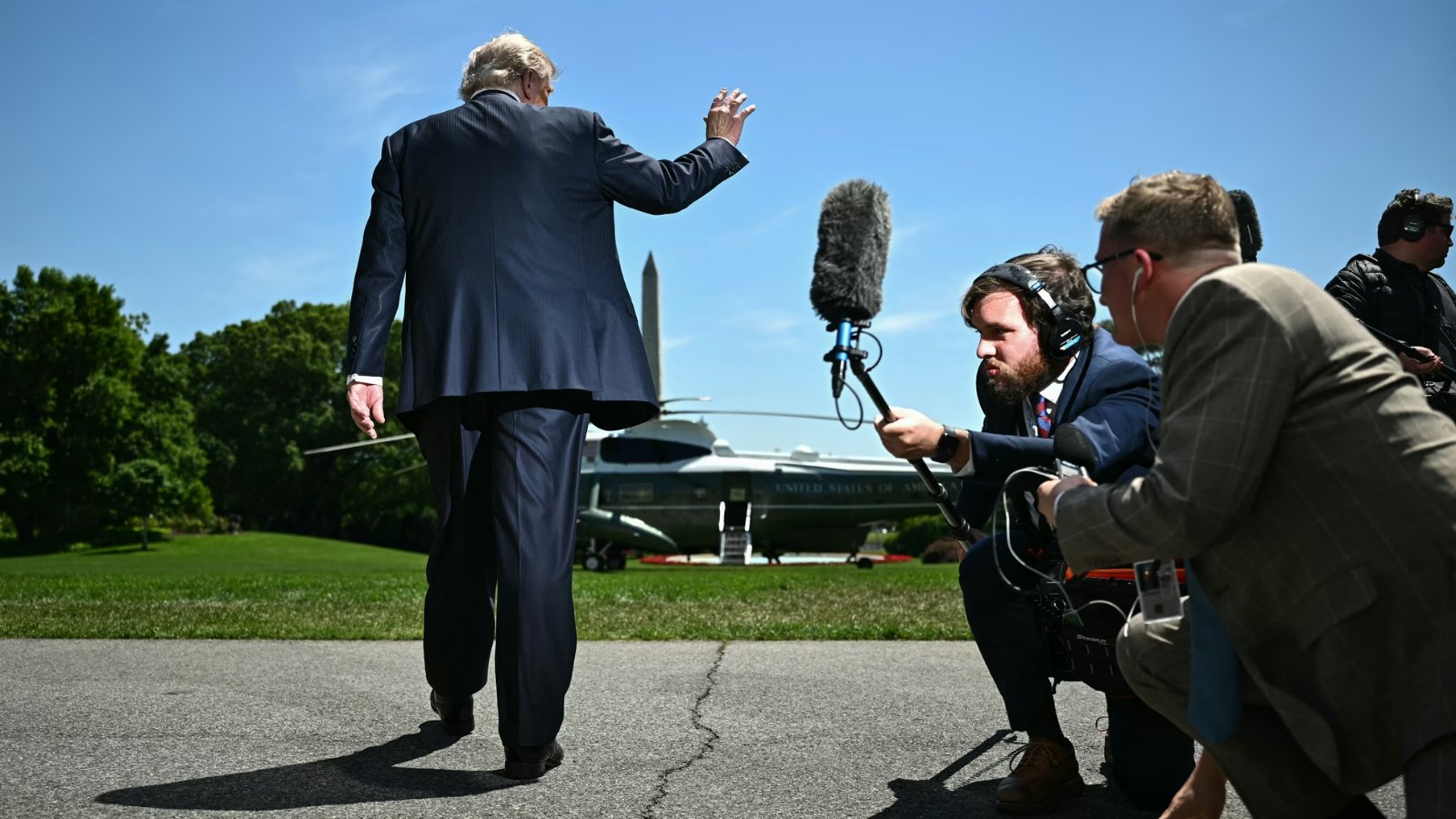
CNN, MS NOW, and Politico Sue Over White House Press Ban; Hearing Set Before the Same Judge Who Ruled for CNN in 2018
What's Actually Being Litigated
On Friday, 18 September 2026, President Trump announced via Truth Social that he was banning CNN, Politico, and MS NOW from the White House, saying the outlets "constantly write or report FICTION and LIES." Reporters from the three organizations were turned away and had their press credentials confiscated by the Secret Service the following day. On Monday, 21 September, the three outlets filed a joint lawsuit in the D.C. District Court, seeking an emergency order to block the ban and restore their journalists' access.
The legal theory rests on two constitutional claims. The outlets argue the ban constitutes viewpoint discrimination in violation of the First Amendment — that the government "does not decide what the press reports or publishes," as their joint statement put it — and separately that the credential revocations violated the Fifth Amendment's Due Process Clause, since they occurred "without notice or process" based, in the outlets' telling, "solely on his dislike of the content of their reporting." Their court filing explicitly invokes Karem v. Trump, a D.C. Circuit precedent addressing White House press-credential revocations without fair notice or an opportunity to respond.
Why the Assigned Judge Matters to This Case's Posture
This is the detail most worth understanding precisely, and it's a genuine legal-analysis point, not editorializing: the case has been assigned to Judge Timothy Kelly — the same judge who, in 2018, ruled in favor of CNN in a strikingly similar dispute. That case involved then-CNN chief White House correspondent Jim Acosta, whose credentials the first Trump White House revoked after a contentious press-conference exchange. Kelly, whom Trump himself nominated to the bench in 2017, found Acosta had not been given due process and ordered the administration to temporarily restore his pass; the administration returned it permanently days later rather than continue litigating. This does not predetermine the outcome of the current case — the facts differ (three outlets and multiple reporters rather than one, and the administration's stated justification has shifted to a national-security framing, discussed below) — but the precedent is close enough on the core due-process question that legal observers are treating Kelly's prior ruling as materially relevant to how this case may proceed. Trump himself reacted to the judge's assignment by publicly attacking Kelly on Truth Social, despite having appointed him.
The Administration's Stated Justification Has Shifted
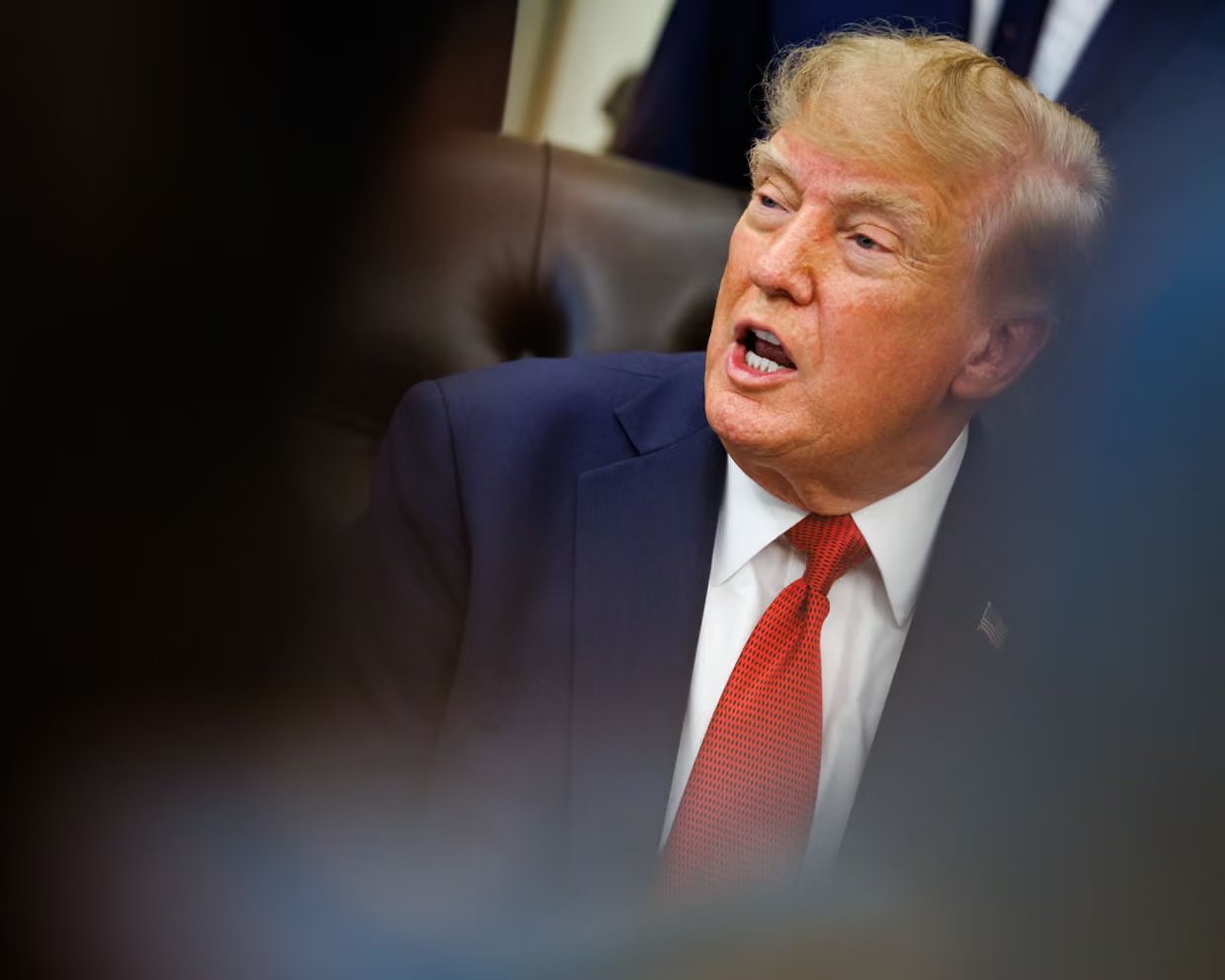
Trump's original Truth Social announcement framed the ban around dissatisfaction with the outlets' reporting. In subsequent public comments, he has instead characterized the ban as addressing a "national security" concern — a justification he has separately invoked for other recent executive actions, including construction of a White House ballroom and a triumphal arch. This shift in stated rationale — from content dissatisfaction to national security — is itself likely to be a live issue in the litigation, since the outlets' due-process claim depends significantly on whether the government provided a legitimate, viewpoint-neutral basis for the credential revocations at the time they occurred, not one articulated afterward.
The Broadcast Networks' Response Is Unprecedented in Scope
Separately from the lawsuit, the other members of the White House press pool — ABC, CBS, Fox News, and NBC, who share pool duties with CNN under a rotating chair arrangement — announced they would suspend televised pool coverage of the president in solidarity with the banned outlets. Fox News's Bryan Boughton, currently serving as pool chair, told pool members: "This follows the White House's position preventing CNN from fulfilling its assigned pool duties." The practical effect was immediate: without professional pool audio and camera equipment, Trump's remarks at a Monday ribbon-cutting event for a new White House helipad were reported as largely inaudible over background helicopter noise, despite a White House-provided livestream. In response, the administration promoted its own video feed, branded "Trump TV," on social media. Separately, the Washington Post, New York Times, and Associated Press withheld distribution of White House photography-pool images for several hours as a further show of solidarity. Print, radio, and wire service coverage of the president's movements continued uninterrupted throughout.
Compliance Implications / What This Means for Media Organizations and Legal Teams
Who must act, and what specifically changes: No new compliance obligation applies to any organization outside this specific litigation. For media law practitioners and First Amendment counsel, this is a live case worth tracking closely given its direct bearing on White House press-credential due-process standards.
Legal exposure and precedent risk for the administration: Given Judge Kelly's 2018 ruling on closely analogous facts, the administration faces a meaningfully elevated risk of an adverse TRO ruling on the due-process claim specifically, independent of how the separate First Amendment viewpoint-discrimination claim is resolved. Organizations advising clients on government-access credentialing disputes should note that the shifting justification (content objection, later reframed as national security) is likely to be scrutinized closely, since after-the-fact rationales generally carry less weight in due-process analysis than contemporaneous ones.
Realistic timeline: A ruling on the TRO request could come as early as this week, following Wednesday's hearing. A TRO, if granted, would be an interim measure — it would not resolve the underlying constitutional claims, which would proceed separately if the case continues.
What remains uncertain or pending: Whether Judge Kelly grants the TRO, and on what specific grounds, is unknown as of this writing. Whether the broadcast networks' voluntary pool-coverage suspension continues beyond a ruling, and under what conditions the pool arrangement would resume normal operation, has not been addressed in available reporting.
Frequently Asked Questions
What exactly are CNN, MS NOW, and Politico asking the court to do? They're seeking a temporary restraining order — an emergency, short-term court order — to immediately block enforcement of the ban and restore their journalists' White House press credentials, ahead of any final ruling on the underlying constitutional claims.
Why does it matter that Judge Kelly is hearing this case? Kelly ruled in CNN's favor in a similar 2018 dispute involving reporter Jim Acosta, finding the administration had not provided due process before revoking his credentials. That prior ruling doesn't guarantee the same outcome here, but it's a directly relevant precedent from the same judge on closely related facts.
Has the administration explained why it banned these specific outlets? Trump's original stated reason was dissatisfaction with the outlets' reporting, which he described as "FICTION and LIES." He has since also characterized the ban as addressing a "national security" concern, a shift in justification likely to be scrutinized in the litigation.
Why did other networks like ABC, CBS, Fox News, and NBC stop covering Trump too, if they weren't banned? They share White House pool-coverage duties with CNN on a rotating basis and voluntarily suspended their own televised pool coverage in solidarity, arguing the ban prevented the pool system from functioning as intended. This was a voluntary decision, not something the administration required or requested.
Does this affect all coverage of the president, or just video? Just televised pool video coverage was suspended by the networks. Print, radio, and wire service reporters continued covering the president's activities throughout, and the White House provided its own livestream and promoted an alternative video feed.
When will we know the outcome? A hearing on the emergency request is scheduled for Wednesday, 23 September 2026. A ruling could follow relatively quickly given the emergency nature of the request, though no timeline is guaranteed.
Citations
- 1.CNN, "CNN, MS NOW and Politico sue Trump administration over White House access" — includes direct quotations from the joint statement and lawsuit filing.
- 2.NBC News, "CNN, Politico, MS NOW plan to sue Trump administration over ban on White House coverage" — confirms named reporters (Betsy Klein, Akayla Gardner, Cheyenne Haslett) and White House Correspondents' Association reaction.
- 3.PBS News, "CNN, MS NOW, Politico sue over Trump denying White House access" — confirms the Knight First Amendment Institute's amicus filing and direct quotation of the lawsuit's due-process language.
- 4.MS NOW, "MS NOW, CNN and Politico sue Trump over White House press ban" — confirms Judge Kelly's assignment, the Wednesday hearing date, and detail on his 2018 Acosta ruling.
- 5.CNBC, "Trump media ban lawsuit set for Wednesday court hearing" — confirms the DOJ's Tuesday response deadline and Wednesday 3:30pm ET hearing time.
- 6.Axios, "CNN, MS NOW, Politico sues White House over blocked access" — confirms the outlets' joint statement language and Trump's response.
- 7.Historical precedent (2018 CNN v. Trump / Jim Acosta credential dispute): contemporaneous 2018 wire reporting, cross-checked against current outlets' references to the same case.
- 8.Original background reporting on the pool-coverage suspension and "Trump TV" feed: The Guardian.
Finish Reading the Full Story and the Expert Analysis.
Get the latest legal & regulatory intelligence in United States
Wansom is AI and can make mistakes.