
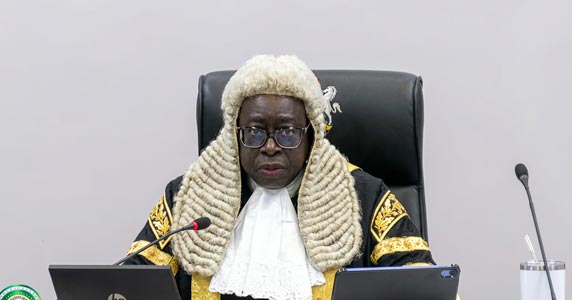
CJN Warns Nigerian Appeal Court Justices: Resist External Influence
Summary
- Chief Justice Kudirat Kekere-Ekun recently swore in twelve new justices to the Nigerian Court of Appeal.
- The Chief Justice warned the new appointees against political, financial, social, and personal pressures.
- Justices were also cautioned to resist public opinion and undue influence from professional relationships, including senior colleagues.
- The warnings emphasized the need to protect judicial independence and the integrity of the Nigerian judiciary.
- Ultimately, the Chief Justice mandated that all decisions must be based strictly on the law and the justices' individual consciences.
A Pivotal Induction
Ultimately, the Chief Justice of Nigeria articulated a fundamental expectation for the newly elevated justices: their decisions must be guided exclusively by the law and their individual conscience.
The Nigerian judiciary recently witnessed a significant event with the formal induction of twelve new justices into the Court of Appeal. This ceremony, presided over by the Chief Justice of Nigeria, Justice Kudirat Kekere-Ekun, marks a crucial expansion of the appellate bench, bringing fresh judicial talent to one of the nation's most vital legal institutions. The swearing-in underscores the ongoing efforts to strengthen the judicial system and ensure its capacity to handle the increasing caseload.
Upholding Judicial Integrity
A central theme of the Chief Justice's admonition was the imperative to resist various forms of external influence that could undermine their judicial independence. Justice Kekere-Ekun specifically cautioned the new justices against succumbing to political pressures, which often seek to sway legal outcomes for partisan gain. Similarly, she warned against financial inducements, social expectations, and personal biases, all of which pose significant threats to impartial decision-making.
Furthermore, the Chief Justice stressed the importance of insulating judicial processes from public opinion, which, while sometimes vocal, should not dictate legal rulings. She also advised the justices to navigate professional relationships carefully, explicitly mentioning the potential for undue pressure from senior colleagues. These warnings collectively aim to safeguard the integrity of the Nigerian judiciary, ensuring that judgments are rendered solely on the merits of the law and evidence presented.
The Mandate for Impartiality
The Chief Justice's directives are a clear call for robust judicial ethics in Nigeria, reinforcing the principle that justice must not only be done but also be seen to be done without compromise. Her message underscored that the bedrock of a fair legal system rests on the ability of judges to decide cases free from any form of coercion or external persuasion. This commitment to impartiality is paramount for maintaining public trust in the judicial process.
Ultimately, the Chief Justice of Nigeria articulated a fundamental expectation for the newly elevated justices: their decisions must be guided exclusively by the law and their individual conscience. This directive serves as a powerful reminder that the personal integrity of each judge is inextricably linked to the overall integrity of the Nigerian judiciary. It is a foundational principle designed to ensure that justice remains accessible and equitable for all citizens, free from the corrupting influence of external factors.
Practical Implications
This development underscores the Nigerian judiciary's renewed emphasis on judicial independence and integrity, particularly within the Court of Appeal. Lawyers should be aware that judicial officers are being explicitly cautioned against external pressures, which may influence how cases are adjudicated and how ethical breaches are perceived within the legal system.
Source
How does this affect you?
Get an AI analysis of this article grounded in your jurisdictions, practice areas, and any policy documents you've uploaded to Wansom.
Finish Reading the Full Story and the Expert Analysis.
Get the latest legal & regulatory intelligence in Nigeria
Wansom is AI and can make mistakes.