
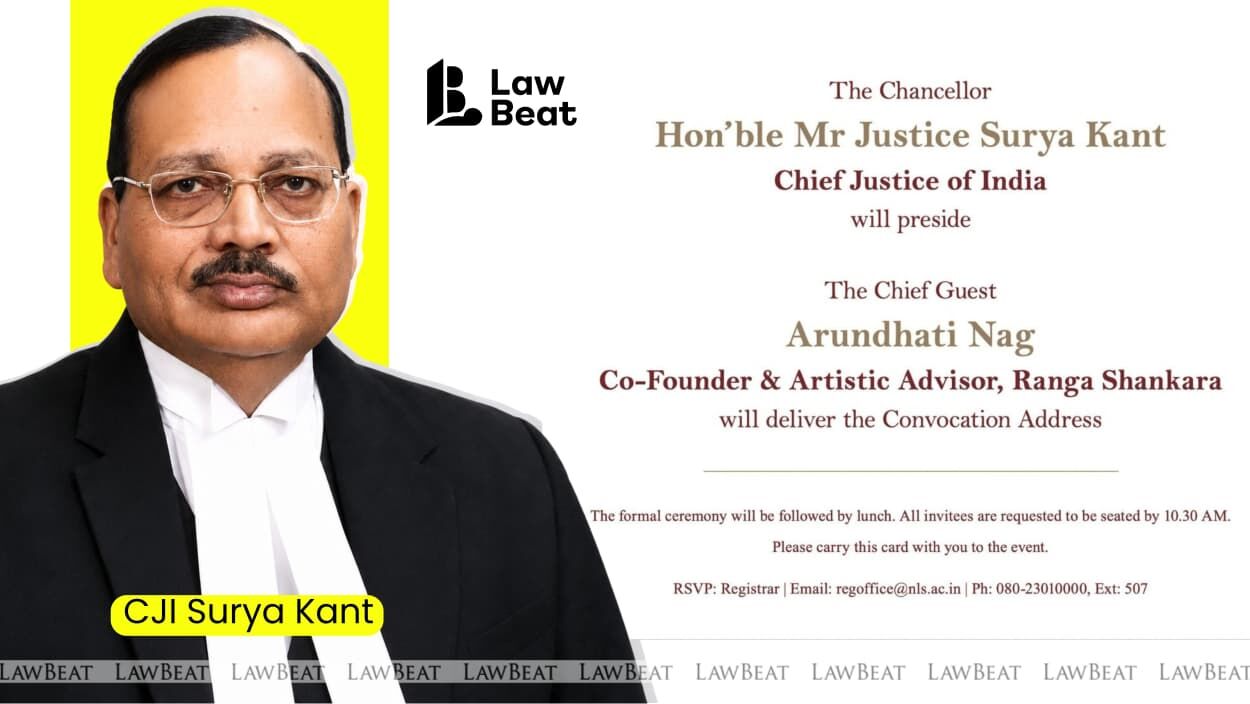
NLSIU: CJI Surya Kant Confirmed for October 17 Convocation
Summary
- Chief Justice of India Surya Kant is confirmed to preside over the National Law School of India University convocation on October 17 as its Chancellor.
- This confirmation follows earlier protests by NLSIU students and alumni regarding the CJI's attendance, which had led to a temporary cancellation of the event.
- Students from NLSIU and NALSAR University of Law, Hyderabad, raised objections over the CJI's remarks concerning NEET Paper Leak protests and alleged police excesses during a Delhi demonstration.
- NLSIU students also opposed the attendance of Bar Council of India chairman Manan Kumar Mishra, citing concerns over the BCI's now-withdrawn order against NALSAR.
- A statement signed by 165 graduating NLSIU students, 409 current students, and 128 alumni condemned inviting officials who had expressed 'disdain and condescension' towards students.
CJI Surya Kant to Preside Over NLSIU Convocation Amidst Prior Protests
The students' collective statement underscored their belief that inviting high-ranking officials who had publicly expressed 'disdain and condescension' towards students constituted an 'offensive, humiliating and a mockery of students and their struggles'.
Chief Justice of India Surya Kant is officially confirmed to preside over the National Law School of India University (NLSIU) convocation ceremony on October 17. The Chief Justice will attend in his capacity as the university's Chancellor, an annual tradition for the institution. Actor Arundhati Nag is slated to be the Chief Guest for the event, where she will deliver the Convocation Address to the graduating class.
This confirmation from NLSIU follows a period of uncertainty regarding the CJI's participation, which arose due to significant opposition from a segment of NLSIU students and alumni earlier this year. The university had previously announced the cancellation of the convocation on August 27, citing "unavoidable circumstances," a decision that came amidst the widespread student dissent.
Student Opposition Rooted in Judicial Remarks and Institutional Actions
The student protests at NLSIU, which gained momentum in August, were primarily launched in solidarity with their counterparts at NALSAR University of Law, Hyderabad. A key point of contention for both student bodies revolved around remarks attributed to CJI Surya Kant concerning the NEET Paper Leak protests. Additionally, NLSIU students voiced strong objections to the attendance of Bar Council of India (BCI) chairman Manan Kumar Mishra at their convocation.
Condemnation of 'Disdain' and BCI's Actions
A collective statement, signed by 165 graduating students from the Class of 2026, 409 current students, and 128 alumni of NLSIU, articulated their profound disapproval. The students' collective statement underscored their belief that inviting high-ranking officials who had publicly expressed 'disdain and condescension' towards students constituted an 'offensive, humiliating and a mockery of students and their struggles.'
Furthermore, the students condemned a now-withdrawn BCI order that sought to halt the enrolment of NALSAR University of Law students. While acknowledging the BCI had closed all proceedings against NALSAR, the statement emphasized that the initiation of such "unconstitutional and illegal 'proceedings'" by a statutory body against university students and faculty did not diminish the gravity of the actions or the responsibility of the BCI Chairman and the Council. They expressed solidarity with NALSAR students, commending their "exemplary courage and moral conviction in speaking truth to power."
Institutional Roles and the Significance of Student Dissent
The Chief Justice of India traditionally serves as the Chancellor of NLSIU, while the Bar Council of India chairman holds the position of chairman of the university's general council. The attendance of the CJI at the National Law School of India University convocation is a long-standing norm, making the initial uncertainty and subsequent confirmation particularly notable in light of the student protests.
The sustained opposition from students and alumni across two prominent legal institutions highlights a growing concern within the legal education community regarding judicial conduct and institutional accountability. The decision for CJI Surya Kant to proceed with the NLSIU convocation on October 17, despite the strong sentiments expressed, underscores the complex interplay between academic traditions, student activism, and the roles of high-ranking legal officials.
Practical Implications
This article primarily reports on an academic event and related student protests concerning judicial conduct, offering no direct practical legal implications for lawyers or compliance officers regarding new regulations, compliance exposures, or legal precedents. It may be of interest for those following judicial ethics or legal education governance in India.
Source
How does this affect you?
Get an AI analysis of this article grounded in your jurisdictions, practice areas, and any policy documents you've uploaded to Wansom.
Finish Reading the Full Story and the Expert Analysis.
Get the latest legal & regulatory intelligence in India
Wansom is AI and can make mistakes.