
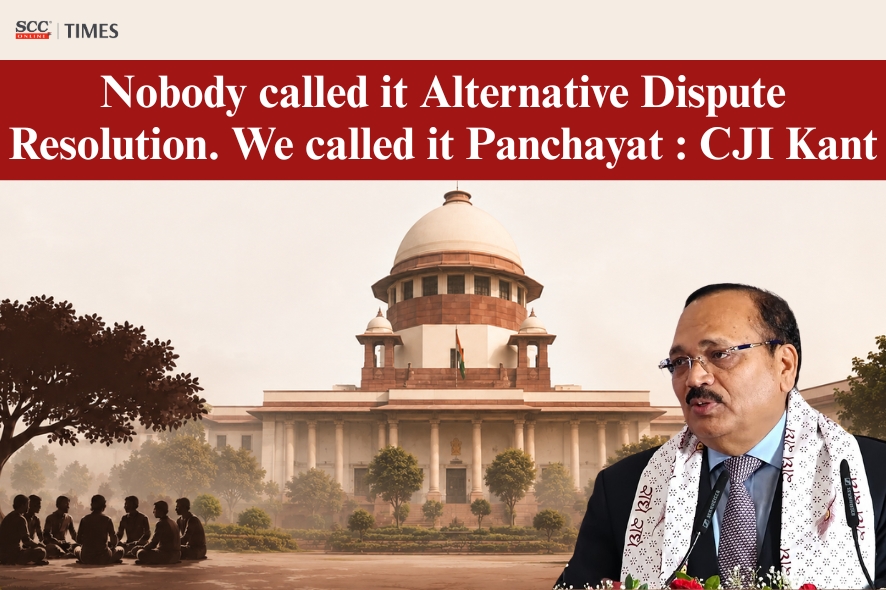
CJI on India's Ancient Mediation Tradition: A Rich History of Dialogue
Summary
- The Chief Justice of India, Justice Surya Kant, highlighted India's long-standing tradition of resolving disputes through dialogue and community participation.
- This approach, rooted in traditional Panchayat systems, predates the modern concept of Alternative Dispute Resolution (ADR).
- Indian laws governing mediation, such as the Indian Mediation Act, 2023, reflect this tradition's emphasis on community participation and consensus-building.
- The CJI's comments may inform lawyers' approach to mediation in Indian cases.
India's Mediation Tradition
It was mediation before the word became fashionable.
The Chief Justice of India, Justice Surya Kant, recently highlighted the country's rich history of resolving disputes through dialogue and community participation. This approach, which predates the modern concept of Alternative Dispute Resolution (ADR), is rooted in traditional Panchayat systems. In these systems, communities come together to resolve conflicts, preserving relationships that are essential for social cohesion. The CJI's remarks underscore the significance of this tradition, emphasizing its relevance to contemporary mediation practices.
Relevance to Indian Mediation Laws
The Panchayat system has long been a cornerstone of India's dispute resolution framework. Its emphasis on community participation and consensus-building has influenced the development of Indian laws governing mediation. For instance, the Indian Mediation Act, 2023, seeks to promote mediation as an alternative to litigation, reflecting the country's commitment to this tradition. Lawyers practicing in India should take note of the CJI's observations, which may inform their approach to mediation in Indian cases.
Why This Matters
The Chief Justice of India's comments on India's mediation tradition have far-reaching implications for the country's dispute resolution landscape. By emphasizing the importance of community participation and consensus-building, the CJI is highlighting a key aspect of Indian culture that can inform contemporary mediation practices. As India continues to grapple with rising disputes and litigation rates, this tradition offers a valuable framework for promoting peaceful conflict resolution.
Practical Implications
Lawyers should note the Chief Justice of India's emphasis on India's long-standing tradition of resolving disputes through dialogue and community participation, which may inform their approach to mediation in Indian cases.
Source
Source: Original reporting via The Hindu
How does this affect you?
Get an AI analysis of this article grounded in your jurisdictions, practice areas, and any policy documents you've uploaded to Wansom.
Wansom is AI and can make mistakes.