
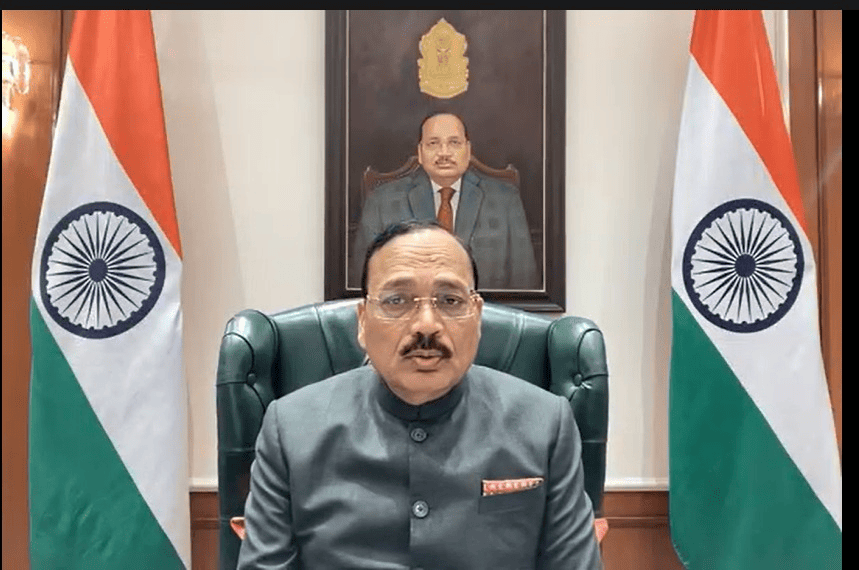
CJI Chandrachud: Calls For Greater India Singapore Arbitration Cooperation
Summary
- The then Chief Justice of India, D.Y. Chandrachud, called for greater cooperation between India and Singapore in international arbitration.
- Key areas identified for collaboration include institutional design, professional standards, training, technology, and early mediation.
- Singapore's Law Minister, Edwin Tong, emphasized a shared goal for both nations to improve, not just succeed in, international arbitration.
- The call was made at an ICA Symposium which coincided with the 200th anniversary of Singapore's Second Charter of Justice.
- This initiative aims to enhance the quality and efficacy of international dispute resolution between the two countries.
A Call for Enhanced Arbitration Cooperation
Then Chief Justice of India D.Y. Chandrachud underscored the critical need for enhanced CJI India Singapore arbitration cooperation across several key domains to elevate the quality and efficacy of international dispute resolution.
During a recent ICA Symposium focused on India–Singapore relations, the then Chief Justice of India, D.Y. Chandrachud, articulated a compelling vision for the future of international arbitration, urging greater collaboration between the two nations. The central message from then Chief Justice D.Y. Chandrachud underscored the critical need for enhanced **CJI India Singapore arbitration cooperation** across several key domains to elevate the quality and efficacy of international dispute resolution. This initiative aims to move beyond mere success in arbitration to actively improve its foundational elements.
The symposium served as a platform for high-level discussions, bringing together prominent legal figures from both countries. Then Chief Justice D.Y. Chandrachud specifically highlighted five crucial areas for this intensified partnership: institutional design, professional standards, training, technology integration, and the promotion of early mediation. These areas represent a comprehensive approach to strengthening the arbitration ecosystem, ensuring that both India and Singapore are not only participants but also innovators in the global landscape of dispute resolution.
Singapore's Law Minister, Edwin Tong, echoed this forward-looking sentiment, emphasizing that the shared ambition for India and Singapore should extend beyond merely achieving favorable outcomes in international arbitration. Instead, he proposed a collective endeavor to fundamentally enhance the entire process, making it more robust, efficient, and equitable for all parties involved. This joint aspiration sets a high bar for the future trajectory of **India Singapore international arbitration**.
Strategic Pillars for Improvement
Then Chief Justice of India D.Y. Chandrachud's detailed proposals for cooperation outline a strategic roadmap for advancing international arbitration practices. Focusing on **institutional design arbitration**, the call suggests a need to examine and potentially harmonize the frameworks and operational structures of arbitration centers in both jurisdictions. Such collaboration could lead to more streamlined processes and greater predictability for parties engaged in cross-border disputes.
Beyond structural considerations, the emphasis on professional standards aims to foster a shared understanding of ethical conduct and best practices among legal practitioners and arbitrators. This would involve developing common benchmarks for expertise and integrity, thereby enhancing the credibility and reliability of arbitration proceedings. Furthermore, dedicated training initiatives are envisioned to build capacity and ensure that legal professionals in both countries are equipped with the latest skills and knowledge required for complex international cases.
The integration of technology represents another vital pillar of this proposed cooperation. Leveraging advancements in digital tools and platforms can significantly improve the efficiency, accessibility, and cost-effectiveness of arbitration. Finally, the promotion of **early mediation India Singapore** seeks to encourage the resolution of disputes at their nascent stages, offering a less adversarial and often more expeditious alternative to full-blown arbitration, thereby preserving business relationships and reducing litigation burdens.
Historical Context and Future Implications
The ICA Symposium, where these significant calls for cooperation were made, held particular historical resonance as it coincided with the 200th anniversary of Singapore's Second Charter of Justice. This historical backdrop underscored the enduring legal traditions and the continuous evolution of justice systems in the region, providing a meaningful context for discussions on modernizing and improving dispute resolution mechanisms.
The proposals put forth by the Chief Justice of India, often referred to in legal circles as **CJI Chandrachud arbitration** initiatives, signal a proactive stance from India in shaping the future of international commercial dispute resolution. The convergence of these efforts with Singapore's established reputation as a leading arbitration hub creates a powerful synergy. This collaborative approach is poised to not only benefit litigants from both nations but also to set new global benchmarks for efficiency, fairness, and innovation in international arbitration.
Ultimately, the vision articulated at the symposium points towards a future where India and Singapore collectively contribute to a more effective and adaptable international arbitration framework. By focusing on shared standards, technological adoption, and early dispute resolution, the two countries aim to solidify their positions as key players in the global legal landscape, offering robust and reliable avenues for resolving complex cross-border commercial disagreements.
Practical Implications
Lawyers involved in international arbitration with an India-Singapore nexus should monitor future policy and institutional developments. This call for cooperation may lead to harmonized standards, new procedural frameworks, or enhanced mediation options, impacting dispute resolution strategies and client advice in cross-border matters.
Source
How does this affect you?
Get an AI analysis of this article grounded in your jurisdictions, practice areas, and any policy documents you've uploaded to Wansom.
Finish Reading the Full Story and the Expert Analysis.
Get the latest legal & regulatory intelligence in India
Wansom is AI and can make mistakes.