
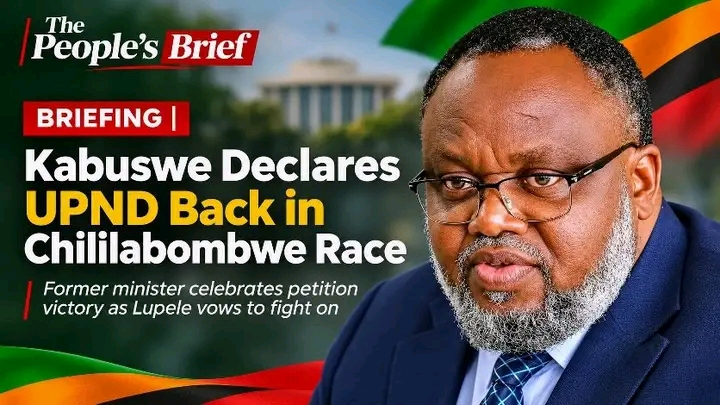
Zambia High Court: Chililabombwe MP Election Nullified
Summary
- The High Court nullified the election of Resolute Party MP Nsofwa Lupele for the Chililabombwe parliamentary seat.
- Minister of Mines and Minerals Development Paul Kabuswe declared the UPND is back in contention for the Chililabombwe seat.
- Nsofwa Lupele has vowed to pursue a court battle, indicating an appeal against the nullification.
- This decision highlights the rigorous judicial scrutiny applied to electoral processes in Zambia.
Judicial Overturn in Chililabombwe
The judgment sets a precedent that could influence how future election petitions are adjudicated and how political parties and candidates conduct their campaigns.
The High Court in Zambia has issued a significant ruling, nullifying the election of Nsofwa Lupele as the Member of Parliament for the Chililabombwe constituency. This judicial decision effectively unseats the Resolute Party MP, marking a pivotal moment in the electoral landscape of the Copperbelt region. The nullification means that the previous outcome of the parliamentary contest for Chililabombwe is now void, necessitating further electoral action.
This development follows a legal challenge to the initial election results, which culminated in the High Court's determination that the election was not conducted in accordance with the law. Such nullifications are a critical component of Zambia's electoral justice system, ensuring that parliamentary representation is based on valid and fair processes. The immediate consequence is the removal of Lupele from his legislative role, opening the door for a new electoral contest.
Legal Ramifications and Recourse
The High Court's decision to nullify the Chililabombwe parliamentary election underscores the rigorous judicial oversight applied to electoral disputes in Zambia. Election petitions are a fundamental mechanism for aggrieved parties to challenge results, and the court's role is to ascertain whether any irregularities or illegalities occurred that could have affected the outcome. In this instance, the court found sufficient grounds to invalidate the previous election.
Following this ruling, the unseated Resolute Party MP, Nsofwa Lupele, has publicly committed to pursuing further legal avenues. Lupele's declaration of an impending "court battle" indicates an intention to appeal the High Court's judgment to a higher court, likely the Constitutional Court, which serves as the final arbiter in such electoral matters. This potential appeal process could extend the legal dispute, delaying the final resolution of the Chililabombwe parliamentary representation.
Political Landscape Shifts
The nullification has immediately reshaped the political dynamics in Chililabombwe. Minister of Mines and Minerals Development Paul Kabuswe has promptly declared that the United Party for National Development (UPND) is now firmly back in contention for the parliamentary seat. This statement highlights the perceived advantage or renewed opportunity for the UPND in the wake of the Resolute Party MP's unseating.
Should the High Court's decision be upheld through any potential appeals, a by-election would be triggered in Chililabombwe. This would present a fresh opportunity for various political parties, including the UPND, to campaign for the vacant seat. The political maneuvering and declarations following such a nullification are typical as parties position themselves for future electoral contests, reflecting the competitive nature of Zambian politics.
Precedent for Electoral Integrity
This High Court ruling holds significant implications for electoral law and practice in Zambia. The nullification of the Chililabombwe MP election serves as a potent reminder of the judiciary's role in upholding the integrity of the electoral process. Lawyers specializing in electoral law, as well as those advising political clients, will undoubtedly scrutinize the specific grounds cited by the High Court for this decision.
The judgment sets a precedent that could influence how future election petitions are adjudicated and how political parties and candidates conduct their campaigns. It reinforces the principle that electoral victories are subject to stringent legal review, and any deviation from established electoral norms can lead to severe consequences, including the unseating of an elected official. This judicial scrutiny is crucial for maintaining public confidence in democratic institutions.
Practical Implications
Lawyers involved in electoral law or advising political clients should analyze the High Court's grounds for nullifying the Chililabombwe parliamentary election, as this decision sets a precedent for future election petitions and highlights the judicial scrutiny applied to electoral processes in Zambia.
Source
How does this affect you?
Get an AI analysis of this article grounded in your jurisdictions, practice areas, and any policy documents you've uploaded to Wansom.
Finish Reading the Full Story and the Expert Analysis.
Get the latest legal & regulatory intelligence in Zambia
Wansom is AI and can make mistakes.