
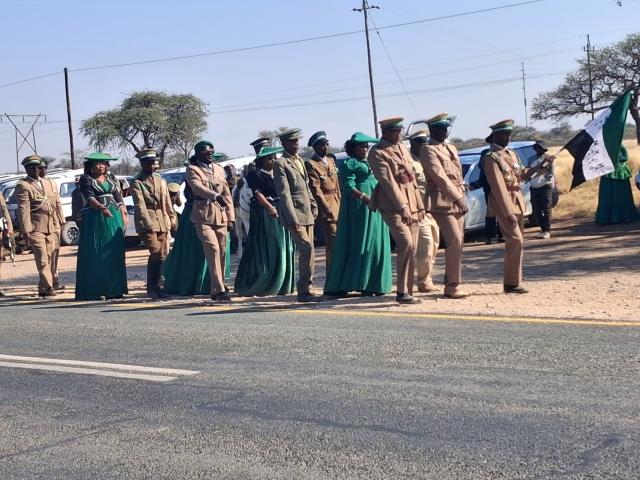
NA Government: Chief Munjuku II Nguvauva Military Base Unveiled at Gobabis
Summary
- The Chief Munjuku II Nguvauva Military Base was officially unveiled in Gobabis, Omaheke region, on a recent Saturday.
- Hundreds of people from across the country attended the ceremony to witness the significant event.
- The government honored former Ovambanderu chief Munjuku II by renaming the 126 Battalion after him.
- Chief Munjuku II was recognized for his pivotal role during the colonial period.
A New Name for a Military Base
This renaming represents a profound gesture of national recognition, embedding a pivotal historical figure's legacy within the country's defense infrastructure.
A significant ceremony recently took place in Gobabis, located within the Omaheke region, marking the official unveiling of the Chief Munjuku II Nguvauva Military Base. The event, held on a recent Saturday, drew hundreds of attendees from across the nation, highlighting the broad public interest and national importance attributed to the occasion. This renaming represents a profound gesture of national recognition, embedding a pivotal historical figure's legacy within the country's defense infrastructure.
The newly designated base previously housed the 126 Battalion, which has now been formally renamed in honor of former Ovambanderu chief Munjuku II. This act by the government serves as a lasting tribute to his contributions, ensuring that his name and the historical significance he represents are permanently associated with a key military installation. The gathering of people from various parts of the country underscores the collective acknowledgment of Chief Munjuku II's enduring impact on the nation's historical narrative.
Honoring a Legacy of Resistance
The government's decision to rename the military base after Chief Munjuku II Nguvauva stems from his instrumental and pivotal role during the colonial period. This recognition is a testament to his leadership and contributions during a critical juncture in the nation's history, reflecting a broader governmental initiative to honor figures who championed resistance and played crucial parts in the struggle against colonial rule. Such acts of renaming public and military institutions are often symbolic, aiming to educate future generations and reinforce national identity through historical remembrance.
By formally associating a military base with Chief Munjuku II, the government not only pays homage to his past endeavors but also integrates his legacy into the ongoing narrative of national sovereignty and defense. This move is consistent with efforts in many post-colonial nations to revise historical narratives and ensure that national heroes, particularly those from indigenous communities who fought against oppression, receive due recognition. The renaming of the 126 Battalion specifically, a unit within the national defense force, imbues it with a deeper historical context and a direct link to the nation's foundational struggles.
Governmental Recognition and National Identity
The official unveiling and renaming of the military base by the government signify a deliberate and public act of historical commemoration. This action underscores the state's role in shaping national memory and identity, particularly through the recognition of figures deemed essential to the country's formation and liberation. The presence of hundreds of people from diverse regions at the ceremony further illustrates the collective buy-in and national resonance of such governmental initiatives.
Renaming a military installation carries substantial symbolic weight, as these sites are not merely operational facilities but also emblems of national strength and resolve. By dedicating such a significant asset to Chief Munjuku II Nguvauva, the government reinforces a narrative that values historical resistance and the contributions of traditional leaders in the face of colonial adversity. This decision reflects a commitment to ensuring that the sacrifices and leadership of past generations are not forgotten, but rather celebrated and integrated into the contemporary national consciousness.
The Broader Significance of Military Base Renaming
The act of renaming a military base, particularly one that previously bore a numerical designation like the 126 Battalion, transforms its identity from a purely functional unit to a living monument. Such a change profoundly impacts the institution's ethos, providing its personnel with a direct link to a revered historical figure and a tangible connection to the nation's struggle for independence. This can foster a stronger sense of purpose and pride among those serving within the Chief Munjuku II Nguvauva Military Base.
Moreover, the renaming serves as a continuous educational tool for the public, reminding citizens of the individuals who shaped their nation's destiny. It ensures that the legacy of Chief Munjuku II, and by extension, the broader history of anti-colonial resistance, remains a visible and integral part of the national landscape. This strategic decision by the government to honor a former Ovambanderu chief through a military installation underscores the enduring importance of historical figures in defining and reinforcing national values and collective memory.
Source
How does this affect you?
Get an AI analysis of this article grounded in your jurisdictions, practice areas, and any policy documents you've uploaded to Wansom.
Wansom is AI and can make mistakes.