
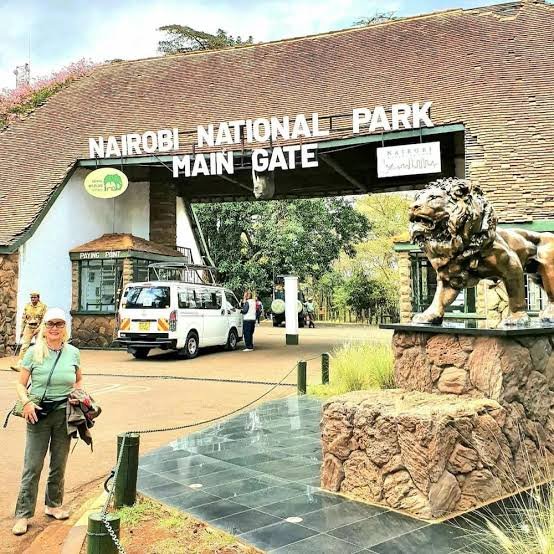
CHAOS at NAIROBI NATIONAL PARK as petitioners temporarily denied inspection as per court orders
Abstract
The visit relates to a petition filed by 4,642 Kenyans challenging the relocation of the Nairobi Animal Orphanage and the excision of park land for the Bomas International Conference Complex. The core issue extends beyond wildlife policy. A state agency named as a respondent in active litigation appears to have restricted the participation of petitioners in a process the court itself had directed, raising questions about compliance with judicial authority by a public body.
Principal risks include contempt exposure for KWS, procedural challenges that could delay or reopen the site visit findings, and reputational damage at a moment when the agency is already defending its environmental approvals. Principal opportunities lie in the court's chance to reinforce judicial authority over state conduct and in KWS's chance to rebuild public trust through transparent conduct at the July 23 hearing.
Stakeholders affected include the Environment and Land Court, KWS leadership, the petitioners and their counsel, the National Environment Management Authority, conservation groups, and any private or public entity involved in the Bomas International Conference Complex project. The immediate significance is that the underlying petition, which challenges whether the relocation and construction were properly authorised, now sits alongside a fresh dispute over whether court process itself was respected.
Introduction
The July 21 incident occurred during what should have been a routine judicial site visit. The Environment and Land Court in Milimani had directed Deputy Registrar Vincent Kiplagat to lead an inspection of the Nairobi Animal Orphanage and the proposed 89-hectare relocation site opposite Bomas of Kenya, with the order specifying that all parties be present. Friends of Nairobi National Park say co-petitioners arrived on time and were instead met by armed, masked KWS personnel who questioned them, directed some back to their vehicles, and later attempted to eject them from KWS headquarters.
This is not simply a dispute about access to a conservation site. It is a dispute about whether a party bound by a court order complied with its terms. The petitioners were eventually allowed into the park, but only after the inspection had already been carried out by court officials, KWS representatives, media, and a single legal representative permitted to accompany them. That sequencing is significant. If the petitioners' own presence was the condition the court attached to the visit, an inspection completed without them raises the question of whether the exercise satisfies the order at all.
The underlying petition, brought by 4,642 Kenyans, challenges the excision of park land for the Bomas International Conference Complex and the relocation of the animal orphanage, on grounds that include inadequate public participation and insufficient environmental assessment. The July 21 incident does not resolve any of those substantive questions. It does, however, introduce a procedural dispute that the court will likely need to address before it can weigh the substantive merits, and it raises broader questions about how state agencies engage with litigation to which they are party.
Background
Kenya's environmental litigation framework rests primarily on the Environment and Management Coordination Act (EMCA), 1999, which establishes the National Environment Management Authority (NEMA) as the principal regulator responsible for environmental impact assessments and licensing.
The Environment and Land Court Act, 2011 establishes the Environment and Land Court as a superior court with jurisdiction over disputes relating to environment and land use, including matters of public land excision and conservation area management. Article 69 of the Constitution of Kenya obligates the state to ensure sustainable exploitation of the environment and to encourage public participation in environmental management, a provision frequently invoked in litigation challenging development approvals inside protected areas.
Analysis
KWS, as a state corporation, is subject to compliance obligations under the State Corporations Act and to general public law duties of good administration. Its conduct here also intersects with EMCA's public participation requirements, since the underlying complaint from petitioners is that participation was inadequate at the approval stage, and now again at the inspection stage. A pattern of restricted participation across both the substantive approval process and the judicial inspection process strengthens, rather than weakens, the petitioners' broader argument about inadequate public participation.
For any private sector entity connected to the Bomas International Conference Complex, whether as contractor, financier, or hospitality partner, the stalled construction and now-contested site visit extend project timeline uncertainty. Businesses with commercial exposure to the relocation project should treat the litigation as materially unresolved, not as a formality awaiting final sign-off, and should factor renewed delay into planning and disclosure where relevant.
Conclusion
For decision-makers watching Kenya's environmental litigation landscape, the trajectory to note is a court increasingly asked to police not just substantive environmental compliance but the conduct of state parties within its own proceedings
Citations
- 1.Constitution of Kenya, 2010, Article 69 (obligations in respect of the environment) and Article 160 (independence of the Judiciary).
- 2.Environmental Management and Coordination Act, No. 8 of 1999.
- 3.Environment and Land Court Act, No. 19 of 2011.
- 4.Wildlife Conservation and Management Act, No. 47 of 2013.
- 5.State Corporations Act, Cap 446, Laws of Kenya.
- 6.Environment and Land Court, Milimani, site visit order directing inspection in the presence of all parties, matter pending as at 21 July 2026.
- 7.Statement by Friends of Nairobi National Park (FoNNaP), 21 July 2026.
Finish Reading the Full Story and the Expert Analysis.
Get the latest legal & regulatory intelligence in Kenya
Wansom is AI and can make mistakes.