
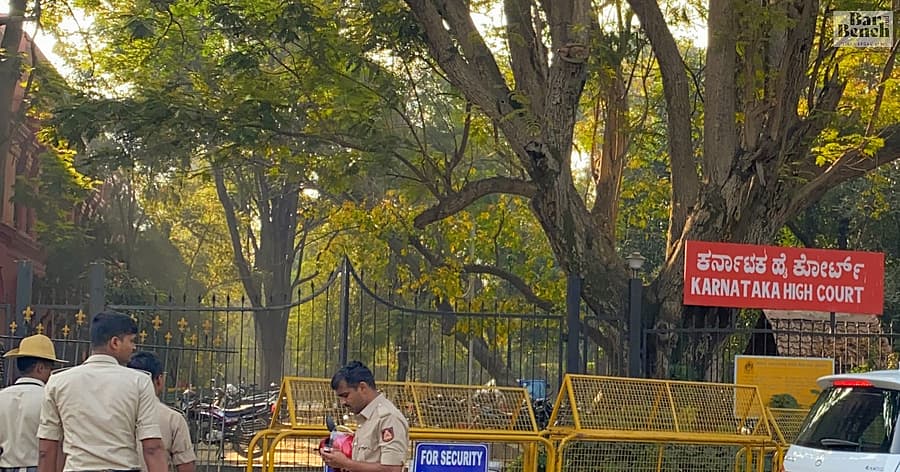
Karnataka High Court: Chandan G v State of Karnataka Compensation, ₹2.77 Cr Awarded
Summary
- The Karnataka High Court awarded ₹2.77 crore with 6% interest to Chandan G, who suffered permanent paraplegia after a tree branch fell on him.
- The court found the BBMP liable due to its statutory and public duty regarding the tree, despite its location on private school premises.
- The civic body had actual notice of the danger from February 22, 2024, before the incident occurred on March 7, 2024.
- The court directed the State government to establish a comprehensive mechanism for addressing public safety hazards, even with divided responsibility.
- Guidelines include using cameras and artificial intelligence for hazard detection, maintaining digital records, and implementing time-bound responses.
The Ruling and Its Impact
Justice Suraj Govindaraj, presiding over the case, determined that the Bruhat Bengaluru Mahanagara Palike (BBMP), which was replaced by the Greater Bengaluru Authority (GBA) as the apex civic body for Bengaluru on September 2, 2025, bore a statutory and public duty concerning the tree.
The Karnataka High Court has mandated a significant compensation of ₹2.77 crore, along with 6% interest, to a Bengaluru resident who suffered permanent paraplegia after a tree branch fell on him while he was walking on a public road. This landmark decision, rendered in the case of Chandan G v. State of Karnataka, addresses the severe injury sustained by Chandan G when a Gulmohar tree branch struck him on March 7, 2024.
Justice Suraj Govindaraj, presiding over the case, determined that the Bruhat Bengaluru Mahanagara Palike (BBMP), which was replaced by the Greater Bengaluru Authority (GBA) as the apex civic body for Bengaluru on September 2, 2025, bore a statutory and public duty concerning the tree. This duty was affirmed despite the tree being situated within the premises of a private school. A critical factor in the court's finding was the establishment of actual notice: the civic body was aware of the potential danger from the tree at least as early as February 22, 2024, prior to the incident.
Legal Rationale and Civic Responsibility
The court's ruling underscores a crucial aspect of civic body negligence in India, particularly regarding public safety liability. Justice Govindaraj's judgment clarifies that a civic authority's responsibility extends beyond public property, encompassing hazards originating on private land if they pose a risk to individuals on public thoroughfares. The finding that BBMP had "actual notice" of the hazard from the Gulmohar tree branch significantly strengthened the plaintiff's claim, establishing a clear link between the civic body's awareness and its failure to act.
This interpretation of duty implies that civic authorities cannot simply disclaim responsibility for dangers that manifest from private premises onto public spaces, especially when they have been made aware of such risks. The decision in Chandan G v. State of Karnataka sets a precedent that could broaden the scope of accountability for municipal bodies, compelling them to proactively address potential threats to public safety irrespective of property lines, provided a public duty exists and notice is established. The paralysis compensation awarded on account of the Karnataka High Court tree branch injury on a public road highlights the severe consequences of such negligence.
Proactive Hazard Management Directives
Beyond the immediate Chandan G v State of Karnataka compensation, the Karnataka High Court issued a series of directives aimed at preventing future incidents and enhancing public safety. The court specifically called upon the State government to establish a robust mechanism for addressing public safety hazards. This mechanism is intended to function effectively even when responsibility for a hazard is fragmented across various departments, authorities, contractors, utility providers, or private owners.
The core objective of this proposed system is to ensure that once a danger is reported or reasonably identified, the information is meticulously recorded, assessed according to its degree of risk, assigned to a named individual or authority for resolution, and diligently followed through until the hazard is neutralized. Furthermore, the remedial work must be independently verified to confirm its effectiveness. To facilitate this, the court issued specific guidelines, including the imperative use of cameras and artificial intelligence (AI) for hazard detection, the maintenance of comprehensive digital records, and the implementation of time-bound response protocols tailored to the severity of the threat. This emphasis on AI hazard detection civic authorities marks a forward-thinking approach to public safety.
Practical Implications
This ruling significantly clarifies and potentially expands the liability of civic authorities for public safety hazards, even those originating on private property, if a public duty exists and notice is established. Lawyers should advise municipal clients on the imperative to implement robust, technology-assisted (including AI) hazard detection and inter-departmental response mechanisms to mitigate liability risks and ensure compliance with judicial directives.
Source
How does this affect you?
Get an AI analysis of this article grounded in your jurisdictions, practice areas, and any policy documents you've uploaded to Wansom.
Finish Reading the Full Story and the Expert Analysis.
Get the latest legal & regulatory intelligence in India
Wansom is AI and can make mistakes.