
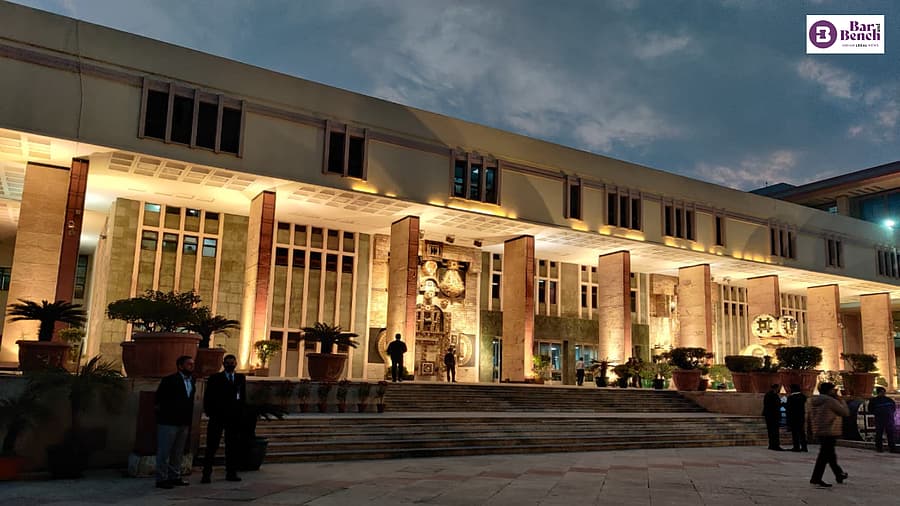
Central Government Appoints 7 Delhi High Court Judges
Summary
- The central government officially notified the appointment of seven judicial officers as judges of the Delhi High Court on Saturday.
- Nivedita Anil Sharma and Nisha Sahay Saxena were appointed as permanent judges, while five others, including former Registrar General Arun Bhardwaj, were appointed as additional judges.
- These appointments follow a Supreme Court Collegium recommendation from September 10 for eight names, though only seven were cleared by the Centre, with Gurvinder Pal Singh not among them.
- The Delhi High Court, with a sanctioned strength of 60 judges, was previously operating with 44 judges, leaving 16 vacancies.
Central Government Appoints Seven Delhi High Court Judges
The addition of these seven new judges, comprising both permanent and additional appointments, will help alleviate some of the existing pressure on the court's judicial resources.
The central government officially announced on Saturday the appointment of seven judicial officers to serve as judges of the Delhi High Court. This significant development sees two individuals, Nivedita Anil Sharma and Nisha Sahay Saxena, elevated to the esteemed position of permanent judges, signifying their long-term tenure on the bench. Concurrently, five other judicial officers — Sanjay Sharma, Bharat Parashar, Aditi Choudhary, Dinesh Bhatt, and Arun Bhardwaj — have been appointed as additional judges. These additional judges typically serve for a fixed term, after which their appointment may be made permanent based on performance and judicial requirements.
Notably, Arun Bhardwaj previously held the crucial administrative role of Registrar General for the Delhi High Court, bringing his extensive experience from that position directly to the judicial bench. These appointments are a key step in bolstering the judicial strength of the Delhi High Court, which plays a pivotal role in the legal landscape of the capital. The formal notification from the central government confirms the final stage of their appointment process, making their elevation official and marking a notable moment for Delhi High Court new judge appointments.
The Appointment Process and Collegium's Role
These recent judicial appointments follow a recommendation made by the Supreme Court Collegium on September 10, which had proposed a total of eight judicial officers for elevation to the Delhi High Court. The Collegium, a body comprising the Chief Justice of India and senior-most judges of the Supreme Court, plays a primary role in initiating the selection process for high court judges. However, the central government's subsequent notification cleared only seven of these names, indicating a divergence from the Collegium's initial recommendation.
Specifically, Gurvinder Pal Singh was not among the individuals whose names were approved by the Centre for judgeship on this occasion. This outcome underscores the multi-stage process involved in judicial appointments, where the Supreme Court Collegium Delhi High Court recommendations undergo further scrutiny and approval by the central government before the final notification is issued. The decision to clear a subset of the recommended names highlights the distinct roles played by both the judiciary and the executive in the appointment of judges to the Delhi High Court.
Addressing Judicial Vacancies in the Delhi High Court
The Delhi High Court operates with a sanctioned strength of 60 judges, a number determined to effectively manage its substantial and often complex caseload. Prior to these new appointments, the court was functioning with only 44 judges, resulting in a significant vacancy position of 16. This shortfall can lead to increased case backlogs and delays in the judicial process, impacting litigants and the overall efficiency of justice delivery.
The addition of these seven new judges, comprising both permanent and additional appointments, will help alleviate some of the existing pressure on the court's judicial resources. While these appointments do not fully bridge the gap to the sanctioned strength, they represent a meaningful step towards reducing the number of Delhi High Court judicial vacancies. The influx of new judicial talent is expected to contribute positively to the court's capacity and operational efficiency, potentially speeding up the resolution of pending cases and enhancing the overall pace of justice within the capital's high court. These new judge appointments are crucial for maintaining the court's ability to handle its responsibilities effectively.
Practical Implications
Lawyers and compliance officers should note the appointment of these new judges to the Delhi High Court, as it impacts the court's composition and may influence case management, hearing schedules, and the overall pace of justice delivery, especially given the existing vacancies.
Source
How does this affect you?
Get an AI analysis of this article grounded in your jurisdictions, practice areas, and any policy documents you've uploaded to Wansom.
Finish Reading the Full Story and the Expert Analysis.
Get the latest legal & regulatory intelligence in India
Wansom is AI and can make mistakes.