
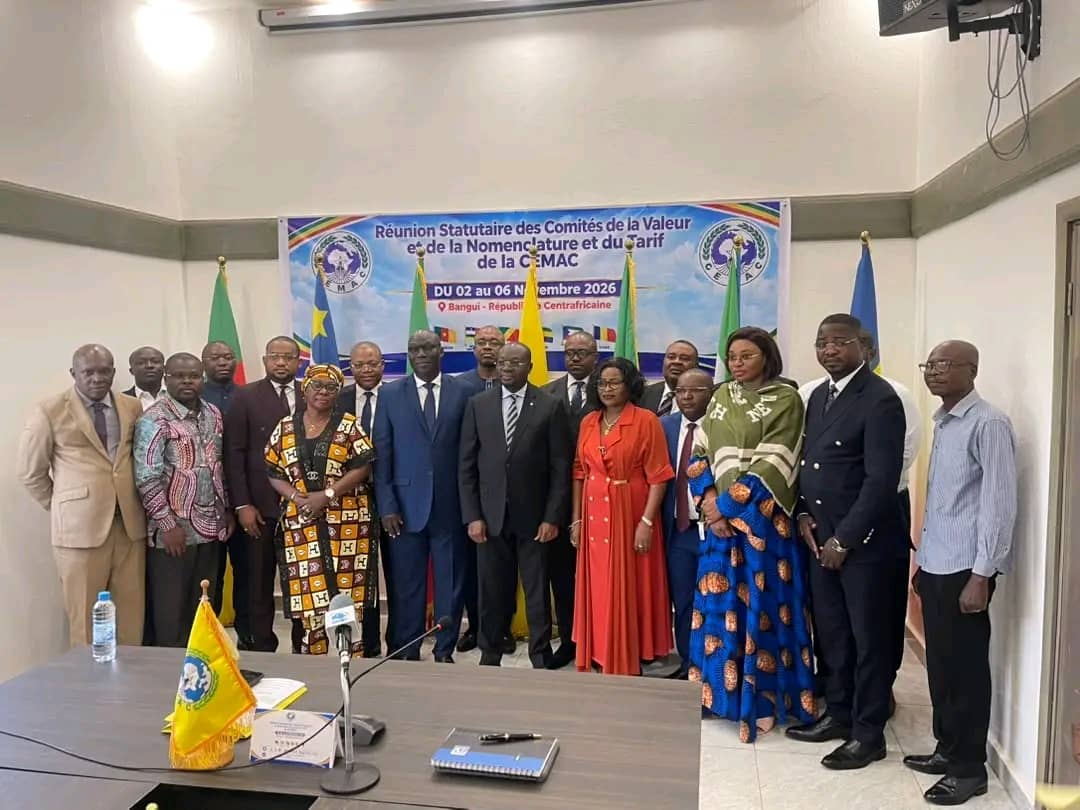
CEMAC Import-Substitution Strategy: Bangui Meetings Advance Implementation
Summary
- CEMAC committees convened in Bangui on November 2, 2026, to strengthen the customs union and advance import-substitution.
- Commissioner Mbogo Ngabo Seli emphasized the urgency of reforms due to international conditions.
- The regional import-substitution strategy targets priority products including fish, rice, wheat, meat, and cassava.
- The agenda includes validating fiscal incentives for production inputs and equipment, and reviewing customs approval requests.
- A key challenge is balancing increased sub-regional production with the preservation of member states' budgetary revenues.
What Happened
A significant challenge for these deliberations is to strike a delicate balance: fostering dynamic sub-regional production while simultaneously safeguarding the budgetary revenues of member states.
A series of crucial meetings for the CEMAC region commenced on November 2, 2026, in Bangui, bringing together the Committees of Valuation, Nomenclature, and Tariff. These joint statutory sessions, presided over by Mbogo Ngabo Seli, the Commissioner responsible for the Common Market, are designed to reinforce the existing CEMAC customs union. A primary objective is to invigorate intra-community commerce and fully implement the regional import-substitution strategy Bangui is hosting.
Commissioner Seli underscored the pressing need for accelerated reforms, citing the current international economic climate as a catalyst for these changes. The agenda for these discussions is comprehensive, focusing on critical measures to bolster the sub-region's economic resilience. The committees are tasked with ensuring that the CEMAC import-substitution strategy is not merely theoretical but becomes an operational framework for economic development.
Driving the Import-Substitution Agenda
A core focus of the Bangui meetings is the operationalization of a regional import-substitution strategy, targeting specific essential goods. This initiative aims to reduce the CEMAC region's reliance on external markets for key products. The strategy prioritizes increasing domestic production of items such as fish, rice, wheat, meat, and cassava, which are vital for food security and local economies.
This strategic shift is a direct response to the imperative of strengthening the sub-regional productive apparatus. By fostering greater internal production, the CEMAC aims to mitigate its CEMAC import dependency, thereby enhancing economic stability and creating more robust internal markets. The discussions are centered on how best to achieve this without compromising the financial health of member states.
Balancing Economic Growth and Fiscal Stability
The committees' agenda includes the validation of new CEMAC fiscal incentives specifically designed for production inputs and equipment. These incentives are crucial for stimulating local manufacturing and agricultural output within the CEMAC regional trade bloc. Concurrently, a rigorous examination of all pending customs approval requests is underway, aiming to streamline processes and ensure fair application of CEMAC customs agreements.
A significant challenge for these deliberations is to strike a delicate balance: fostering dynamic sub-regional production while simultaneously safeguarding the budgetary revenues of member states. The ultimate goal is to boost internal production across the CEMAC zone to diminish reliance on imports, all without undermining the public finances of the individual nations that comprise the economic community. This intricate balancing act is central to the long-term success of the import-substitution strategy.
Practical Implications
Lawyers and compliance officers should monitor the outcomes of these CEMAC committee meetings for new fiscal incentives for production inputs and equipment, as well as potential changes to customs agreements. These developments could significantly impact import/export operations and local manufacturing strategies for businesses operating within the CEMAC zone.
Source
How does this affect you?
Get an AI analysis of this article grounded in your jurisdictions, practice areas, and any policy documents you've uploaded to Wansom.
Wansom is AI and can make mistakes.