
CEDEAO Court: Arrêt Réforme Constitutionnelle Togo 2024 Declared Unconstitutional
Summary
- The Cadre National de Concertation pour le Changement (CNCC) hosted a conference in Lomé to discuss the CEDEAO Court of Justice's ruling on Togo's 2024 constitutional reform.
- Legal experts at the conference debated the ruling, with some asserting the reforms were unconstitutional under the African Charter on Democracy, Elections and Governance (CADEG), while others noted discrepancies in the judgment.
- One legal scholar argued that Togo was "condemned" in violation of CADEG Article 23, emphasizing the collective responsibility for implementing the decision.
- The conference concluded with a joint appeal for citizen mobilization to ensure the effective application of the CEDEAO Court's decision.
Key Legal Discussion on Togo's Constitutional Reform
Professor Komi Wolou articulated a strong position, asserting unequivocally that the Court had determined the constitutional modifications implemented by the Togolese government to be "anticonstitutionnelles."
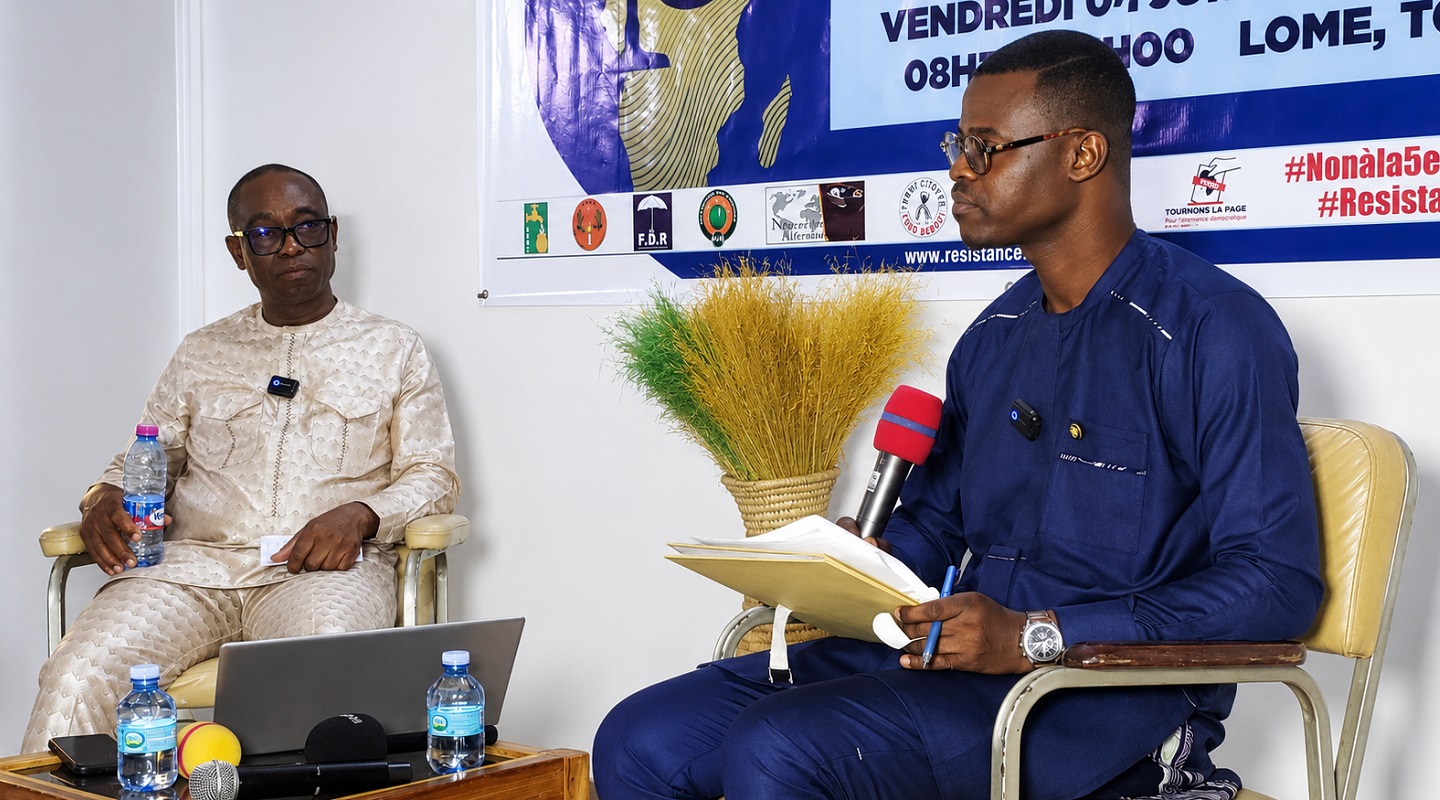
The Cadre National de Concertation pour le Changement (CNCC) recently hosted a significant conference-debate in Lomé, focusing on the ruling issued by the Cour de justice de la CEDEAO concerning Togo's 2024 constitutional reform. Held under the evocative theme, "The CEDEAO Court of Justice's ruling on Togo's 2024 constitutional reform: a major jurisprudential turning point in Africa?", the event brought together a diverse group of legal scholars, political figures, and civil society actors. The discussions were structured around two primary communications, designed to thoroughly dissect the implications of the regional court's decision.
One segment of the conference was dedicated to an in-depth legal analysis of the arrêt, featuring contributions from prominent experts. Among them were Martial Zongo, a professor of public law at Thomas Sankara University in Burkina Faso, and Mamadou Ismaïla Konaté, an esteemed lawyer practicing at the Mali and Paris bars, who also previously served as Mali's Minister of Justice. They were joined by Komi Wolou, a professor specializing in private and criminal law at the University of Lomé. This panel meticulously examined the nuances of the CEDEAO Court's judgment, exploring its legal foundations and potential ramifications for the Togolese state and regional jurisprudence.
Divergent Legal Interpretations of the CEDEAO Ruling
During the legal analysis, differing perspectives emerged regarding the precise scope and interpretation of the CEDEAO Court's decision. Professor Komi Wolou articulated a strong position, asserting unequivocally that the Court had determined the constitutional modifications implemented by the Togolese government to be "anticonstitutionnelles." He specifically referenced the African Charter on Democracy, Elections and Governance (CADEG) as the framework underpinning this conclusion, highlighting the regional instrument's role in assessing national constitutional amendments. This interpretation suggests a direct challenge to the legitimacy of the recent changes.
However, Me Ismaïla Konaté offered a more nuanced view, pointing to what he described as a "distortion between the grounds and the operative part" of the ruling. He argued for the necessity of a new referral to the Court, aiming to rectify the arrêt and clarify its practical application. This perspective suggests that while the CEDEAO Court arrêt réforme constitutionnelle Togo 2024 is significant, its implementation might face further legal hurdles or require additional judicial clarification. Political scientist Mohamed Madi Djabakate further contributed to the debate, stating his belief that Togo had been "condemned" in violation of CADEG Article 23, underscoring the specific legal basis for the regional court's intervention and the perceived breach of democratic governance principles. These discussions underscore the complexity surrounding the Cour de justice de la CEDEAO Togo's pronouncement and the ongoing debate about the réforme constitutionnelle togolaise anticonstitutionnelle.
Broader Implications and Call for Action
Beyond the technical legal analysis, the conference also delved into the broader political implications of the CEDEAO Court's decision and the potential role of the international community. This segment featured interventions from a diverse panel, including Armando Lona, a journalist and president of the Front Populaire in Guinea-Bissau, and Victor Prudent Topanou, a lecturer at the University of Abomey-Calavi and former Minister of Justice for Benin. They were joined by Ekoué David Dosseh, a professor of medicine at the University of Lomé and a prominent civil society actor, alongside Marie Josiane Ngah, who coordinates WADEMOS's activities for Francophone West Africa. Their discussions explored how the jurisprudence CEDEAO réformes constitutionnelles could influence regional stability and democratic norms.
The various speakers emphasized the collective responsibility in addressing the outcome of the ruling. Mohamed Madi Djabakate, for instance, stressed that the implementation of the decision is not the exclusive domain of any single political party or association but rather a shared endeavor requiring widespread engagement. The conference-debate, organized by the Cadre National Concertation Changement Togo, ultimately concluded with a unified appeal for citizen mobilization. This call aimed to ensure the effective application of the CEDEAO Court's decision, signaling a desire for active public participation in upholding constitutional principles and regional legal judgments in Togo.
Practical Implications
Lawyers and compliance officers advising on Togolese law or regional governance must monitor the evolving legal status of Togo's 2024 constitutional reform, particularly the interpretation and potential future challenges to the ECOWAS Court's ruling. This case could establish a significant regional precedent regarding the review of national constitutional amendments against international instruments like the African Charter on Democracy, Elections and Governance (CADEG).
Source
How does this affect you?
Get an AI analysis of this article grounded in your jurisdictions, practice areas, and any policy documents you've uploaded to Wansom.
Finish Reading the Full Story and the Expert Analysis.
Wansom is AI and can make mistakes.