
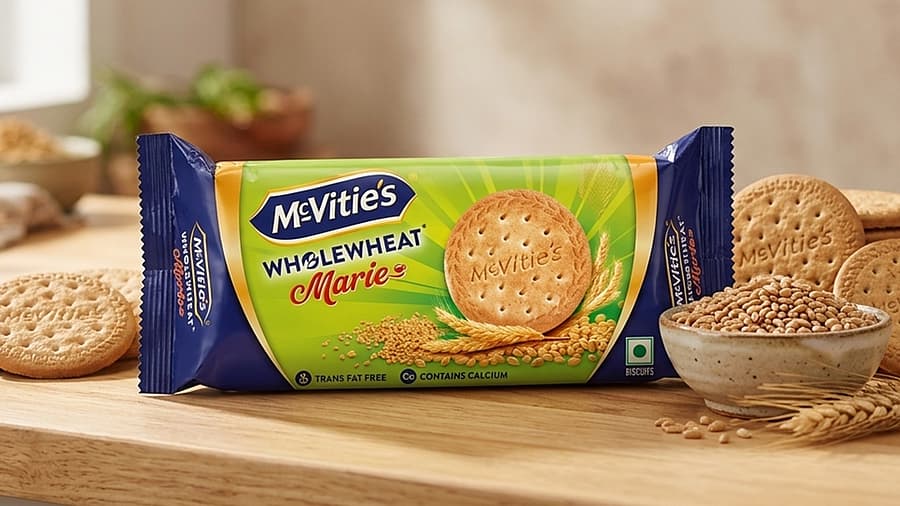
CCPA Fines McVitie's Over Misleading Wholewheat Claims
Summary
- The Central Consumer Protection Authority (CCPA) fined Pladis India Private Limited ₹1 lakh for misleading advertising.
- McVitie’s Marie Biscuits were marketed as "Wholewheat" despite containing only 19.5% whole wheat flour and 52% refined wheat flour.
- The CCPA ordered the immediate discontinuation of all misleading advertisements across various media.
- Pladis India Private Limited must also modify all new product packaging to remove the false "Wholewheat" claim.
- The regulatory action was initiated after the CCPA took suo motu cognisance of an online article highlighting the issue.
Regulatory Action Taken
This decisive CCPA fine McVitie's wholewheat claims case sets a precedent for how ingredient declarations must align with marketing representations.
The Central Consumer Protection Authority (CCPA) has levied a significant financial penalty against Pladis India Private Limited, formerly known as United Biscuits Private Limited, in a recent ruling concerning misleading advertising practices. The regulatory body imposed a fine of ₹1 lakh on the company for its marketing of McVitie’s Marie Biscuits, which were prominently labeled as "Wholewheat." This action by the CCPA underscores its commitment to upholding consumer protection standards in India, particularly regarding food product claims.
The order, issued on August 28 by former CCPA Chief Commissioner Nidhi Khare and former Commissioner Anupam Mishra, also mandates immediate and comprehensive corrective measures. Pladis India Private Limited has been directed to cease all allegedly misleading advertisements across print, electronic, and social media platforms without delay. Furthermore, the company must modify all new product packaging to remove the contentious "Wholewheat" claim, ensuring future compliance with advertising standards India consumer protection. This decisive CCPA fine McVitie's wholewheat claims case sets a precedent for how ingredient declarations must align with marketing representations.
The Deceptive Claim
The CCPA's investigation revealed a substantial discrepancy between the product's marketing and its actual composition. Despite being marketed as "Wholewheat," McVitie’s Marie Biscuits were found to contain only 19.5 percent whole wheat flour. In stark contrast, refined wheat flour, commonly known as maida, constituted a significant 52 percent of the biscuit's ingredients. The authority concluded that the prominent display of the term "Wholewheat," coupled with associated imagery of wheat on the primary packaging, was inherently capable of deceiving consumers about the true nature of the product.
Proceedings against Pladis India Private Limited commenced after the CCPA took suo motu cognisance of an online article that highlighted concerns regarding the marketing of McVitie’s Wholewheat Marie Biscuits. A preliminary inquiry subsequently confirmed that while the packaging prominently featured "Whole Wheat," the ingredient list clearly indicated that whole wheat flour comprised only 19.5 percent of the product. This initial finding prompted the referral of the matter to the CCPA’s dedicated investigation wing, which ultimately affirmed the misleading nature of the claim, leading to the Central Consumer Protection Authority India penalty. This case highlights the importance of McVitie's Marie biscuit labeling compliance.
Broader Implications for Advertising Standards
This ruling by the Central Consumer Protection Authority sends a clear message to food and beverage manufacturers operating in India regarding the stringent enforcement of advertising standards. The penalty and the directive to discontinue misleading advertisements emphasize that health-related claims, such as "wholewheat," must be precisely substantiated by the product's ingredient composition. Companies are now on notice that prominent marketing terms must accurately reflect the nutritional and ingredient profile, preventing any potential for consumer deception.
The CCPA's proactive approach, initiated through suo motu cognisance of an online article, demonstrates its vigilance in monitoring the market for non-compliant advertising. This case serves as a critical example of India food product claims compliance, reinforcing the need for thorough internal reviews of product packaging and marketing materials. For companies like Pladis India Private Limited, ensuring that ingredient declarations precisely match marketing claims is paramount to mitigating risks of penalties and mandatory advertising discontinuation, thereby safeguarding consumer trust and adhering to regulatory mandates.
Practical Implications
This case demonstrates the CCPA's strict enforcement against misleading food labeling, particularly for health-related claims like 'wholewheat.' Compliance officers and legal counsel for food and beverage companies in India should review their product packaging and advertising to ensure ingredient declarations precisely match marketing claims, mitigating risks of penalties and mandatory advertising discontinuation.
Source
How does this affect you?
Get an AI analysis of this article grounded in your jurisdictions, practice areas, and any policy documents you've uploaded to Wansom.
Finish Reading the Full Story and the Expert Analysis.
Wansom is AI and can make mistakes.