
Canada Supreme Court: Hears Challenge to 2020 Assault Rifle Ban
Summary
- Canada's Supreme Court is hearing challenges to a May 2020 federal ban on 1,500 models of firearms, including AR-15s and Ruger Mini-14s.
- The ban, enacted via an Order in Council after a 2020 Nova Scotia shooting, prohibits ownership and importation of these weapons.
- Appellants, led by Christine Generoux, argue the government exceeded its authority and unfairly targets legitimate firearm users.
- The Attorney General defends the ban, citing public safety and minimal impact on most gun owners, a stance supported by lower court rulings.
- Justices appear to lean towards upholding the government's broad authority to enact such restrictions for public safety.
Background of the Ban
The Supreme Court justices, while seeking extensive clarifications from the Attorney General regarding the policy's broad reach, appeared largely convinced that the government had acted within its legal bounds.
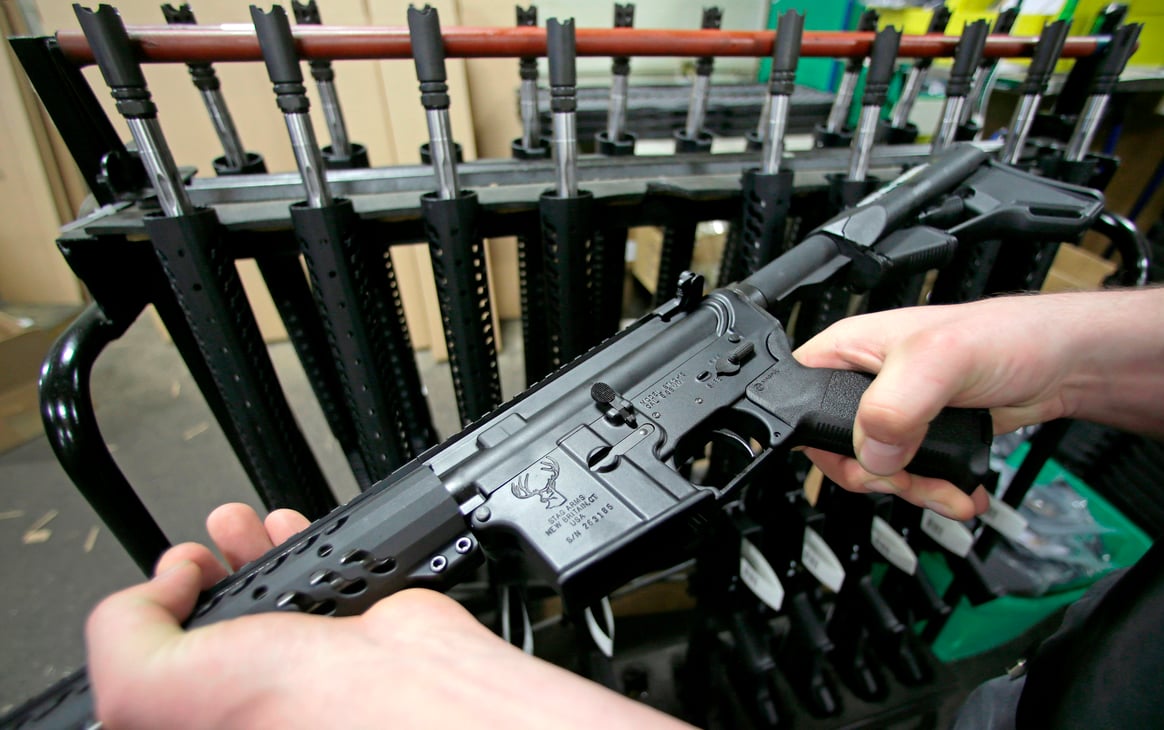
In May 2020, the Canadian federal government implemented a comprehensive ban on the ownership and importation of approximately 1,500 models of firearms and their variants, including popular models such as the AR-15 and the Ruger Mini-14 rifle. This significant regulatory change was enacted following a tragic mass shooting in Nova Scotia in April 2020, which resulted in 23 fatalities, including the perpetrator. The prohibition, announced by then-Prime Minister Justin Trudeau, specifically targeted what were described as military-grade assault weapons.
This federal initiative, formalized as an Order in Council, operates without direct parliamentary ratification, akin to an executive order in the United States. Now, nearly four years later, this Canada Supreme Court assault rifle ban is facing a rigorous challenge before the nation's highest court. Four separate appeals have been consolidated for hearings this week, seeking to overturn the prohibition on grounds that Ottawa exceeded its legal authority.
The Legal Challenge Unfolds
Leading the appellate effort is Christine Generoux, an Ottawa resident representing herself, supported by a diverse coalition of hunters, Indigenous communities, and various sports and firearm advocacy groups. These gun rights activists contend that the broad scope of the policy unfairly criminalizes weapons that have historically been used safely for hunting, by sports enthusiasts, and even by Olympic athletes. Generoux argues that while the ban targets firearms capable of causing harm, this rationale could extend to virtually any weapon, potentially paving the way for further restrictions on gun owners. She asserted that firearm enthusiasts are being unjustly targeted and portrayed as criminals for their recreational activities, suggesting they are being used as "scapegoats to cover for their own poor public policy."
Michael A. Loberg, counsel for the Canadian Coalition for Firearm Rights, further argued that the government's Cabinet overstepped its legal mandate. He contended that the ban specifically targeted firearms that have a long history of use in hunting and sports, thereby violating the authority granted to the Cabinet by Parliament to restrict firearms under the Criminal Code. This Canadian firearm ban challenge asserts that the government's actions exceeded the reasonable interpretation of its powers.
Government's Stance and Judicial Inquiry
The Attorney General of Canada vigorously defended the policy, asserting that its impact is limited, affecting only an estimated 3% to 5% of gun owners. The government's counsel highlighted the continued availability of numerous other firearms suitable for hunting and sport shooting activities. Attorney Zoe Oxaal posed a critical question to the court, asking whether it is reasonable to permit the continued use of these specific guns in Canada for hunting and sporting, given the substantial risk of "enormous harms" should they fall into the wrong hands.
The Supreme Court justices, while seeking extensive clarifications from the Attorney General regarding the policy's broad reach, appeared largely convinced that the government had acted within its legal bounds. This sentiment echoes the decisions of both the Federal Court and the Federal Court of Appeal, which previously dismissed the challenges, affirming the government's valid arguments concerning public safety. Justice Glenn D. Joyal acknowledged that while many of these weapons could be used safely, he also noted that "others are using it in a very different way," suggesting a need to balance safe use with potential misuse. The court also questioned whether the firearm owners had adequately considered the paramount importance of public safety in their arguments.
Implications for Canadian Firearm Law
The ongoing AR-15 ban Canada appeal at the Supreme Court underscores the federal government's significant authority to regulate firearms through an Order in Council firearms Canada, particularly when public safety is deemed at risk. The Criminal Code explicitly grants the Cabinet the power to impose restrictions on firearms if they are determined not to be reasonably usable for hunting and sports shooting. This case will likely solidify the interpretation of that power.
The justices' line of questioning and their apparent inclination to uphold the government's actions suggest a reinforcement of the state's prerogative to enact broad public safety measures, even if they impact a segment of the population. Justice Mahmud Jamal's observation that "There may be cases where perhaps the [Government in Council] has gone too far, but that’s different than saying the whole shebang is defective" indicates a judicial willingness to scrutinize specific applications but not to invalidate the fundamental mechanism of the ban. This outcome will have lasting implications for firearm ownership and import regulations across Canada, particularly regarding the scope of executive authority in matters of national security and public well-being.
Practical Implications
Lawyers advising clients on firearm ownership or import in Canada should note that the Supreme Court of Canada appears poised to uphold the federal government's ban on certain assault-style weapons, reinforcing the government's broad authority to enact such restrictions via Order in Council for public safety. This decision will likely solidify the current regulatory landscape for prohibited firearms.
Source
Source: Original reporting via CN
How does this affect you?
Get an AI analysis of this article grounded in your jurisdictions, practice areas, and any policy documents you've uploaded to Wansom.
Finish Reading the Full Story and the Expert Analysis.
Get the latest legal & regulatory intelligence in United States
Wansom is AI and can make mistakes.