
Cameroun, Tchad, RCA: Réforme Foncière Transhumance Pour Gérer Conflits Fonciers
Summary
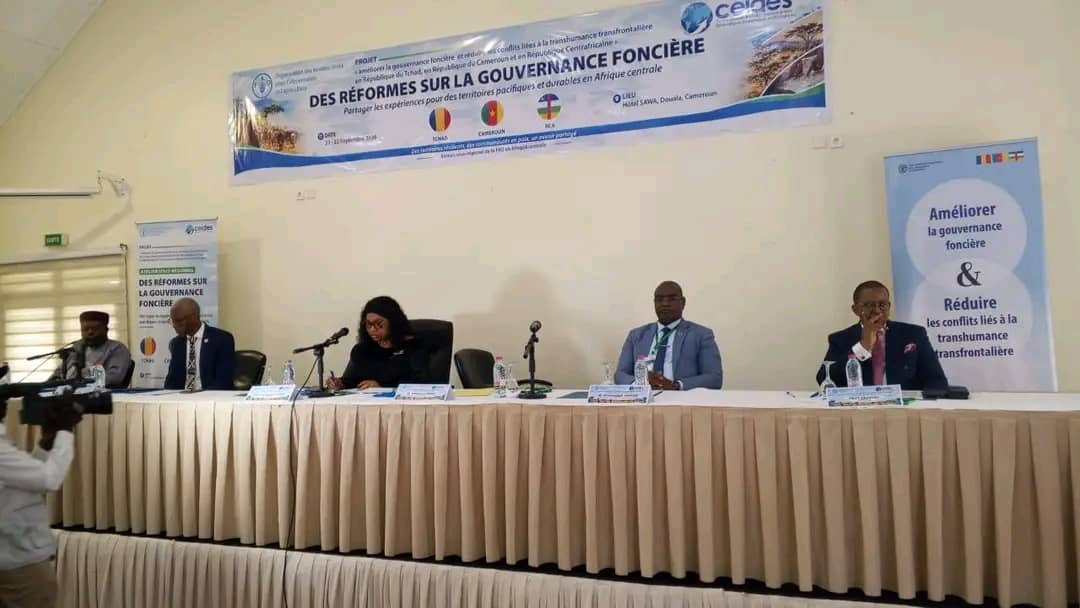
- Experts from Cameroon, Chad, and the Central African Republic (CAR) met in Douala for a three-day workshop on land governance reform.
- The meeting, organized by FAO and CEIDES, began on September 21, 2026, to address urgent land conflicts.
- The primary goal is to reduce tensions arising from cross-border transhumance between farmers and herders, exacerbated by climate change and demographic pressure.
- Dr. Antonio Querido of FAO highlighted the need for concrete solutions for inclusive and sustainable land governance.
- Cameroon's Ministry of State Property, Survey and Land Tenure (MINDCAF) views the initiative as essential for conflict prevention and sustainable development.
Regional Focus on Land Governance Reform
The recurrent clashes stemming from transhumance are further exacerbated by broader environmental and demographic pressures.
Experts from Cameroon, Chad, and the Central African Republic (CAR) have convened in Douala, Cameroon, to address critical issues surrounding land governance reform in Central Africa. The three-day workshop, which commenced on Monday, September 21, 2026, brings together various stakeholders, including government administrations and technical partners from the three nations. This collaborative effort aims to devise practical strategies for enhancing land management across the region.
Organized under the joint auspices of the Food and Agriculture Organization of the United Nations (FAO) and the African Centre for International, Diplomatic, Economic and Strategic Studies (CEIDES), the discussions are centered on identifying concrete solutions. The overarching objective is to foster more inclusive and sustainable land governance practices, recognizing the urgent need to mitigate prevalent land-related conflicts.
Addressing Cross-Border Transhumance Conflicts
A primary driver for these urgent deliberations is the escalating challenge of cross-border transhumance, a phenomenon that frequently sparks tensions between agricultural communities and pastoralists throughout the region. Land, a fundamental resource, has become a significant source of conflict in Central Africa, with these disputes often intensified by the movement of livestock across national borders.
The recurrent clashes stemming from transhumance are further exacerbated by broader environmental and demographic pressures. Climate change, leading to shifts in grazing patterns and water availability, combined with growing population densities, intensifies competition for finite land resources. The Douala gathering seeks to directly confront these complex dynamics, aiming to reduce the persistent friction between farmers and herders through improved land tenure security and dispute resolution mechanisms.
Stakeholder Perspectives and Strategic Objectives
The pragmatic nature of the workshop underscores a shared commitment to tangible outcomes. Dr. Antonio Querido, the FAO Representative in Cameroon, emphasized the importance of these sessions in pinpointing specific, actionable solutions for a more equitable and enduring system of land governance. This vision aligns closely with the strategic priorities of the Ministry of State Property, Survey and Land Tenure (MINDCAF), which views the initiative as a vital instrument.
MINDCAF recognizes the profound potential of these reforms as a crucial lever for proactive conflict prevention and the promotion of sustainable development across the participating countries. By addressing the root causes of land disputes and enhancing the framework for land administration, the collaborative efforts in Douala are expected to lay the groundwork for greater regional stability and economic progress, particularly concerning the management of transhumance and land use.
Practical Implications
Lawyers advising on land use, agriculture, or property rights in Cameroon, Chad, or CAR should closely monitor the outcomes of these discussions. Anticipate potential reforms in land governance, tenure security, and dispute resolution mechanisms, which could impact client investments, operations, or compliance obligations related to transhumance and land conflicts.
Source
Source: Original reporting via {source}
How does this affect you?
Get an AI analysis of this article grounded in your jurisdictions, practice areas, and any policy documents you've uploaded to Wansom.
Finish Reading the Full Story and the Expert Analysis.
Get the latest legal & regulatory intelligence in Cameroon
Wansom is AI and can make mistakes.