
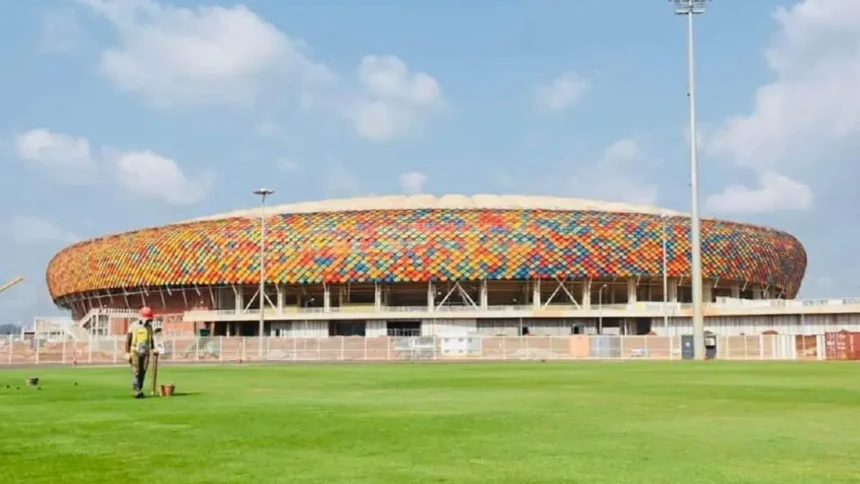
Cameroun: Conteste Sentence CIRDI Piccini Sur Complexe Olembe
Summary
- Cameroon is challenging an ICSID arbitral award in a dispute with Italian firm Piccini concerning the Olembe sports complex.
- The government claims ICSID lacked jurisdiction and failed to consider damages Cameroon suffered, including project delays caused by Piccini.
- ICSID ordered Cameroon to pay 78.5 million euros (over 50 billion CFA francs), significantly less than Piccini's initial claim of 280 billion CFA francs.
- Cameroon questions the award, stating the sum corresponds to unspent project funds from the initial budget, allegedly still held in Italy.
- The government emphasizes its commitment to protecting public funds, viewing the challenge as crucial for state resource management and accountability.
Cameroon Challenges ICSID Award in Piccini Dispute
The State must protect public funds, and we are committed to that.
The government of Cameroon is vigorously contesting a recent arbitral award issued by the International Centre for Settlement of Investment Disputes (CIRDI) in a long-standing dispute with the Italian company Piccini. This **litige investissement Cameroun Piccini** centers on the construction of the Olembe sports complex, a high-profile infrastructure project. Pr Cyrille Tollo, Technical Advisor No. 2 at the Ministry of Sports, articulated the Cameroonian authorities' strong disapproval of the decision, confirming their intent to pursue a challenge.
From the outset, Yaoundé maintained that CIRDI lacked the necessary jurisdiction to adjudicate the matter. According to government officials, the core issue is primarily the execution of a commercial contract between the Cameroonian state and a service provider, governed by mutual obligations and rights. This fundamental disagreement over the nature of the dispute underscores Cameroon's position that the international arbitration body overstepped its mandate.
The government's firm stance indicates that the **Cameroun conteste sentence CIRDI Piccini** with significant resolve, viewing the award as a substantial surprise. This challenge highlights a broader commitment to scrutinizing international arbitral decisions, particularly when they involve significant public funds and complex contractual relationships.
Government Cites Unconsidered Damages and Legal Concerns
A key point of contention for the Cameroonian government is the alleged failure of the CIRDI tribunal to adequately account for damages it claims to have incurred during the project's execution. Officials specifically point to considerable delays experienced at the Olembe sports complex construction site. The government asserts that Piccini's actions, including an alleged closure of the site for nearly a year, were a major contributor to these setbacks, significantly impacting the project's timely delivery.
Pr Tollo expressed that the CIRDI ruling appeared to disregard the financial and operational setbacks faced by the Cameroonian state. He suggested that the decision seemed to be based more on subjective evaluations rather than rigorous legal arguments, raising questions about the award's judicial foundation. This perspective forms a crucial part of the **CIRDI Cameroun contestation**, as the government seeks to demonstrate that its grievances were not fully addressed.
This ongoing **Cameroun recours sentence arbitrale CIRDI** underscores the complexities inherent in **droit international investissement Cameroun**, particularly when state contracts with foreign entities lead to disputes.
Awarded Sum Raises Questions for Cameroon
The CIRDI tribunal ultimately directed Cameroon to pay 78.5 million euros, an amount equivalent to just over 50 billion CFA francs. This sum represents a significant reduction from the approximately 280 billion CFA francs initially sought by Piccini. Despite the lower figure, the Cameroonian government has expressed profound reservations regarding the awarded amount itself.
Officials have highlighted what they describe as a peculiar aspect of the award: the 78.5 million euros reportedly corresponds to the unspent remainder of the project's initial budget, which is allegedly still held in Italy. The Olembe sports complex was originally budgeted at 163 billion CFA francs. Prior to the contract's termination in November 2019, Piccini had reportedly utilized around 113 billion CFA francs of these funds.
This situation leads the government to question the rationale behind the award, with Pr Tollo stating that it creates the impression of being compelled to compensate a foreign company for work that was never performed. This specific detail is central to Cameroon's argument against the legitimacy of the financial judgment.
Protecting Public Funds: A Core Government Priority
For the Cameroonian government, the stakes extend beyond the immediate dispute with Piccini, touching directly upon the management and safeguarding of public resources. This challenge to the CIRDI award is framed as a fundamental commitment to protecting the nation's financial integrity and ensuring accountability in large-scale projects.
Pr Cyrille Tollo explicitly affirmed the state's unwavering dedication to this principle, stating, "The State must protect public funds, and we are committed to that." This declaration underscores the broader policy implications of the government's decision to contest the arbitral ruling, positioning it as a matter of national financial stewardship.
The government's assertive stance in this **Olembe complexe sportif arbitrage** case could set a precedent for future interactions with foreign investors. It signals a clear intent to rigorously defend public finances and challenge international decisions perceived as detrimental to the state's interests, potentially influencing the landscape of **droit international investissement Cameroun**.
Practical Implications
Lawyers advising foreign investors in Cameroon or involved in investment arbitration should closely monitor the Cameroonian government's challenge to this ICSID award. This case highlights the state's aggressive stance on protecting public funds and its willingness to contest international arbitral decisions, which could influence future dispute resolution strategies and investment protection clauses in contracts with the Cameroonian state.
Source
How does this affect you?
Get an AI analysis of this article grounded in your jurisdictions, practice areas, and any policy documents you've uploaded to Wansom.
Finish Reading the Full Story and the Expert Analysis.
Get the latest legal & regulatory intelligence in Cameroon
Wansom is AI and can make mistakes.