
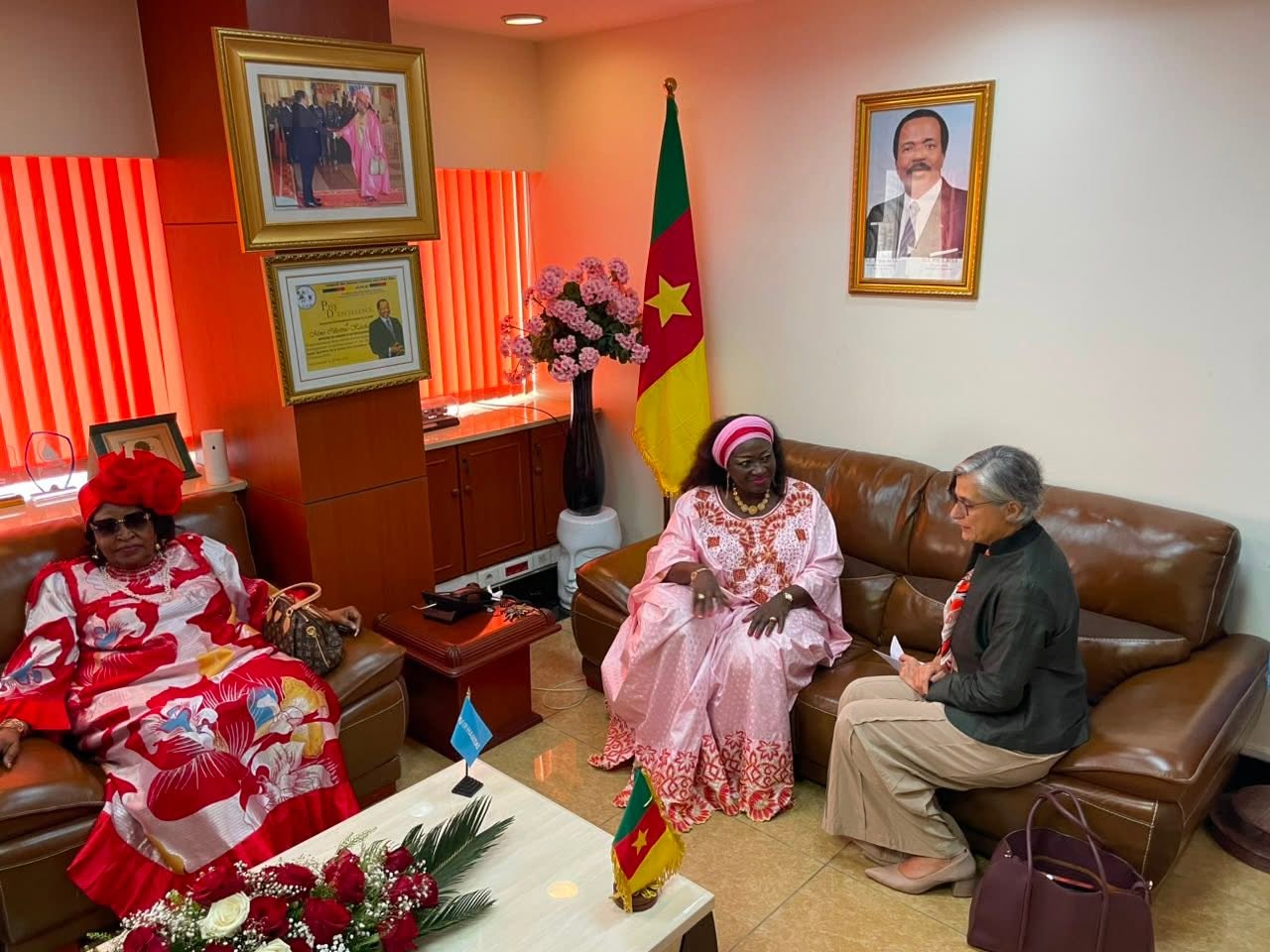
Cameroon: ONU-Habitat Partnership Eyes 2027-2030 Urban Development
Summary
- Anacláudia Rossbach, Executive Director of ONU-Habitat, visited Cameroon from September 6-9 to reinforce a two-decade partnership on sustainable urbanization.
- The National Urban Policy (PUN), significantly supported by ONU-Habitat, is currently awaiting official approval and operationalization.
- ONU-Habitat also led the development of Cameroon's National Smart Cities Plan, leveraging digital solutions for urban management.
- Between 2020 and 2025, ONU-Habitat invested approximately USD 20 million in nearly 15 projects covering affordable housing, urban resilience, and sanitation.
- Future priorities include establishing a national ONU-Habitat office, fully implementing the PUN, and launching an ambitious national affordable housing program to address a 2.5 million unit deficit.
Renewed Focus on Urban Development
This crucial policy document is currently awaiting official approval, with ongoing support dedicated to its eventual operationalization.
United Nations Under-Secretary-General and Executive Director of ONU-Habitat, Anacláudia Rossbach, recently concluded an official visit to Cameroon, spanning September 6 to 9. Her mission aimed to strengthen a collaborative relationship that has matured over two decades and to identify new avenues for sustainable urbanization within the nation. A significant component of her itinerary involved an audience with the Ministry of Housing and Urban Development (MINHDU), followed by an extensive technical meeting involving various ministerial officials.
Discussions during these high-level engagements centered on evaluating the joint achievements of the Cameroon ONU-Habitat urban development partnership, pinpointing strategic priorities for the 2027-2030 period, and devising strategies to mobilize both national and international partners. The objective is to secure funding and facilitate the implementation of critical, structuring projects. Ms. Rossbach, who assumed her current role on August 12, 2024, received commendation for her leadership at ONU-Habitat, while Cameroon expressed its gratitude for the consistent support provided by the UN agency across vital sectors, including housing, local governance, climate resilience, and territorial development.
Foundations of Urban Policy and Planning
The cooperation between Cameroon and ONU-Habitat traces its origins back to the early 2000s, initially manifesting through initiatives such as the Urban Governance Program (PGU). This enduring partnership was formally cemented in 2012 with the signing of a Memorandum of Understanding, which outlined a broad scope of collaboration encompassing urban policy, planning, social housing, mobility solutions, energy efficiency, the enhancement of informal settlements, and the reinforcement of institutional capacities.
A cornerstone achievement of this collaboration is the National Urban Policy (PUN). ONU-Habitat played a pivotal role by funding its feasibility study in 2014 and subsequently providing substantial technical assistance, which was further complemented by financial contributions from the Cameroonian government. This crucial policy document is currently awaiting official approval, with ongoing support dedicated to its eventual operationalization. Furthermore, ONU-Habitat spearheaded the development of the National Smart Cities Plan (Plan National Villes Intelligentes Cameroun), an initiative designed to harness digital technologies and artificial intelligence for improved land management, urban mobility, sanitation, and governance, bringing together various ministries, local authorities, universities, and technology operators.
Concrete Progress and Investment in Sustainable Cities
Beyond policy formulation, the Cameroon ONU-Habitat urban development partnership has yielded tangible results on the ground. Interventions aimed at improving informal settlements, carried out under the Participatory Slum Upgrading Program (PPAB), have directly benefited communities in Yaoundé, Kribi, and Bamenda. Other notable accomplishments include advancements in urban planning methodologies, the creation of a building energy efficiency code, the promotion of low-carbon urban development approaches, and collaborative efforts with the Special Council Support Fund for Mutual Assistance (FEICOM) to bolster local governance structures.
Between 2020 and 2025, ONU-Habitat provided support to nearly 15 projects across Cameroon, representing an investment of approximately USD 20 million. These diverse initiatives spanned territorial planning, the provision of affordable housing (Logement abordable Cameroun ONU-Habitat), including studies conducted with the Cameroon Real Estate Company (SIC) and the construction of housing units for moto-taxi drivers. The scope also extended to urban resilience programs in cities such as Mokolo, Fotokol, Ebolowa, and Bafoussam, alongside urban sanitation efforts exemplified by the National Clean Cities Award. These projects underscore the commitment to a comprehensive Cameroon sustainable cities plan.
Addressing Challenges and Charting Future Directions
Despite significant progress, Cameroon continues to grapple with substantial urban challenges. The nation faces an urbanization rate approaching 60%, alongside an estimated housing deficit of 2.5 million units, requiring an annual provision of 100,000 to 120,000 new homes. Cities are also contending with complex land tenure issues, mobility constraints, sanitation deficiencies, waste management problems, the impacts of climate change, and the challenges posed by population displacement.
In response to these pressing needs, the MINHDU and ONU-Habitat have outlined several key priorities for the 2027-2030 period. These include finalizing the Headquarters Agreement to establish a national ONU-Habitat office in Yaoundé, completing the implementation and widespread dissemination of the National Urban Policy (PUN), and launching an ambitious national affordable housing program. This future program is envisioned to leverage strategic land mobilization and innovative financial mechanisms to address the critical housing shortage, further solidifying the MINHDU ONU-Habitat cooperation Cameroon.
Practical Implications
Lawyers and compliance officers in Cameroon should closely monitor the approval and operationalization of the National Urban Policy (PUN) and the National Smart Cities Plan, as these initiatives will introduce new legal frameworks, regulations, and compliance requirements for real estate, urban planning, infrastructure, and technology sectors. This also signals potential opportunities for public-private partnerships and new project tenders.
Source
How does this affect you?
Get an AI analysis of this article grounded in your jurisdictions, practice areas, and any policy documents you've uploaded to Wansom.
Finish Reading the Full Story and the Expert Analysis.
Wansom is AI and can make mistakes.