
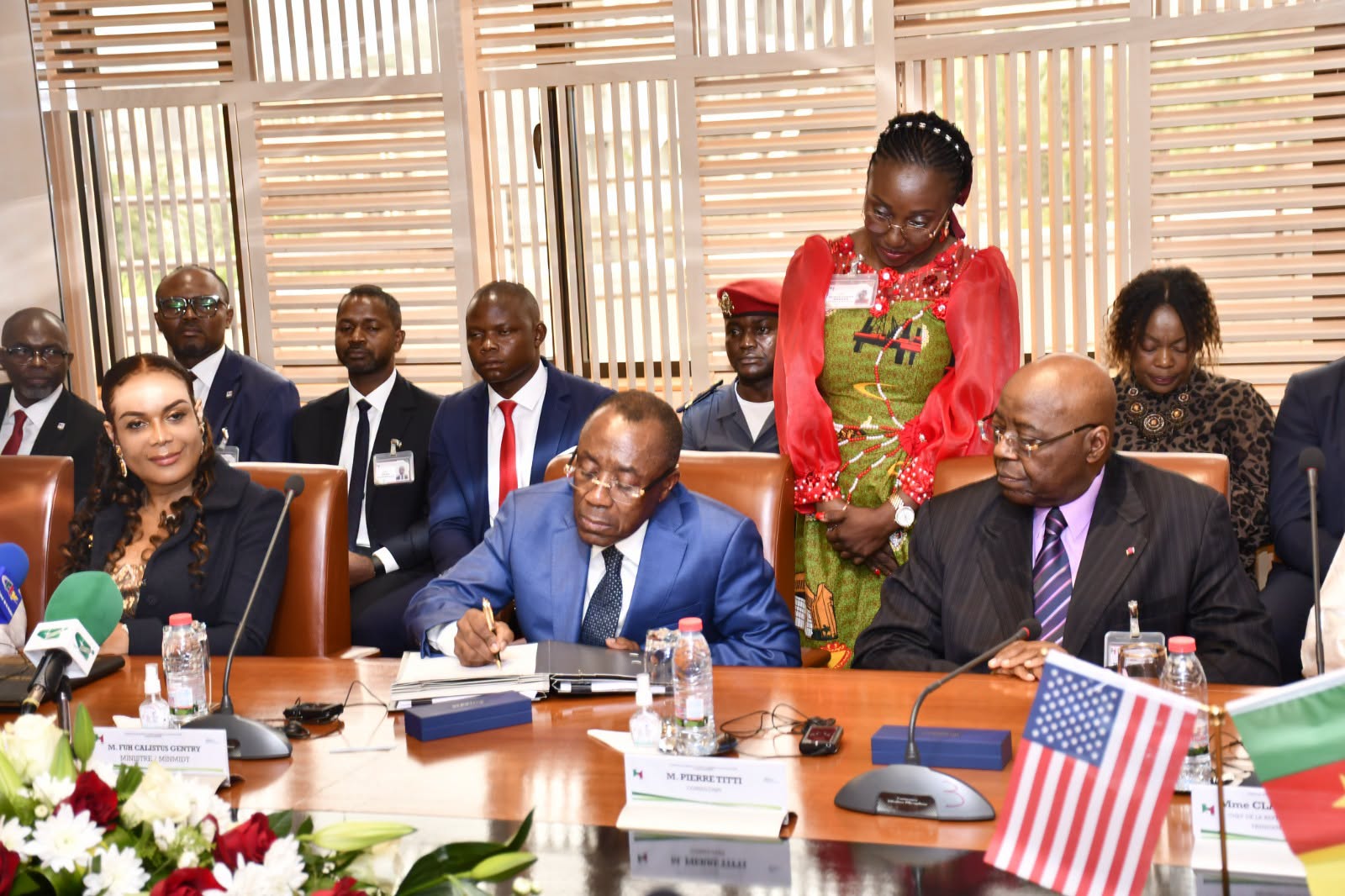
Cameroon Offshore Oil: Murphy Oil Signs 4 Production Contracts
Summary
- Cameroon signed four new Production Sharing Contracts with Murphy Oil Corporation on November 11, 2026, covering 10,578.13 km² of offshore blocks.
- The agreements, part of a strategy to revitalize Cameroon's extractive sector, commit Murphy Oil to a $200 million investment over a maximum seven-year program.
- The contracts cover the Etinde Exploration, Tilapia, Elombo, and Ntem maritime blocks in the Douala/Kribi-Campo basin.
- The work program includes an initial three-year phase for seismic and geological studies, followed by optional two-year extensions requiring exploration well drilling.
- Murphy Oil is mandated to establish a local subsidiary, recruit Cameroonian staff, and provide dedicated training for national citizens, emphasizing local content development.
Cameroon Bolsters Offshore Oil Sector with New Agreements
Lawyers advising energy companies in Cameroon should review the terms of these new Production Sharing Contracts and the local content obligations, including recruitment and training requirements, which are now critical for compliance and successful operation in the country's offshore sector.
The Ministry of Mines, Industry, and Technological Development (MINMIDT) recently underscored its pivotal role in Cameroon's national strategy to revitalize the extractive sector. On November 11, 2026, Professor Fuh Calistus Gentry, who heads MINMIDT, presided over the official signing ceremony for four new Production Sharing Contracts (Contrats de Partage de Production Cameroun) at the headquarters of the Société Nationale des Hydrocarbures (SNH). These significant agreements were formalized between the State of Cameroon and the American oil corporation, Murphy Oil Corporation.
This signing event marks the culmination of a rigorous selection process that began with an international call for expressions of interest in August 2025. Professor Gentry highlighted the critical importance of this regulatory and contractual initiative, addressing the current challenges facing the sector, including the natural decline of several mature fields and a reported decrease in production during 2025. With the finalization of these four contracts, all five blocks initially allocated during the 2025 consultation are now secured under firm agreements, following a previous contract signed with Octavia Energy Corporation in August of the same year. This proactive approach by MINMIDT Cameroun Murphy Oil demonstrates the renewed appeal of Cameroon's sedimentary basin, attributed to an attractive incentive framework implemented by public authorities.
Significant Investment in Offshore Exploration
The four newly signed contracts with Murphy Oil Corporation specifically target the maritime blocks of Etinde Exploration, Tilapia, Elombo, and Ntem. These key areas are strategically located within the Douala/Kribi-Campo basin and collectively span an extensive area of 10,578.13 square kilometers. The comprehensive minimum work program outlined in these agreements is designed to unfold over a maximum duration of seven years, representing a substantial total investment commitment estimated at $200 million, which equates to approximately 112 billion FCFA.
The exploration pétrolière offshore Cameroun program is structured into two distinct phases. An initial three-year period will focus on the reprocessing of existing seismic data and the execution of in-depth geological and geophysical studies to better understand the subsurface potential. Following this, the contracts include provisions for two optional two-year extension periods. Crucially, each of these optional periods mandates the drilling of at least one exploration well per contract, ensuring a sustained commitment to discovering new hydrocarbon reserves within these vital blocs maritimes Etinde Tilapia Elombo Ntem.
Local Content and Human Capital Development Mandates
Beyond the direct financial and fiscal benefits, MINMIDT is placing a strong emphasis on ensuring that the exploitation of these resources generates significant local impact. This commitment to local integration is evident in Murphy Oil's recent establishment of a subsidiary in Douala, a move directly aligned with the Cameroonian government's vision for enhancing national human capital. This new entity is slated to recruit Cameroonian engineers, geoscientists, and various support staff in the short to medium term, fostering local employment opportunities.
Furthermore, the negotiated clauses within these Production Sharing Contracts impose stringent obligations on Murphy Oil regarding the training of national citizens. These mandates extend beyond the company's direct workforce, requiring a dedicated annual budget specifically allocated for training programs during both the research and exploitation phases. This strategic collaboration between MINMIDT, SNH, and other sectoral administrations underscores a clear determination to leverage Cameroon offshore oil Murphy Oil exploration and local technological advancement as primary drivers for sustainable economic growth across the nation. Lawyers advising energy companies in Cameroon should review the terms of these new Production Sharing Contracts and the local content obligations, including recruitment and training requirements, which are now critical for compliance and successful operation in the country's offshore sector.
Practical Implications
Lawyers advising energy companies in Cameroon should review the terms of these new Production Sharing Contracts and the local content obligations, including recruitment and training requirements, which are now critical for compliance and successful operation in the country's offshore sector. Compliance officers must ensure their organizations meet these specific nationalization and local content mandates.
Source
How does this affect you?
Get an AI analysis of this article grounded in your jurisdictions, practice areas, and any policy documents you've uploaded to Wansom.
Finish Reading the Full Story and the Expert Analysis.
Get the latest legal & regulatory intelligence in Cameroon
Wansom is AI and can make mistakes.