
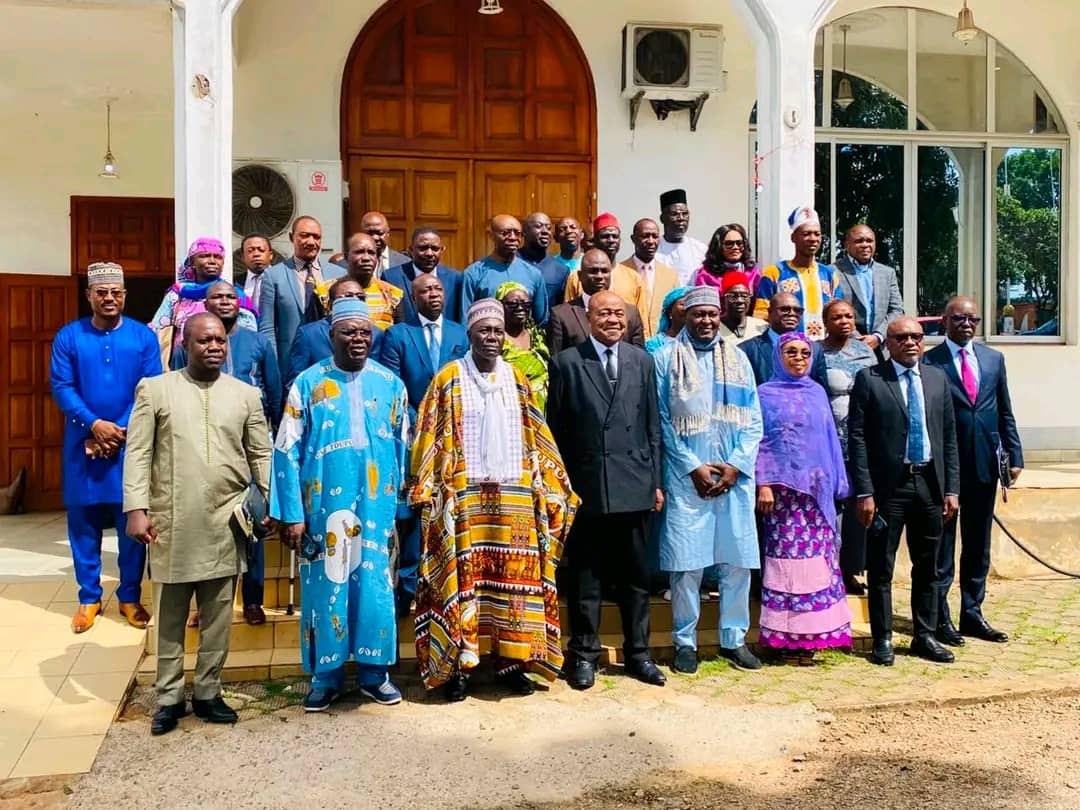
Cameroon MINAC: Advances Tupuri Feo Kague UNESCO Inscription Bid
Summary
- A Tupuri delegation, led by Dr. Emmanuel Pohowe, met with Cameroon's Minister of Arts and Culture on September 16, 2026.
- The meeting's purpose was to present a project for the inscription of the Feo Kague, or "Rooster Festival," on the UNESCO Intangible Cultural Heritage list.
- Feo Kague is a post-harvest ritual of the Tupuri community in Cameroon and Chad, involving thanksgiving, invocations for prosperity, and the traditional drink Bil-Bil.
- Beyond its ritual, the festival promotes reconciliation, forgiveness, sharing, and intergenerational transmission of culture.
- The delegation specifically requested the Ministry's support to achieve this international recognition for their cultural heritage.
Seeking International Recognition
Their primary objective was to formally present the project for the Tupuri Feo Kague UNESCO inscription, seeking the government's crucial support in this endeavor.
A delegation representing the Tupuri community recently met with Cameroon's Minister of Arts and Culture (MINAC) to advance a significant cultural heritage initiative. The meeting, held on Wednesday, September 16, 2026, at the National Museum in Yaoundé, focused on the proposed inscription of the Feo Kague, also known as the "fête du Coq" or Rooster Festival, onto the UNESCO Representative List of the Intangible Cultural Heritage of Humanity.
The delegation was led by Dr. Ing. Emmanuel Pohowe, who serves as the Deputy General Manager (DGA) of CICAM, and included M. Danlai Tinakreo, the Secretary General of the Superior Spiritual Chief Wang Doré. Their primary objective was to formally present the project for the Tupuri Feo Kague UNESCO inscription, seeking the government's crucial support in this endeavor. This move underscores a concerted effort to safeguard and promote a vital aspect of Cameroun patrimoine culturel on a global stage.
The Essence of Feo Kague
The Feo Kague is a profound ritual manifestation central to the Tupuri community, which spans both the Far North region of Cameroon and neighboring Chad. This traditional celebration, literally translated as the "fête du Coq," takes place annually between September and November, following the conclusion of the harvest season. It serves as a pivotal moment for collective thanksgiving, where the community expresses gratitude to both God and their ancestors for bountiful rains and successful harvests.
Beyond mere gratitude, the Feo Kague also functions as an invocation for future blessings, including peace, protection, and prosperity for the community. A key element of the festivities is the consumption of Bil-Bil, a traditional beverage crafted from millet, which is integral to the ritualistic aspects of the celebration. This cultural practice is deeply embedded in the Tupuri way of life, marking the cyclical rhythm of their agricultural year and spiritual beliefs.
Community and Heritage Preservation
The significance of the Feo Kague extends far beyond its ritualistic components, embodying core communal values. It acts as a powerful catalyst for reconciliation and forgiveness within the community, fostering a spirit of unity and mutual understanding. The festival is also a vital platform for sharing knowledge and traditions, facilitating intergenerational transmission of cultural practices and historical narratives.
While certain aspects of the Feo Kague remain exclusive to initiates, ensuring the sanctity and proper observance of its deeper mysteries, efforts are made to connect the wider community. Symbolic reproductions of the festival are organized in urban centers like Yaoundé and Douala, allowing members of the Tupuri diaspora and younger generations to maintain a strong link to their heritage. This approach helps ensure that the spirit of the Feo Kague fête du Coq continues to resonate, even for those geographically distant from its traditional heartland.
Governmental Support for Cultural Initiatives
During their audience, the Tupuri delegation explicitly requested the accompaniment and support of the Ministry of Arts and Culture for their project. This appeal for MINAC Feo Kague soutien is critical for navigating the complex process of achieving UNESCO patrimoine immatériel humanité status. Such governmental backing is often indispensable for cultural groups seeking international recognition for their traditions, providing necessary resources, expertise, and official endorsement.
Securing inscription on the UNESCO list would not only elevate the global profile of the Feo Kague but also provide enhanced protection and promotion for this invaluable cultural asset. The initiative, championed by figures like Dr. Emmanuel Pohowe Tupuri, represents a concerted effort to ensure the longevity and vibrancy of the Tupuri community's unique heritage for generations to come.
Practical Implications
This article reports on a cultural heritage initiative and does not present a direct, actionable legal or compliance implication for lawyers or compliance officers at this stage. It is primarily an informational update on a community's efforts to gain international recognition for its cultural practices.
Source
How does this affect you?
Get an AI analysis of this article grounded in your jurisdictions, practice areas, and any policy documents you've uploaded to Wansom.
Finish Reading the Full Story and the Expert Analysis.
Get the latest legal & regulatory intelligence in Cameroon
Wansom is AI and can make mistakes.