
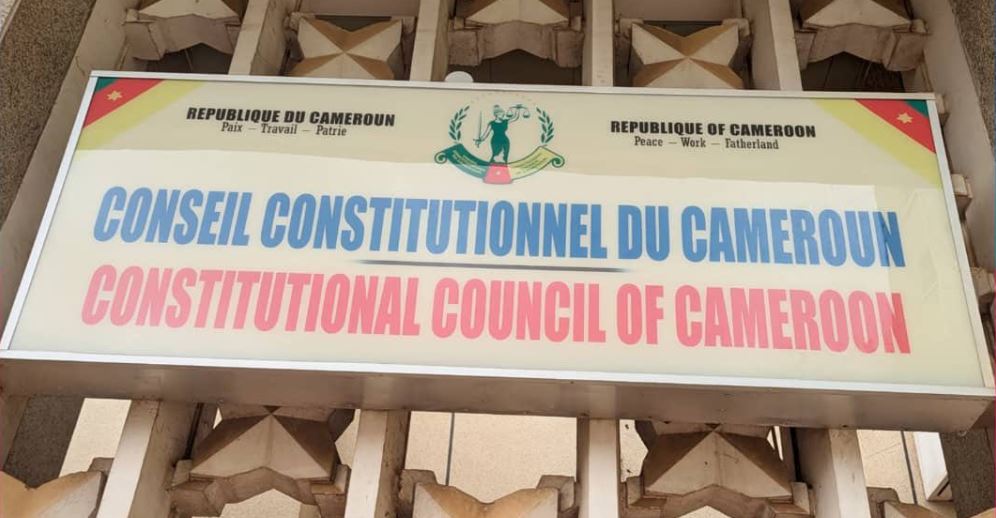
Cameroon: Constitutional Council Appointments Underway
In Cameroon, in October 2026, procedures were initiated for the appointment of successors to the late President Clément Atangana and member Bah Oumarou Sanda of the Constitutional Council, following their recent deaths. The process began after the passing of Constitutional Council President Clément Atangana on October 4, 2026, and member Bah Oumarou Sanda on August 7, 2026. On October 12, 2026, the Bureau of the National Assembly convened to address the designation of a new member to replace Bah Oumarou Sanda. The President of the National Assembly, having consulted with the Bureau, is now empowered to designate this new member, whose name will subsequently be transmitted to the President of the Republic for formal appointment by decree. While the excerpt primarily details the replacement of the member, it also indicates that arrangements are in place for the appointment of a new President of the Constitutional Council.
This development holds significant legal importance for maintaining the operational integrity and constitutional balance of power within Cameroon's governance framework. The Constitutional Council is a pivotal institution responsible for ensuring the constitutionality of laws, resolving electoral disputes, and overseeing the proper functioning of state institutions. Vacancies in such a high-level body can introduce uncertainty and potentially hinder its ability to fulfill its critical mandate. The prompt initiation of these replacement procedures underscores the government's commitment to ensuring the continuity of constitutional oversight and the stability of the institutional framework, even in the face of leadership changes at the highest levels.
The legal context for these appointments is firmly rooted in Article 51 of the Cameroonian Constitution. Specifically, Article 51, paragraph 2, dictates that three members of the Constitutional Council are designated by the President of the National Assembly following consultation with the Bureau. Furthermore, Article 51, paragraph 3, directly addresses the protocol for succession in the event of a death. These constitutional provisions clearly delineate the roles and responsibilities of the National Assembly and its President in the designation process, with the ultimate authority for formal appointment resting with the President of the Republic through a presidential decree. This intricate process highlights the system of checks and balances inherent in the appointment of key judicial and constitutional figures in Cameroon.
The key parties involved in this process include the deceased officials, President Clément Atangana and member Bah Oumarou Sanda of the Constitutional Council, whose passing necessitated these actions. The institutions actively involved in the replacement process are the National Assembly, its Bureau, and its President, who plays a crucial role in the designation. The ultimate appointing authority is the President of the Republic, who will formalize the appointments by decree. The body directly affected and whose composition is undergoing change is the Constitutional Council of Cameroon, often referred to as the
How does this affect you?
Get an AI analysis of this article grounded in your jurisdictions, practice areas, and any policy documents you've uploaded to Wansom.
Finish Reading the Full Story and the Expert Analysis.
Get the latest legal & regulatory intelligence in Cameroon
Wansom is AI and can make mistakes.