
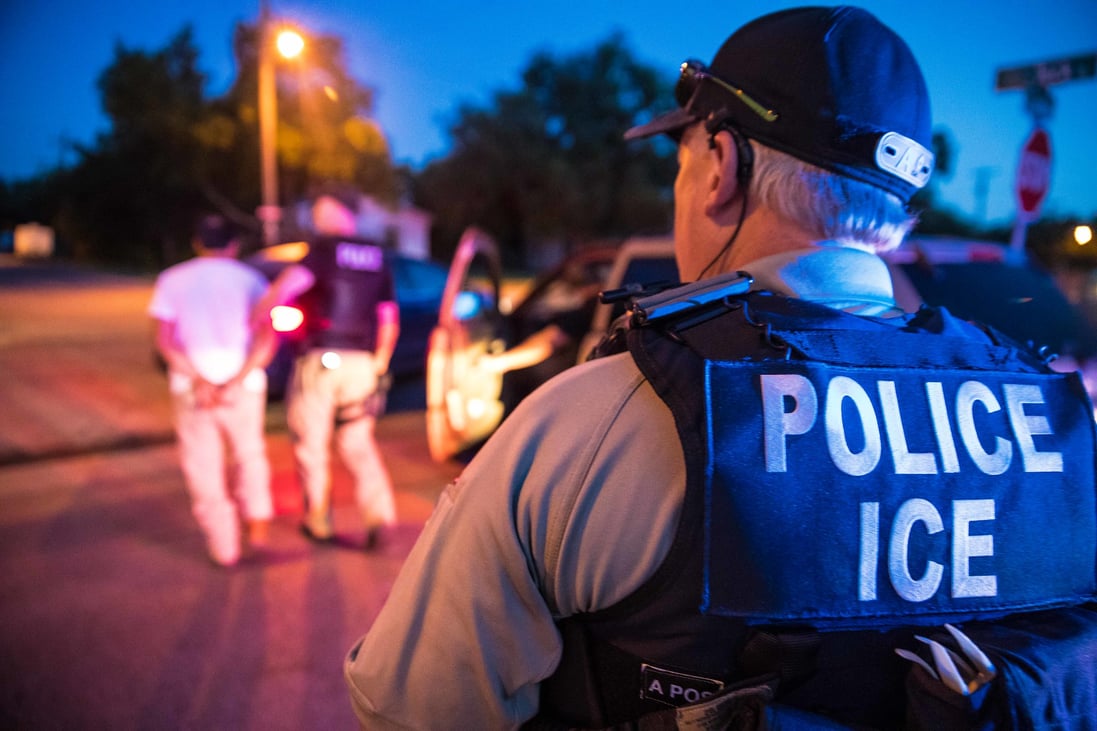
California Sues ICE: Halts Courthouse Arrests Over Judicial Integrity
Summary
- California Attorney General Rob Bonta has filed a lawsuit against U.S. Immigration and Customs Enforcement (ICE) in federal court.
- The suit aims to stop ICE from conducting civil immigration enforcement actions at California courthouses.
- The state claims ICE's actions, including "Operation Safe California," disrupt judicial proceedings and deter victims and witnesses from court.
- California argues ICE's policy violates common law privilege, the Administrative Procedure Act, and the 10th Amendment.
- The lawsuit seeks a court order to halt all further immigration enforcement by ICE at California courthouses.
The Lawsuit Unfolds
California asserts that these enforcement actions have severely compromised the state's ability to administer justice, as crime victims and witnesses are now fearful of attending court proceedings.
California's Attorney General, Rob Bonta, has initiated legal action against U.S. Immigration and Customs Enforcement (ICE), seeking a federal court order to prohibit the agency from conducting civil immigration enforcement operations within the state's courthouses. The complaint, lodged in a Los Angeles federal court, asserts that ICE's activities are severely undermining California's judicial processes and deterring individuals, including crime victims and witnesses, from accessing the courts. This legal challenge, focusing on California sues ICE courthouse arrests, highlights a critical conflict between federal immigration enforcement and state judicial integrity.
The lawsuit details an alleged directive from ICE leadership instructing agents nationwide to dramatically increase immigration arrests, setting targets of 3,000 daily and 19,000 weekly. Furthermore, the complaint specifically alleges that ICE issued a targeted directive for California, dubbed "Operation Safe California," which involves a 45-day enforcement surge stretching from San Diego to San Francisco. This operation, expected to continue through November, reportedly authorizes officers to "pick up anybody," with Attorney General Bonta claiming that ICE views California's courthouses as convenient locations for these enforcement actions. The state emphasizes that these highly visible arrests are often disruptive, involve the use of force, and have created an environment where courthouses are no longer perceived as safe spaces, particularly for vulnerable populations like survivors of domestic or family violence.
Legal Foundations of the Challenge
Central to California's legal argument is the assertion that ICE has knowingly acted in violation of established legal principles. The state invokes a long-standing common law privilege that protects individuals from civil arrest while attending court proceedings. This privilege, recognized by the U.S. Supreme Court and various lower federal and state courts, is fundamental to the functioning of the judicial system, ensuring that parties and witnesses can appear without fear of civil detention. The lawsuit contends that ICE's current policy directly contravenes this essential legal safeguard, thereby impeding the administration of justice.
Beyond common law, the complaint also challenges ICE's policy under the Administrative Procedure Act (APA), the federal statute governing how agencies establish policy. California argues that the directive authorizing widespread immigration enforcement at courthouses is arbitrary and capricious because ICE allegedly failed to adequately consider the profound "chilling effect" it would have on access to justice and the overall operation of state judicial systems. Moreover, the Attorney General points out that ICE neglected to provide a rationale for rescinding a previous restriction on courthouse enforcement in jurisdictions where such activities were prohibited. The state further asserts that ICE's policy infringes upon California's sovereign powers, constituting a violation of the 10th Amendment, which reserves powers not delegated to the federal government to the states.
Broader Implications for California
The consequences of ICE's courthouse enforcement policy, as outlined in the lawsuit, extend far beyond individual arrests, impacting the very fabric of California's justice system. California asserts that these enforcement actions have severely compromised the state's ability to administer justice, as crime victims and witnesses are now fearful of attending court proceedings. This fear has led to significant disruptions, including interrupted and delayed court cases, and in some instances, proceedings are not pursued at all, directly hindering the state's capacity to uphold law and order and protect its residents.
The legal challenge by Rob Bonta against ICE's courthouse enforcement policy underscores the state's commitment to protecting access to justice for all its residents, regardless of immigration status. The lawsuit seeks a definitive court order to permanently halt all civil immigration enforcement actions by ICE within California's courthouses. While the U.S. Justice Department has declined to comment on the ongoing litigation, the outcome of this case could significantly reshape the landscape of immigration enforcement at state judicial facilities, with far-reaching implications for legal practitioners and compliance officers advising clients on court appearances and the broader functioning of state legal systems.
Practical Implications
Lawyers and compliance officers in California should closely monitor the progress and outcome of this lawsuit, as a ruling against ICE could significantly alter the landscape of immigration enforcement at state courthouses, impacting client advice regarding court appearances and access to justice for vulnerable populations.
Source
How does this affect you?
Get an AI analysis of this article grounded in your jurisdictions, practice areas, and any policy documents you've uploaded to Wansom.
Finish Reading the Full Story and the Expert Analysis.
Get the latest legal & regulatory intelligence in United States
Wansom is AI and can make mistakes.