
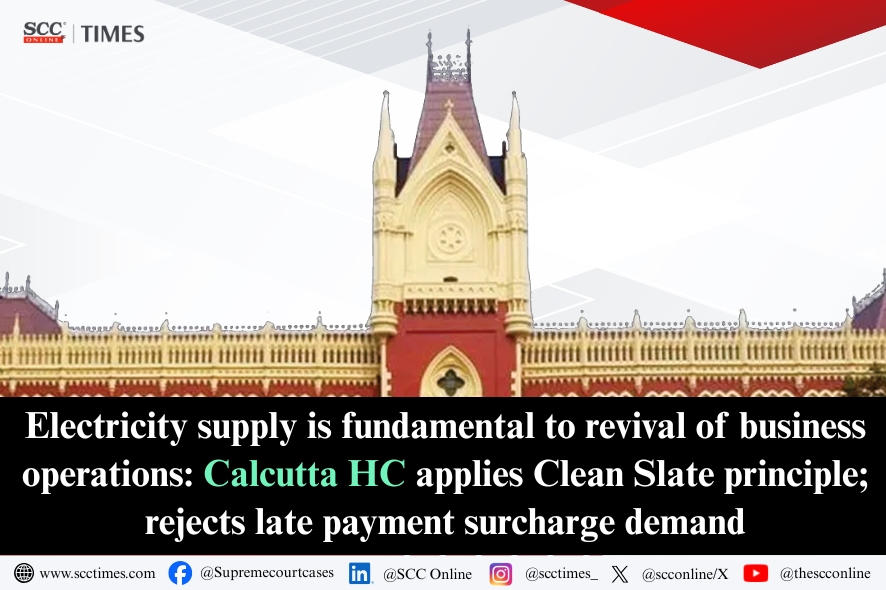
Calcutta HC Rejects Late Payment Surcharge Demand Under Clean Slate Principle
Summary
- The Calcutta High Court applied the clean slate principle to reject the electricity board's demand for late payment surcharges.
- The court held that past defaults do not affect a debtor's current financial obligations under this principle.
- The decision has significant implications for businesses undergoing resolution plans, limiting their ability to pass on late payment surcharges to customers.
What Happened
This principle is based on the idea that a debtor should be given a fresh start, free from the burden of past defaults.
A paper mill in India underwent a change in ownership when a new owner took over under an approved resolution plan. However, the electricity board refused to switch back on the power supply due to outstanding dues and surcharges amounting to over ₹2.5 crore. The new owner sought relief from the Calcutta High Court, arguing that the clean slate principle should apply in this case. This principle, which was recently applied by the court, holds that a debtor's past defaults do not affect their current financial obligations.
Legal Context
The clean slate principle has been gaining traction in Indian courts as a means of promoting business revival and recovery. The principle is based on the idea that a debtor should be given a fresh start, free from the burden of past defaults. In this case, the Calcutta High Court applied the principle to reject the electricity board's demand for late payment surcharges. This decision has significant implications for businesses undergoing resolution plans, as it limits their ability to pass on such charges to customers.
Why It Matters
The Calcutta High Court's ruling is a crucial development in the context of business revival and recovery in India. The court's application of the clean slate principle sends a clear message that electricity supply is fundamental to the revival of business operations. This decision has far-reaching implications for businesses, particularly those undergoing resolution plans, as it affects their ability to pass on late payment surcharges to customers. Lawyers advising such businesses should take note of this ruling and review their billing practices accordingly.
Practical Implications
Lawyers advising businesses undergoing resolution plans should note that the Calcutta High Court's ruling may limit their ability to pass on late payment surcharges to customers, and they should review their billing practices accordingly.
Source
Source: Original reporting via SCC Times
How does this affect your business?
Get an AI analysis of this article grounded in your jurisdictions, practice areas, and any policy documents you've uploaded to Wansom.
Wansom is AI and can make mistakes.