
Burundi: Social Economy Sector Needs Better Structuring
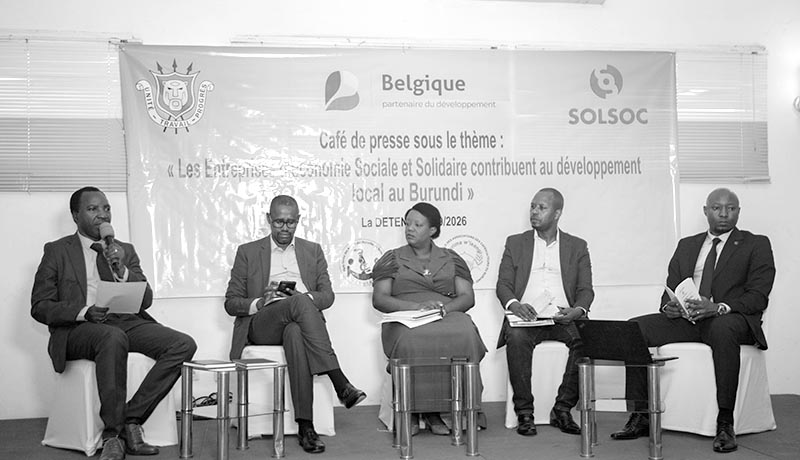
Adisco, in partnership with Pamusab, Cnac, and Febutra, organized a press conference in Bujumbura, Burundi, on September 18, 2026, to discuss the contribution of social and solidarity economy (SSE) enterprises to local development. This event, titled "L’économie sociale et solidaire, un secteur à mieux structurer" (The social and solidarity economy, a sector to be better structured), brought together key stakeholders to highlight the role of SSE entities in Burundi's local development and to advocate for improved structural support for the sector.
This initiative carries significant legal implications for practitioners, businesses, and the public in Burundi. The focus on "better structuring" for the SSE sector strongly suggests that current legal and regulatory frameworks may be perceived as inadequate or fragmented. Such discussions often precede policy reforms, new legislative proposals, or the development of specific guidelines aimed at formalizing, supporting, or regulating SSE entities. For businesses operating within or considering the SSE space, this signals a potential shift in the operational landscape, affecting everything from legal entity formation and governance to funding opportunities and compliance requirements. The emphasis on local development also points to potential incentives or preferential treatment for businesses that align with these social objectives.
Burundi's legal framework for economic activities typically encompasses general company law, cooperative law, and specific statutes for non-profit organizations or associations. The social and solidarity economy, by its very nature, often straddles these categories, including entities like cooperatives, mutual societies (such as those represented by Pamusab), and various forms of associations. The current legal context may lack a unified or comprehensive framework specifically tailored to the unique hybrid nature of SSE, which balances economic viability with social impact. This event serves as a form of advocacy, aiming to influence policymakers to consider a more cohesive legal and regulatory environment, potentially through a dedicated SSE law or significant amendments to existing commercial and non-profit statutes.
The key parties involved in this significant event include Adisco (Organisation Appui au Développement intégral et à la Solidarité sur les collines), a development and solidarity organization, as the primary organizer. Its partners were Pamusab (Plateforme des Acteurs des mutuelles de Santé au Burundi), representing mutual health societies; Cnac, likely a national social security or insurance body; and Febutra, probably a national labor or workers' federation. These diverse organizations underscore the multi-sectoral interest in the SSE, involving civil society, social protection, and labor interests, all converging on the need for a more robust legal and structural foundation for these enterprises in Burundi.
Attorneys advising clients in Burundi, particularly those involved in community development, social services, cooperatives, or any form of socially responsible enterprise, should closely monitor the outcomes of these discussions and any subsequent legislative or policy developments. It is crucial to anticipate potential changes in corporate governance requirements, tax incentives, access to public procurement, or specific reporting obligations for SSE entities. Legal professionals should be prepared to guide clients through evolving compliance landscapes and advise on optimal legal structures that align with both business objectives and the anticipated regulatory environment for the social and solidarity economy in Burundi.
How does this affect you?
Get an AI analysis of this article grounded in your jurisdictions, practice areas, and any policy documents you've uploaded to Wansom.
Finish Reading the Full Story and the Expert Analysis.
Get the latest legal & regulatory intelligence in Burundi
Wansom is AI and can make mistakes.